How to Evaluate Finishing Equipment Vendors Before You Buy
August 27, 2026
Learn how to evaluate finishing equipment vendors using engineering credentials, compliance standards, support capability, and total cost of ownership criteria.
Selecting an industrial finishing equipment vendor is a long-term business decision that extends well beyond the initial purchase price. The equipment a shop installs will define its throughput capacity, compliance posture, product quality, and maintenance overhead for a decade or more. Purchasing from the wrong vendor — one without deep technical expertise, reliable manufacturing standards, or post-sale support infrastructure — can result in costly downtime, regulatory exposure, and equipment that fails to perform as specified.
This post outlines the key criteria finishing professionals should apply when evaluating vendors of spray booths, curing ovens, powder coating systems, and related industrial finishing equipment. The evaluation framework covers engineering credentials, product configuration capabilities, support structures, compliance standards, and total cost of ownership considerations.
Engineering Credentials and Technical Depth
A vendor's engineering capability is the single most reliable indicator of whether their equipment will perform to specification in your operating environment. Manufacturers with in-house engineering teams can design to application-specific requirements rather than selling fixed catalog configurations that may not fit your process.
- Technical staff access: The vendor should provide direct access to engineers who can evaluate your facility layout, airflow requirements, material handling constraints, and production volume before specifying equipment.
- Application experience: Ask for documented experience in your specific industry, whether aerospace, automotive, woodworking, or industrial manufacturing, where finishing requirements differ significantly.
- Custom design capability: Vendors who can modify dimensions, airflow configurations, exhaust systems, and heating arrangements for non-standard applications demonstrate genuine manufacturing depth.
- Load and airflow calculations: A qualified vendor should be able to provide booth velocity calculations, oven heat rise documentation, and airflow uniformity data for the specific system being quoted.
Manufacturing Origin and Quality Control
Where and how equipment is built has a direct bearing on material quality, dimensional accuracy, and long-term durability. Many vendors resell offshore equipment under their own brand without maintaining any manufacturing oversight or quality inspection process.
- Domestic vs. imported construction: Domestically manufactured equipment is generally subject to more rigorous material and fabrication standards and is easier to source replacement parts for throughout the system's service life.
- Steel gauge and coating specifications: Verify the gauge of structural steel, the type of interior finish applied to booth panels, and the insulation values specified for oven walls before accepting a quote.
- Weld and fabrication quality: Ask whether equipment is MIG or TIG welded, and request information on quality inspection steps applied during fabrication.
- Panel construction: For ovens, confirm whether double-wall insulated panels are used, and verify the R-value against your process temperature requirements.
- Component sourcing: Evaluate whether motors, burners, fans, and controls come from recognized manufacturers with established replacement parts availability.
Configuration Flexibility and System Scalability
Few finishing operations remain static over a five-to-ten year horizon. Production volumes shift, product mix changes, and regulatory requirements evolve. Vendors who offer only fixed-configuration equipment limit your ability to adapt without replacing the entire system.
- Modular construction: Systems built with modular panel or section designs can be extended or reconfigured as production requirements change.
- Conveyor integration: If your operation runs or plans to run a continuous finishing line, confirm the vendor can engineer conveyor-compatible booth and oven configurations.
- Heating system options: Verify whether the vendor offers electric, natural gas, propane, and indirect-fired heating configurations so the system can be matched to your utility infrastructure.
- Multi-stage line capability: Vendors experienced in complete finishing lines — including pretreatment, coating, curing, and cooling stages — can better coordinate the interaction between system components.
Compliance and Safety Standards
Industrial finishing equipment must meet specific fire, electrical, and emissions standards that vary by application and jurisdiction. A vendor who cannot demonstrate familiarity with applicable standards is a liability, not a resource.
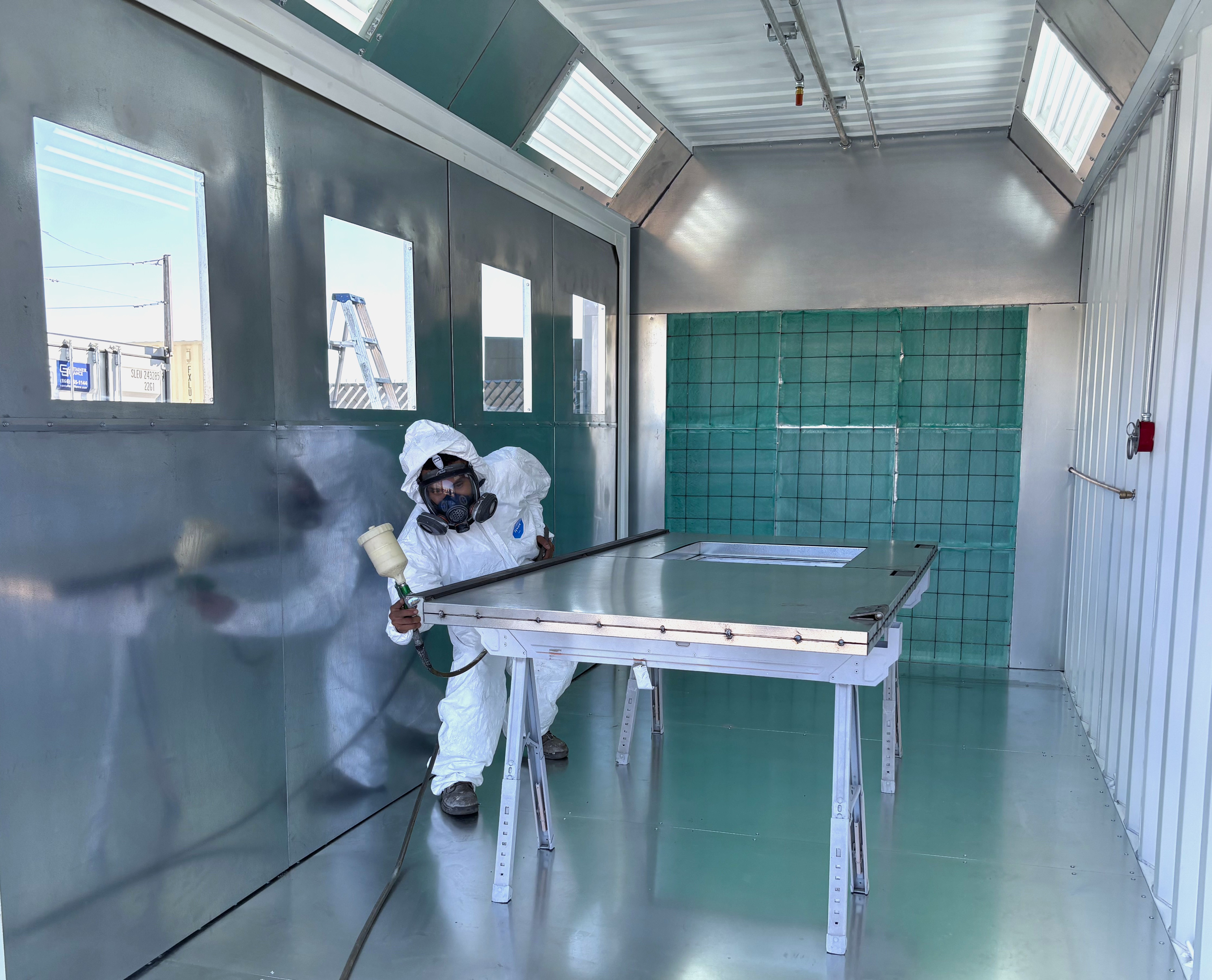
- NFPA compliance: Spray booths must be designed and installed in conformance with NFPA 33, which governs spray application of flammable and combustible materials. Confirm the vendor's equipment specifications reference this standard.
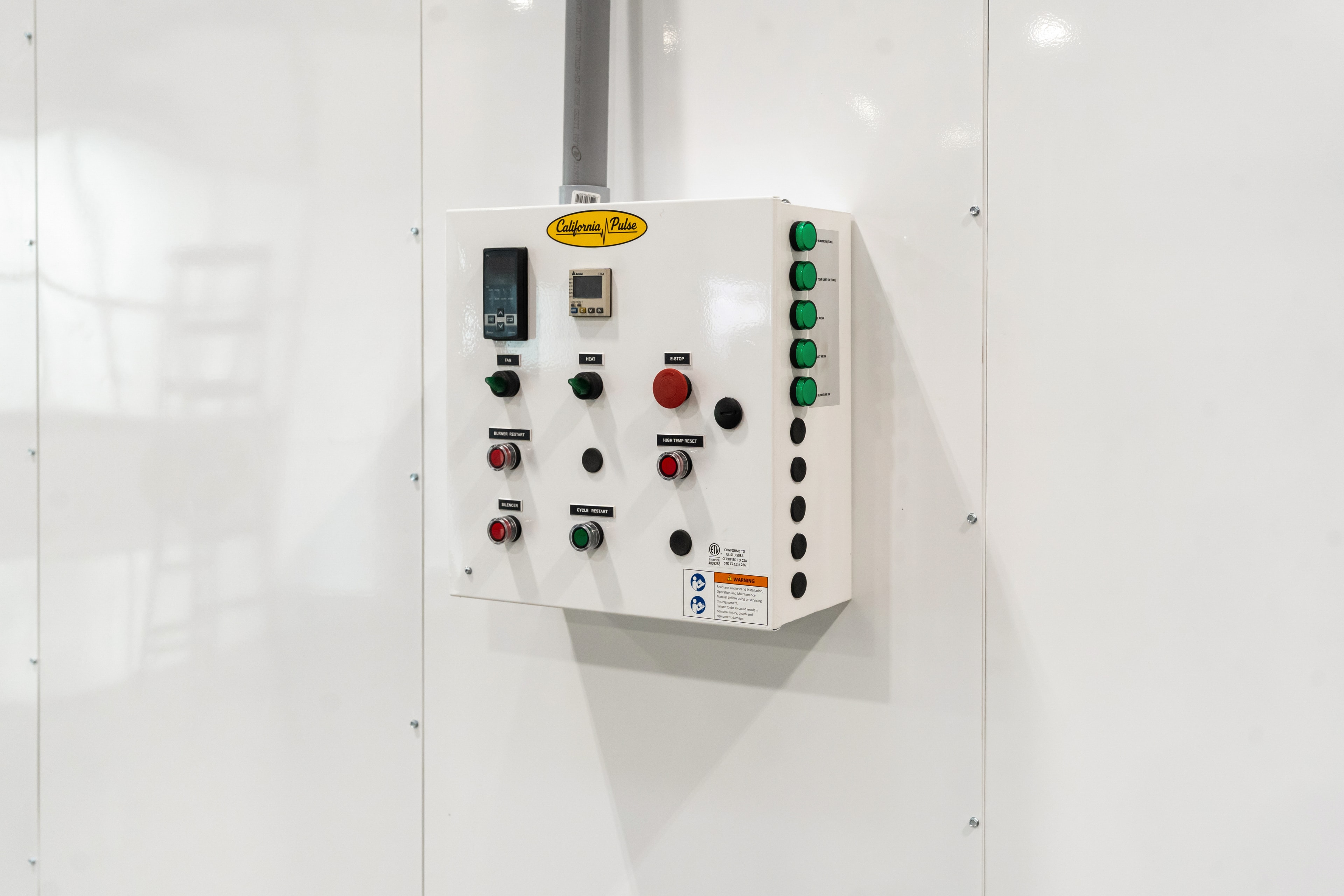
- UL or CSA listings: Electrical controls, panel enclosures, and heating systems should carry appropriate UL or CSA listings applicable to the installation environment.
- EPA and SCAQMD familiarity: In regulated air basins, particularly in California, vendors should understand South Coast AQMD permit requirements and be able to provide documentation supporting permit applications.
- Explosion-proof requirements: For solvent-based coating applications, confirm that fans, motors, and electrical components in air-contact zones meet explosion-proof or spark-resistant classifications.
Post-Sale Support and Parts Availability
The vendor relationship does not end at installation. Equipment that cannot be serviced promptly when problems arise will generate disproportionate losses in production time and finishing quality.
- Parts inventory: The vendor should maintain domestic inventory of high-wear components including filters, burner parts, fan bearings, and control components.
- Technical support access: Direct access to the manufacturer's technical staff, rather than a third-party distributor, shortens diagnostic time and improves resolution accuracy.
- Documentation quality: Evaluate the quality of installation manuals, wiring diagrams, and maintenance schedules provided with the equipment before purchase.
- Warranty terms: Review warranty language carefully, paying specific attention to exclusions, required maintenance documentation, and the process for submitting warranty claims.
Total Cost of Ownership Analysis
Purchase price is one data point in a multi-variable cost equation. Energy consumption, maintenance frequency, filter replacement intervals, and downtime risk all contribute significantly to the true cost of owning finishing equipment over its service life.
- Energy efficiency ratings: Oven insulation quality, burner efficiency ratings, and variable frequency drives on fan motors all affect annual operating costs in measurable ways.
- Filter change intervals and costs: Booth filtration systems with longer service intervals and lower-cost media reduce both maintenance labor and consumable expense.
- Downtime risk profile: Equipment built from commercial-grade components with established supply chains carries a lower downtime risk than systems dependent on proprietary or imported replacement parts.
- Financing and direct pricing: Purchasing direct from a manufacturer eliminates distributor markup, which can represent a meaningful cost difference on capital equipment purchases.
Making a Sound Vendor Decision
Evaluating finishing equipment vendors requires the same systematic discipline applied to any capital equipment procurement. Engineering depth, manufacturing quality, compliance knowledge, and post-sale support are all measurable criteria that should be documented and compared across competing proposals before a purchase decision is made.
Why Choose California Pulse for Finishing Equipment Evaluation and Supply
We manufacture spray booths, powder coating ovens, prep stations, mixing rooms, conveyor systems, and complete finishing lines at our facility in Apple Valley, California. Our engineering team works directly with each customer to assess application requirements, calculate airflow and heat rise specifications, and configure systems that meet both production and compliance objectives — without distributor intermediaries in the process.
We maintain domestic parts inventory, provide direct technical support from our manufacturing team, and have experience serving regulated industries including aerospace, automotive, rail and transit, marine, and industrial manufacturing throughout California and nationally. When you purchase from California Pulse, you are working with the engineers who built the system.