California Pulse
Powder Coating
Powder coating applies a dry, finely ground resin and pigment to a grounded part electrostatically, then melts and cross-links it in a cure oven to form a continuous film. Nothing evaporates. There is no solvent carrier, no flash-off, and no VOC emission from the coating itself. The powder either lands on the part, is reclaimed and re-sprayed, or is captured in the filters.
That single difference drives everything else about the equipment. A powder shop needs two pieces of capital equipment instead of one, a booth and an oven, and gets back a finish that is thicker, tougher, and far more chip and corrosion resistant than most liquid coatings, with material utilization that can exceed 95% when reclaim is working properly.
How the powder coating process works
1. Surface preparation
Powder is unforgiving about contamination. Oils, mill scale, rust, and old coatings all cause adhesion failure, and unlike liquid coatings there is no solvent to bite into the surface. Parts are typically cleaned and degreased, then either blasted to a specified profile or run through a chemical pretreatment such as iron or zinc phosphate. For parts with a corrosion requirement, pretreatment is not optional. It is usually what the salt-spray hours actually depend on.
2. Electrostatic application
A spray gun charges the powder particles as they leave the nozzle, and the grounded part attracts them. The charge holds the powder in place until it is cured, which is why grounding is the single most important variable in the booth: a poorly grounded hanger produces thin coverage, back-ionization, and rejects. Corona guns use a high-voltage electrode and suit most general work; tribo guns charge by friction and reach into recesses and Faraday-cage areas that corona struggles with.
3. Reclaim
Powder that misses the part stays dry and usable. The booth's airflow carries it to a cartridge filter module or cyclone, where it is separated, sieved, and returned to the feed hopper. Reclaim is what makes powder economical, and it is also why powder booths are built the way they are: smooth interior surfaces with no ledges, and a colour-change strategy that lets you clean the booth down without cross-contaminating the next batch.
4. Curing
The coated part goes into an oven where the powder flows out and cross-links. Typical thermoset schedules are 10 to 20 minutes at 350°F to 400°F, but the number that matters is metal temperature, not air temperature. A heavy weldment can take a long time to reach cure temperature, and undercured powder looks finished while failing adhesion and chemical resistance tests. Cure ovens fall within the scope of NFPA 86.
Powder coating equipment
Powder booths
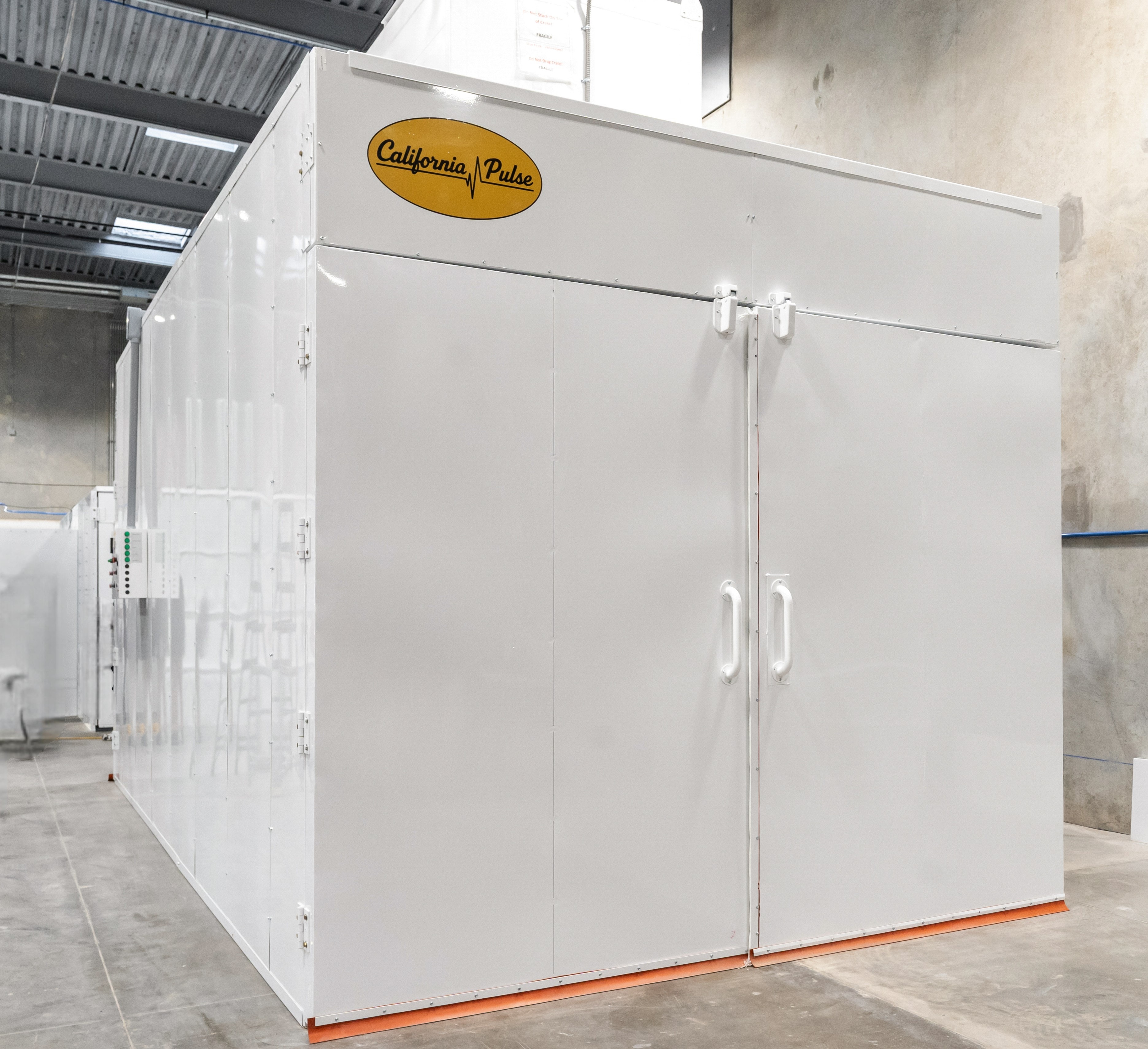
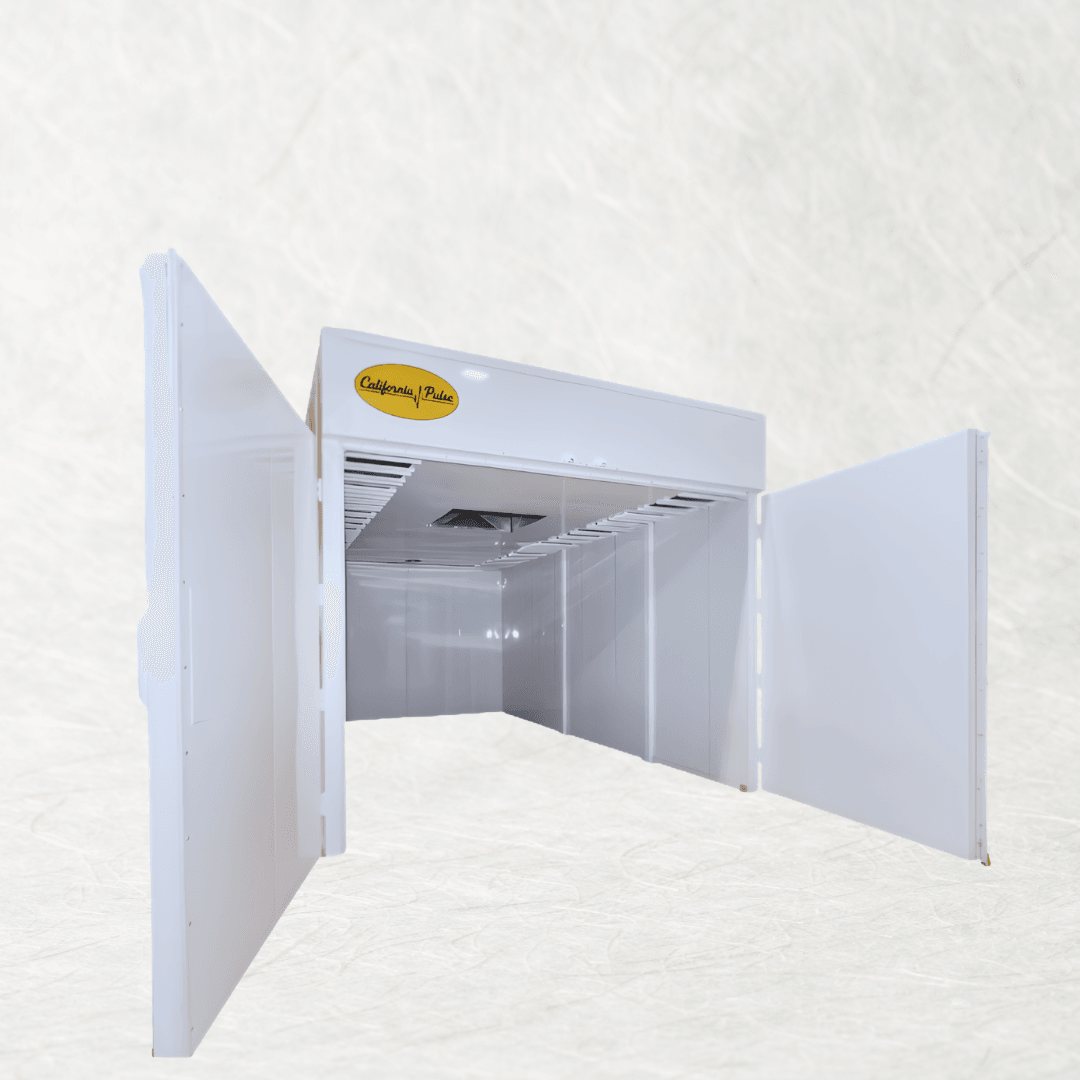
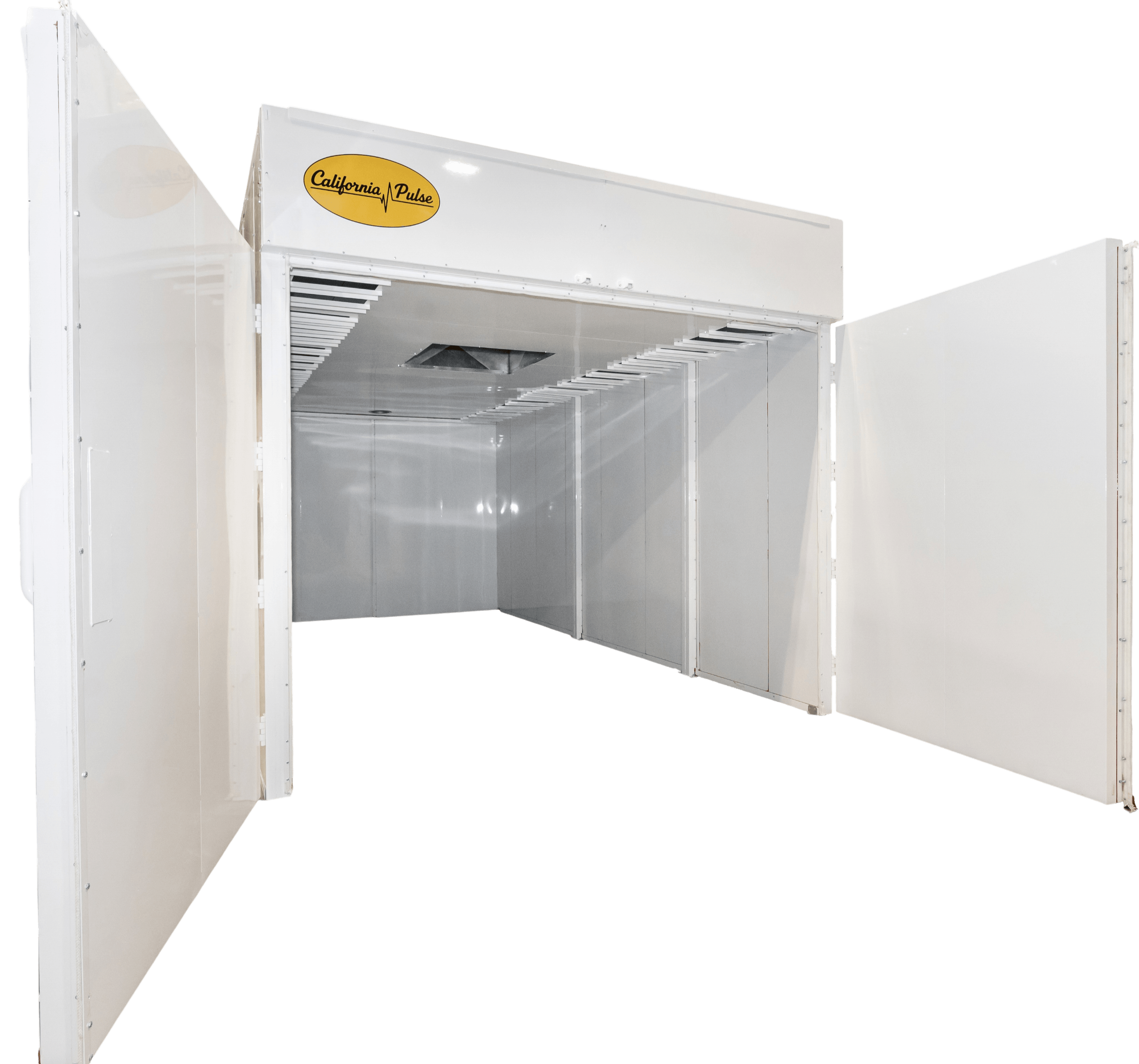
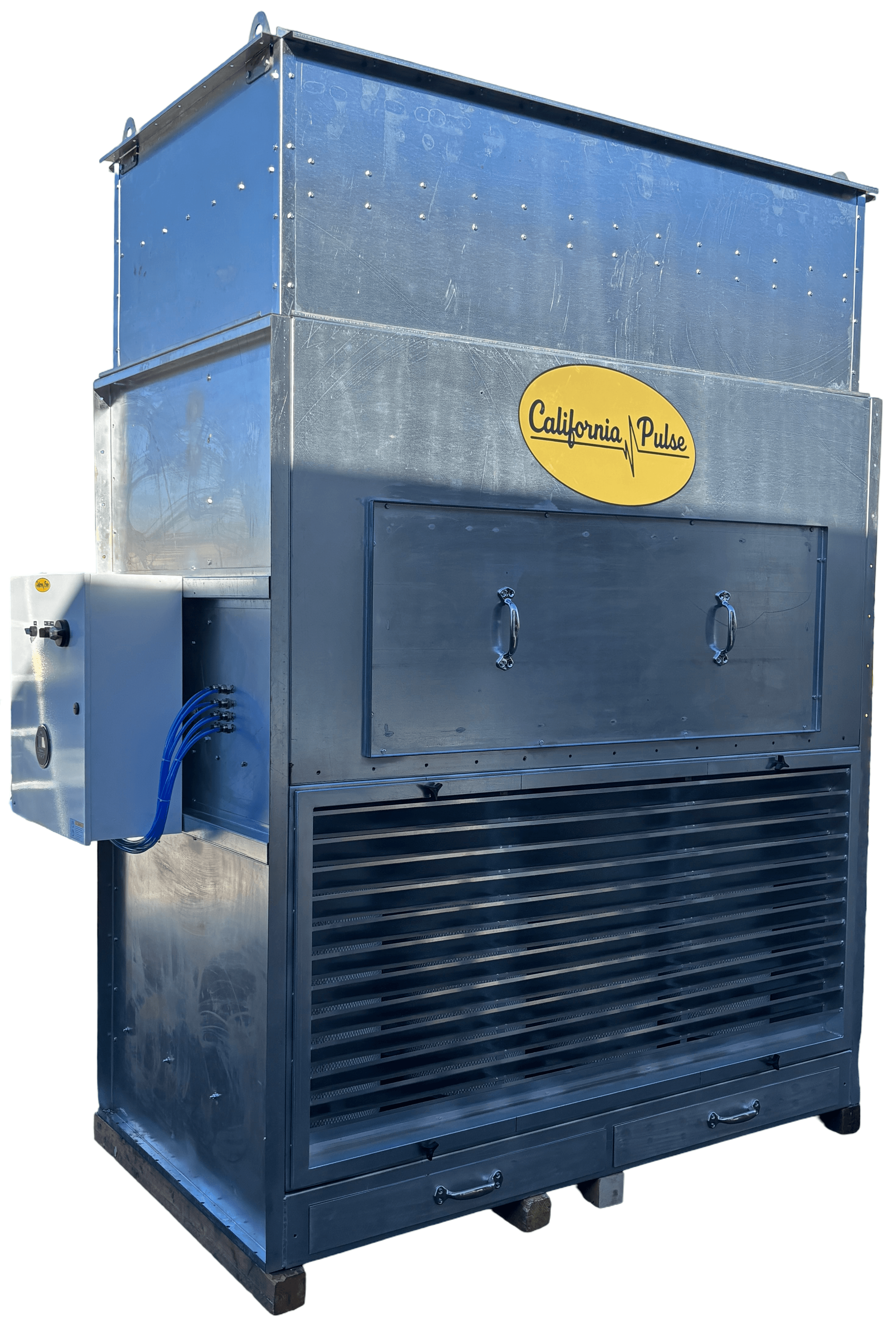
The enclosure contains overspray and delivers it to reclaim. Open-face booths suit batch work and manual application; enclosed booths with entry and exit openings suit conveyorized lines. Interior surfaces are specified for cleanability and colour change, and cartridge filter modules handle both collection and reclaim. The booth is sized around the largest part plus gun reach and operator movement, not around the average part.
Cure ovens
Batch ovens take carts or racks through doors and suit a wide part mix at moderate volume. Conveyorized ovens run continuously and suit high volume of similar parts. Either way the design targets uniform temperature throughout the working envelope, controlled ramp and recovery after door openings, and the safety interlocks, purge cycles, and temperature limits that NFPA 86 requires. Gas and electric heat are both available; gas is usually the lower operating cost at scale, electric the simpler installation.
Batch versus conveyorized
- Batch systems use lower capital, need less floor space, and handle a wide mix of part sizes. Labor per part is higher and throughput is limited by cart and oven cycles.
- Conveyorized systems carry parts continuously through wash, dry-off, booth, and cure. Capital and space requirements are much higher, but labor per part drops sharply and output is predictable.
- The crossover point is driven by part mix as much as by volume. High volume of one part favors a line; moderate volume of fifty different parts often still favors batch.
Where powder coating fits, and where it does not
Powder is the right answer for conductive metal parts that can tolerate the cure temperature and are wanted in a durable, uniform, high-build finish. It is the standard for architectural aluminum, steel fabrications, appliance and enclosure work, wheels, fencing, shelving, and agricultural and construction equipment components.
It is the wrong answer when the substrate cannot be grounded, when the assembly contains bearings, seals, electronics, glass, or adhesives that will not survive 400°F, when the part is too large for any practical oven, or when the specification calls for a very thin film or a finish powder cannot match. In those cases a liquid or waterborne system is the practical route.
Comparing powder against liquid, waterborne, and composite finishing?
Codes and compliance for powder coating
Powder application is covered by NFPA 33, which addresses spray application using flammable or combustible materials and includes provisions specific to powder. Cure ovens fall within NFPA 86. Because powder is a combustible dust, the standards addressing combustible particulate solids also apply, and the practical consequences show up in the equipment: bonding and grounding of all conductive components, control of ignition sources, and interlocks that stop application if the collector's airflow fails.
The emissions picture is simpler than for liquid coating. Powder contributes essentially no VOCs, which is often the reason a California shop moves to it in the first place, but the installation still requires review by your air district and by the Authority Having Jurisdiction. California Pulse offers full-system ETL listings on applicable powder product lines, giving inspectors a single mark to verify.
NFPA 33, NFPA 86, OSHA, ETL listings, and AHJ permitting explained.
Frequently asked questions
What is powder coating?
What temperature and time does powder need to cure?
Do I need both a booth and an oven?
What materials can be powder coated?
How much powder is actually wasted?
Is powder coating a combustible dust hazard?
How durable is powder coating compared with liquid paint?
Can I powder coat parts that are already assembled?
How big does a powder coating booth and oven need to be?
Does powder coating require an air quality permit in California?
Equipment
Related equipment
Ready to build a custom solution for your business?
Before you specify
Worth reading first
- Powder Coating Booth DesignOpen face versus enclosed, airflow and containment, interior surfaces, grounding, and how color change strategy shapes the booth before it is built.
- Powder Coating Compliance GuideNFPA 33 and 86, combustible dust, electrical, OSHA, ETL listing, and air district review, in the order they come up on a real project.
- Industrial finishing overviewPowder and liquid coating compared, with the equipment each process needs.