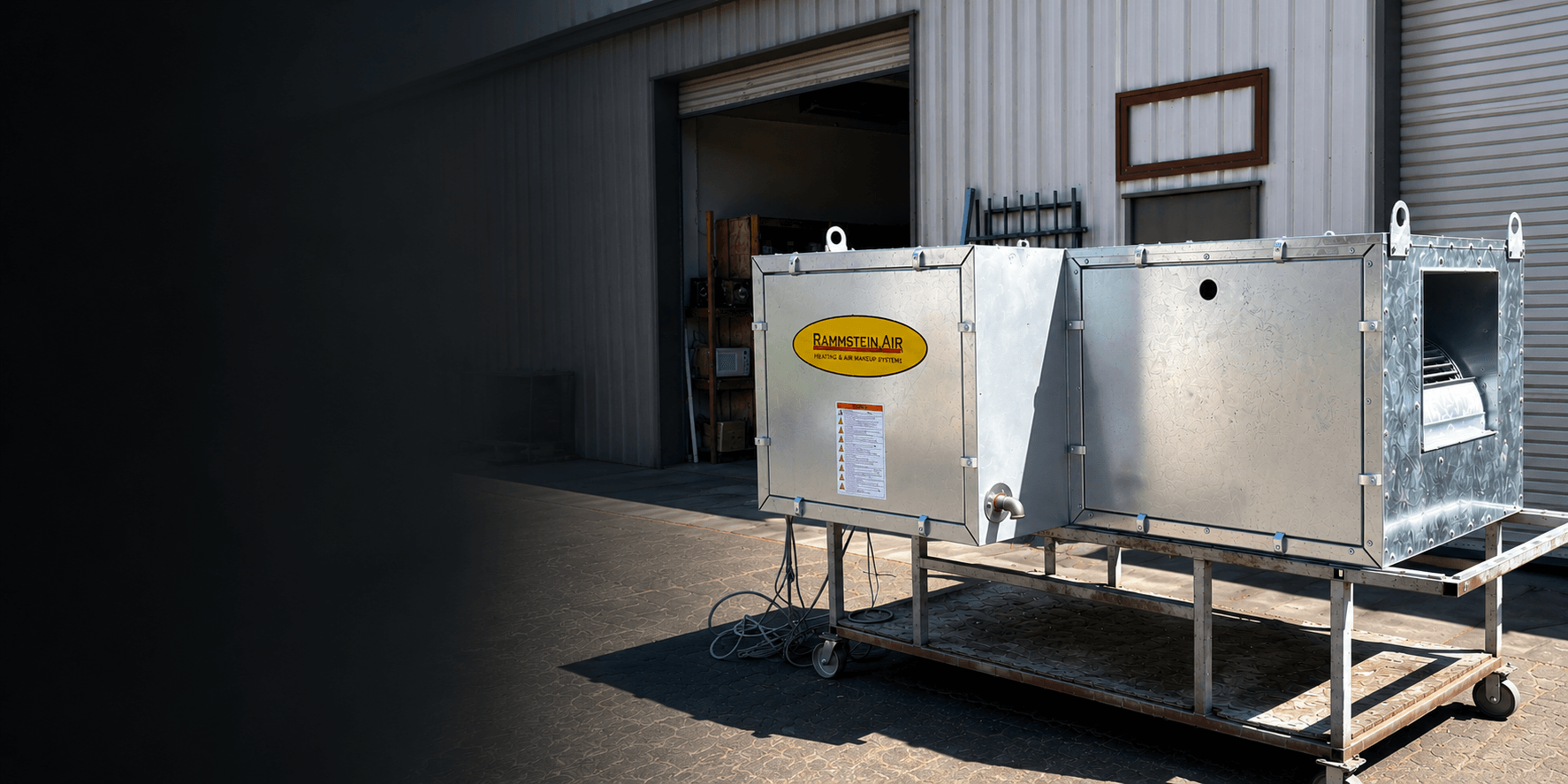

Built in Apple Valley, California
Spray Booth Heaters for Cold Climates
A booth does not lose its heat through the walls. It loses it through the exhaust fan. Every cubic foot pulled out of the building has to come back in, and in January in Duluth or Fargo or Burlington it comes back at whatever the outside is doing. Heated makeup air is what stops the weather from setting your process.
- Heat load calculated against your local design temperature
- Direct fired gas and electric, sized to the booth's real airflow
- Spray, flash, bake and recirculation under one control sequence
- Full-system ETL listing available, engineered in the USA
- -20°F
- Design days we size for
- 1.08
- BTU per CFM per degree of rise
- 4
- Spray, flash, bake, recirculate
- ETL
- Full-system listing available
The Problem
What cold outside air does to a finish
Coatings are formulated to be applied and cured inside a temperature range. Move outside it and the effects are predictable, cumulative, and expensive. The cost rarely shows up on one line of a P and L. It shows up as rework, as jobs that take an extra day, and as a booth that produces a different result in February than it did in July.
- 01Viscosity and atomisation move
- The same gun, the same pressure, and the same painter lay down a different film build in February than in July.
- 02Flash and cure times stretch
- Sometimes by hours, which turns the booth into the bottleneck for the whole shop.
- 03Cold steel collects moisture
- A part brought in from the yard sits below the dew point of the shop air, so it is wet before anyone sprays it.
- 04Defects that look like operator error
- Poor levelling, slow solvent release, and adhesion complaints that surface weeks after the job shipped.
- 05The building goes negative
- Exhaust without heated makeup air drags cold air under every door, disturbs booth airflow, and can back-draft other appliances.
- 06Capacity you never book
- Shops stop spraying on the coldest mornings, or spray anyway and rework. Both are lost weeks every winter.
CFM, BTU & Temperature Rise
Heating capacity is calculated, not chosen
Three numbers decide the heater, and they come in order. Get the first one wrong and everything downstream is wrong with it.
Airflow first
Exhaust volume is set by the booth's cross section and the design velocity for that booth type. A 14 ft by 9 ft crossdraft at 100 feet per minute moves about 12,600 CFM. That is fixed by code and process before heating enters the conversation.
Then temperature rise
The gap between your local winter design temperature and the temperature you hold inside. Design against the published winter design dry bulb for your site, not the record low and not an optimistic guess.
BTU follows
Heat required is CFM multiplied by 1.08 multiplied by the rise. The 1.08 is air density times specific heat times 60 minutes, and it sits behind every makeup air calculation ever run.
The whole calculation
CFM × 1.08 × Temperature Rise = BTU / hr
Same booth, same airflow, three different winters. The only variable below is where the building is, which is the entire argument for engineering the heater against local design conditions rather than shipping a standard package.
Northeast & New England
816,000
BTU per hour
- Design day
- 10°F design day
- Rise to 70°F
- 60°F rise
- If run electrically
- 239 kW
Upper Midwest
953,000
BTU per hour
- Design day
- 0°F design day
- Rise to 70°F
- 70°F rise
- If run electrically
- 279 kW
Northern Plains
1,225,000
BTU per hour
- Design day
- -20°F design day
- Rise to 70°F
- 90°F rise
- If run electrically
- 359 kW
Those figures are heat delivered into the airstream. Burner input is selected on top of them with allowance for efficiency and control margin, and the result is then checked against what your gas service, meter, and line pressure can actually deliver, or against spare electrical capacity. Discovering at commissioning that the gas line feeding the unit is undersized is common and entirely avoidable.
It is also why generous airflow is expensive in a cold climate. Every extra 1,000 CFM specified for comfort is roughly another 97,000 BTU per hour on a 90 degree design day, every hour the booth runs, for the life of the booth. Airflow and heating belong in the same conversation, not in sequence with different parties.
The Equipment
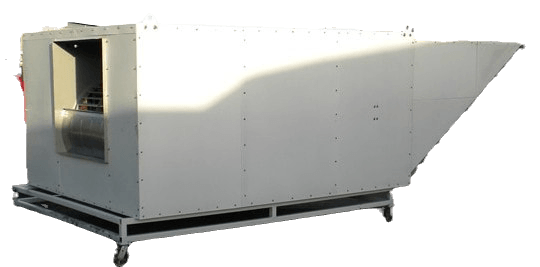
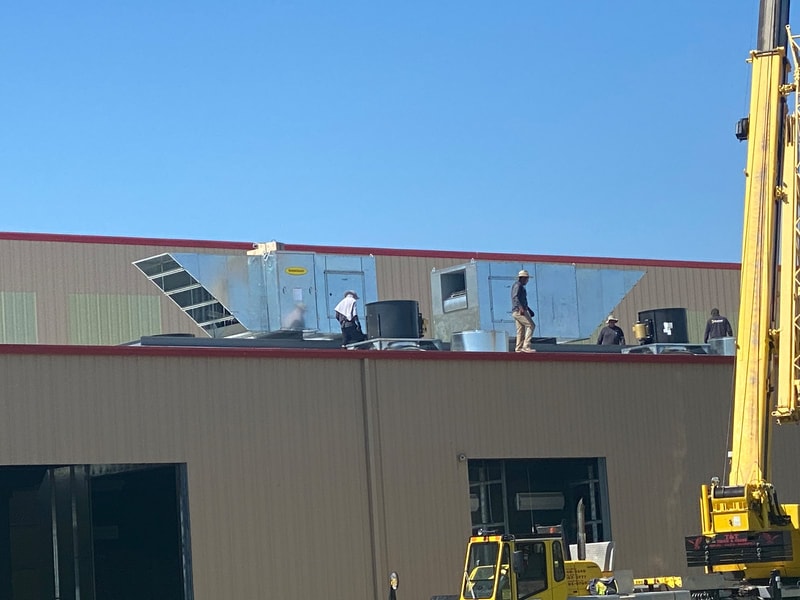
Heated air makeup units
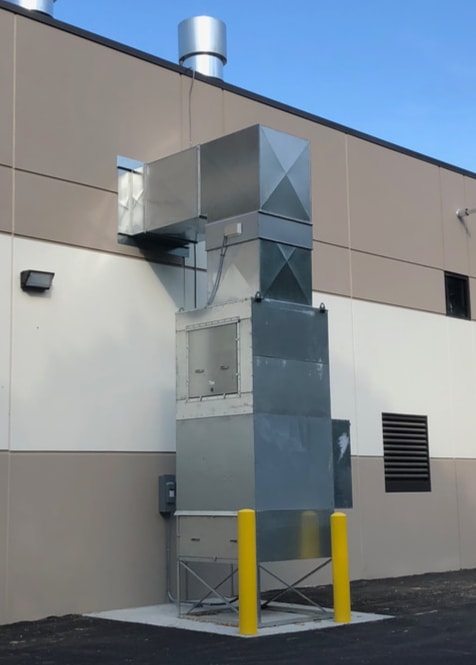
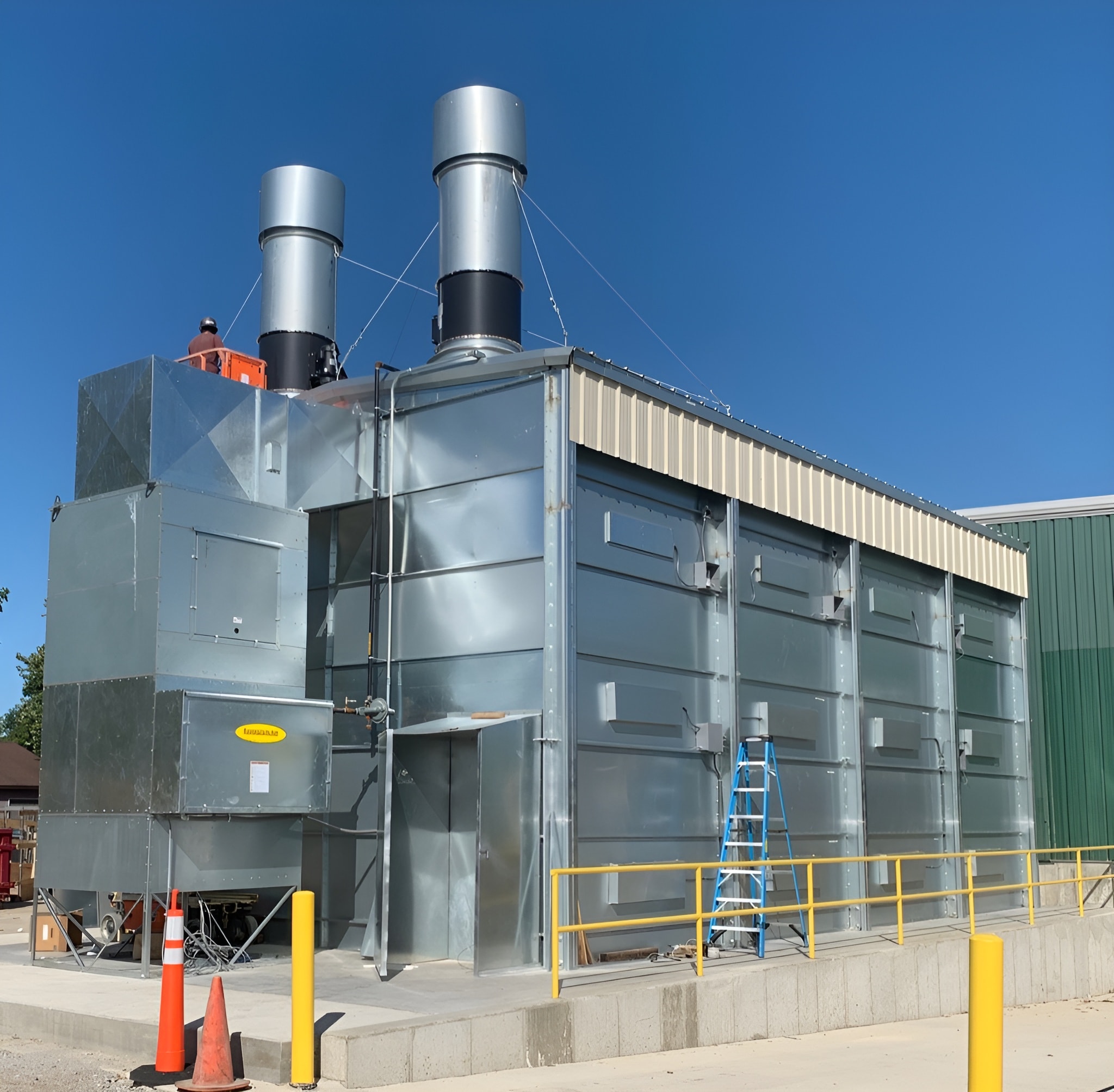
The air makeup unit, or AMU, is the equipment most shops mean when they say booth heater. It draws outside air, filters it, heats it, and delivers it into the booth to replace exactly what the exhaust removes. In a cold climate it is doing four jobs at once.
Supply
Delivers the volume the exhaust removes, so the booth reaches design velocity instead of starving for air.
Filter
Cleans incoming air before it reaches wet coating. Road grit, pollen, and snow melt all arrive with the makeup air.
Heat
Raises that air to application or cure temperature and holds it there through the whole cycle, not just at start-up.
Balance
Keeps booth and building in the pressure relationship the design calls for, rather than letting exhaust pull the shop negative.
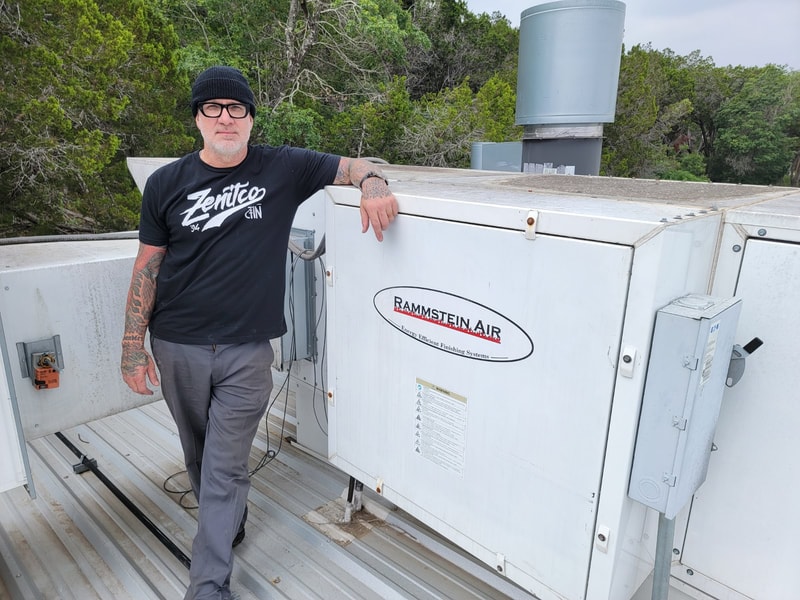
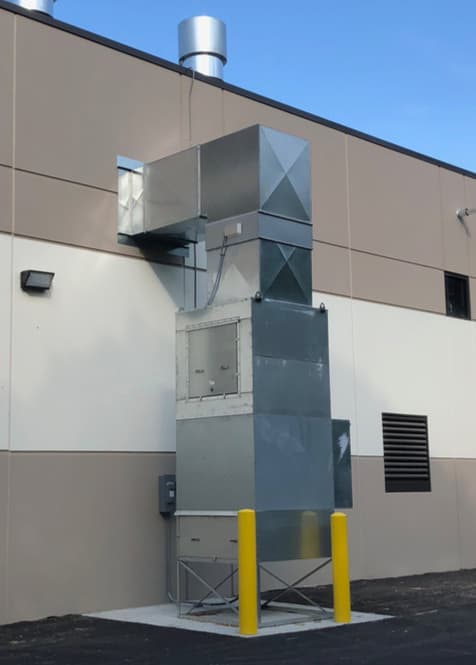
Units are commonly mounted outdoors on a pad or on the roof and ducted into the booth plenum, which keeps floor space inside the building. Cold-region installations get particular attention to intake location and hood design so blowing snow is not drawn in, to damper and actuator selection at low temperature, and to the low-temperature limits appropriate to the equipment involved.
Direct Fired
The burner sits in the airstream
There is no heat exchanger between flame and air, so very little of the fuel energy is lost up a flue. That efficiency is exactly what a cold climate rewards, because the system is being asked for a large temperature rise for a large part of the year. Turndown is high, so the unit modulates smoothly between a mild October afternoon and a January morning instead of cycling.
Because products of combustion enter the supply air, direct fired heating suits makeup air that is exhausted from the booth rather than air recirculated indefinitely, and the arrangement is governed by NFPA 33 and, where a genuine cure process is involved, NFPA 86 as adopted and enforced by your authority having jurisdiction. Where a coating, a process, or a reviewer requires combustion products to stay out of the airstream, an indirect fired arrangement is specified instead.
Fuel
Gas or electric in a cold climate
In practice the building decides this, not preference. Confirm the gas capacity and pressure available at the unit location, and the spare electrical capacity in the panel, before the heating type is chosen.
| Electric heat | Gas fired heat |
|---|---|
| Needs substantial electrical service: 12,000 CFM at an 80 degree rise is roughly 300 kW | Fuel cost per BTU is usually the lower of the two at the volumes cold climates demand |
| Energy cost per unit of heat is typically higher, and it compounds over a long season | Direct fired burners put nearly all the fuel energy into the airstream, with high turndown |
| No gas piping, no venting, no combustion air, no burner service | Needs gas service at adequate capacity and pressure, plus venting and combustion air |
| Suits prep stations, smaller booths, and sites where gas is unavailable | Suits production booths, high airflow, bake cycles, and long winters |
| Simpler permitting and installation scope, which sometimes decides a tight retrofit | Natural gas or propane, configured for the fuel and, in the Mountain States, for altitude |
In much of rural New England and the Northern Plains the answer is propane rather than natural gas, which changes burner configuration but not the approach.
The Cycle
Spray, flash, bake, recirculate
A heated booth is a sequence, not a thermostat. Each mode asks something different of the heater, and the controls are what turn that sequence into a repeatable process rather than an operator judgement call.
Spray
Full design airflow on 100 percent outside air, tempered to a stable application temperature. This mode sets the maximum heating load, and it is the one a cold climate punishes.
Flash
The interval after application when solvent releases. Airflow can often come down while heat holds steady, which shortens the wait before the next coat without pushing the coating.
Bake
Booth temperature raised to the coating's target and held for a set period at reduced airflow, under timed and interlocked control, so parts can be handled and released sooner.
Recirculate
In the non-spray parts of the cycle a share of already heated booth air returns instead of heating fresh air from the design low. The largest fuel lever available in a cold climate.
Controls
Heat cannot fire without proven airflow
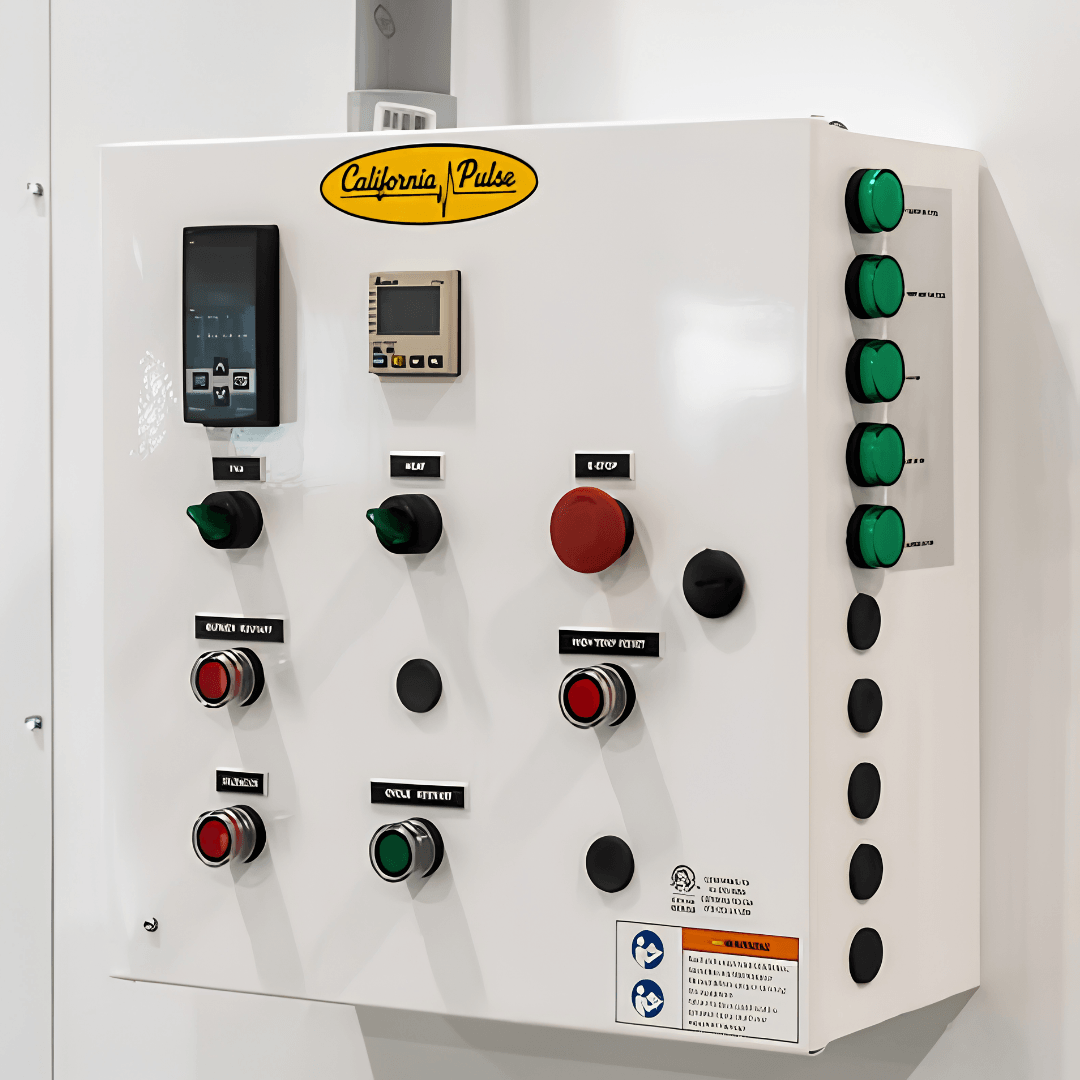
Heating equipment is only as good as the control over it. We build the panels for the systems we supply, so mode sequencing, temperature control, cure timing, VFD control, and the interlocks between heat, airflow, and safety devices are engineered as one system. Cure cannot start while spray is active. The sequence is the same on the coldest day of the year as on the mildest.
Where a booth already has a panel, controls can be integrated with it rather than replaced. Add variable frequency drives and the system stops running full spray volume when it does not need to, which over a winter is where the operating cost difference between a designed system and an assembled one shows up.
Retrofits
Heating a booth you already own
Common and entirely practical, but not a bolt-on appliance. What is actually being added is a makeup air system sized to that booth's exhaust volume, plus everything that has to be true for it to run.
- An air makeup unit matched to the booth's measured exhaust volume, not to its nameplate
- Gas supply at adequate capacity and pressure, or the electrical service for electric heat
- A duct route from the unit to the booth plenum, and the roof or wall penetrations it needs
- A fresh look at pressure balance, because conditioned supply air changes how the booth behaves
- Controls and interlocks tied into the existing panel, including proof of airflow before heat
- Permitting with the local AHJ, which for gas fired work usually means mechanical, gas, and fire review
Send us the booth make and dimensions, the exhaust fan data, your coatings and cure requirements, the fuel and electrical capacity at the building, and your location. We will tell you what is realistic before you commit to it, including when the honest answer is that the existing booth is the limiting factor.
Where We Build For
Cold climate regions
The same booth needs a different heater in Bismarck than in Bakersfield. Design temperature, season length, fuel availability, and altitude all move the specification, so equipment is engineered to local conditions rather than shipped as a standard package.
Upper Midwest
Near 0°FMinnesota, Wisconsin, Michigan, Iowa, Illinois, Indiana, Ohio
Long heating seasons and wide humidity swings, over a dense base of manufacturing, agricultural equipment, truck, and trailer finishing. Full-cycle control and recirculation are worth engineering in from the start.
Northern Plains
-20°F and belowNorth Dakota, South Dakota, Nebraska, eastern Montana
Among the coldest design conditions in the lower 48 and the largest temperature rises we size for, frequently on propane, and often on wind-exposed sites where intake and hood design matter as much as the cold.
Mountain States
Altitude deratingColorado, Utah, Idaho, Wyoming, western Montana
Altitude is the variable that catches people out. Thinner air means burners need high-altitude configuration and fans have to be selected for density at the site, not at sea level. Miss it and the unit underperforms in exactly the conditions it was bought for.
Northeast
0°F to 10°FNew York, Pennsylvania, New Jersey
Cold, damp winters where humidity affects flash times as much as temperature does, older industrial buildings with limited spare electrical service, and tight sites where placing the unit and its duct route is the hardest part of the job.
New England
0°F to 10°FMaine, New Hampshire, Vermont, Massachusetts, Connecticut, Rhode Island
Propane is common outside the gas mains, coastal salt exposure influences material choices on outdoor equipment, and local fire and building officials are closely involved, which is where complete drawings and listing documentation earn their keep.
Somewhere else cold?
We manufacture in Apple Valley, California and ship across the United States. Send your location with the booth details and the heat load gets run against your design conditions, wherever the building is.
Send your details →Photo Gallery
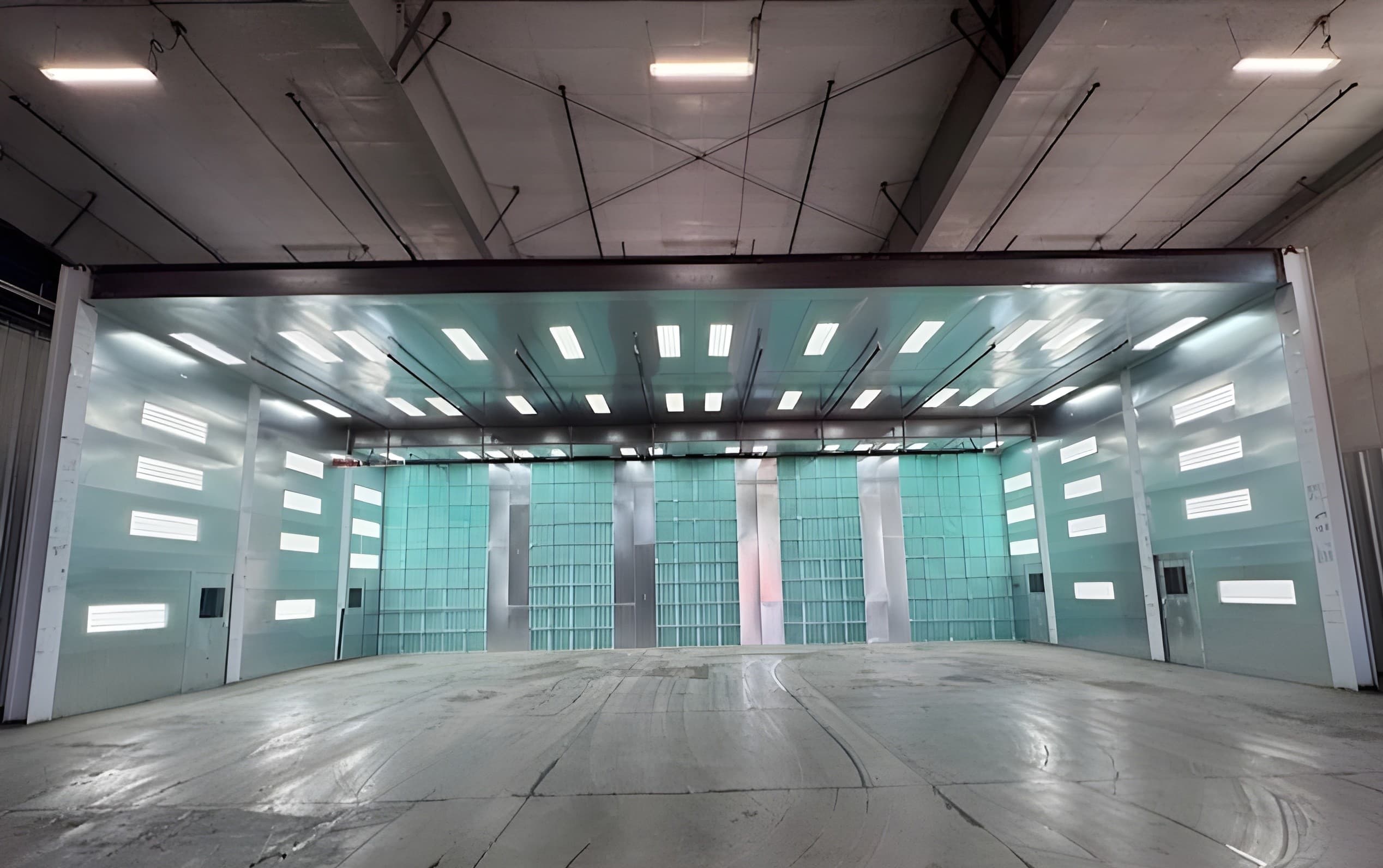
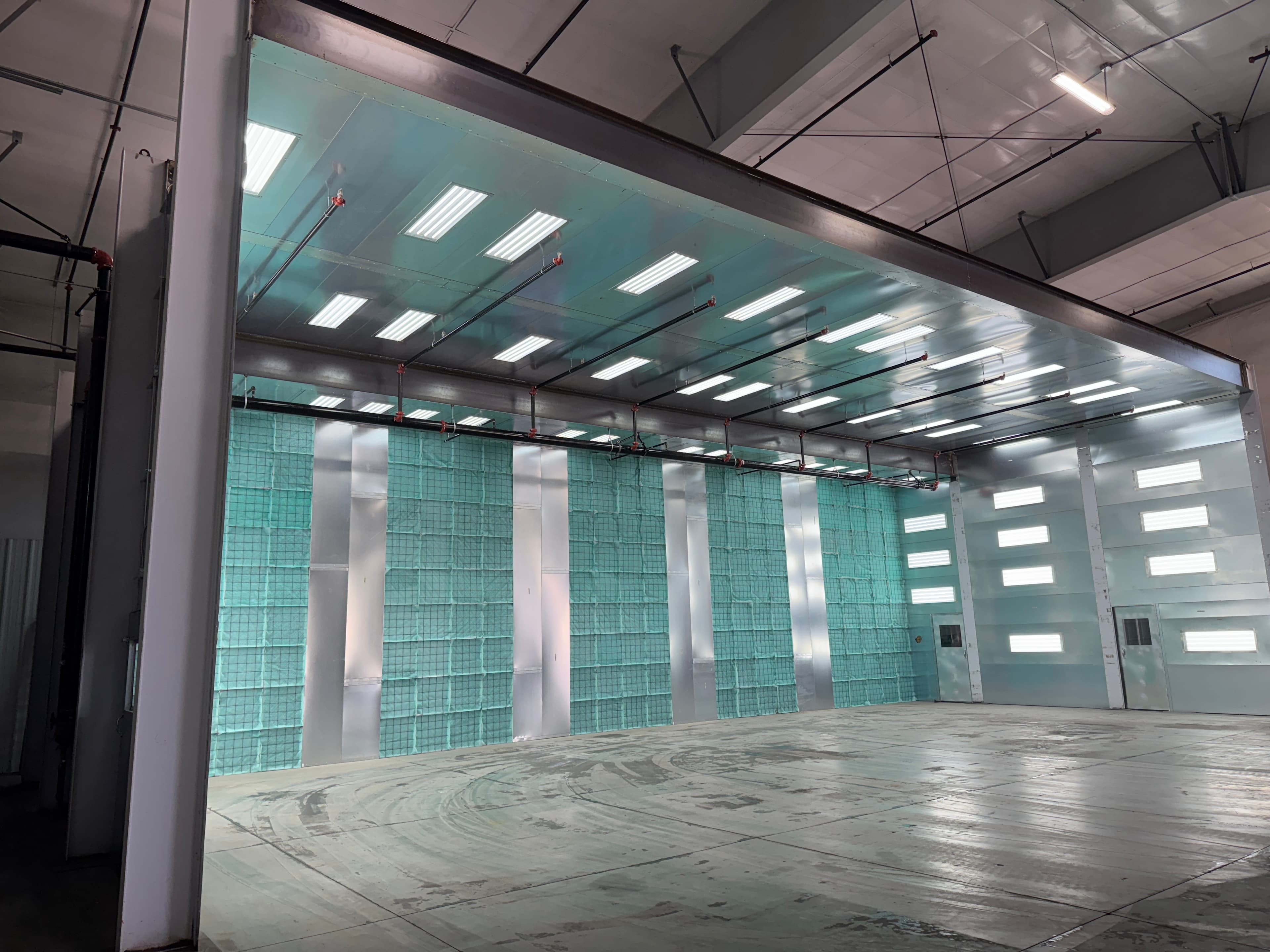
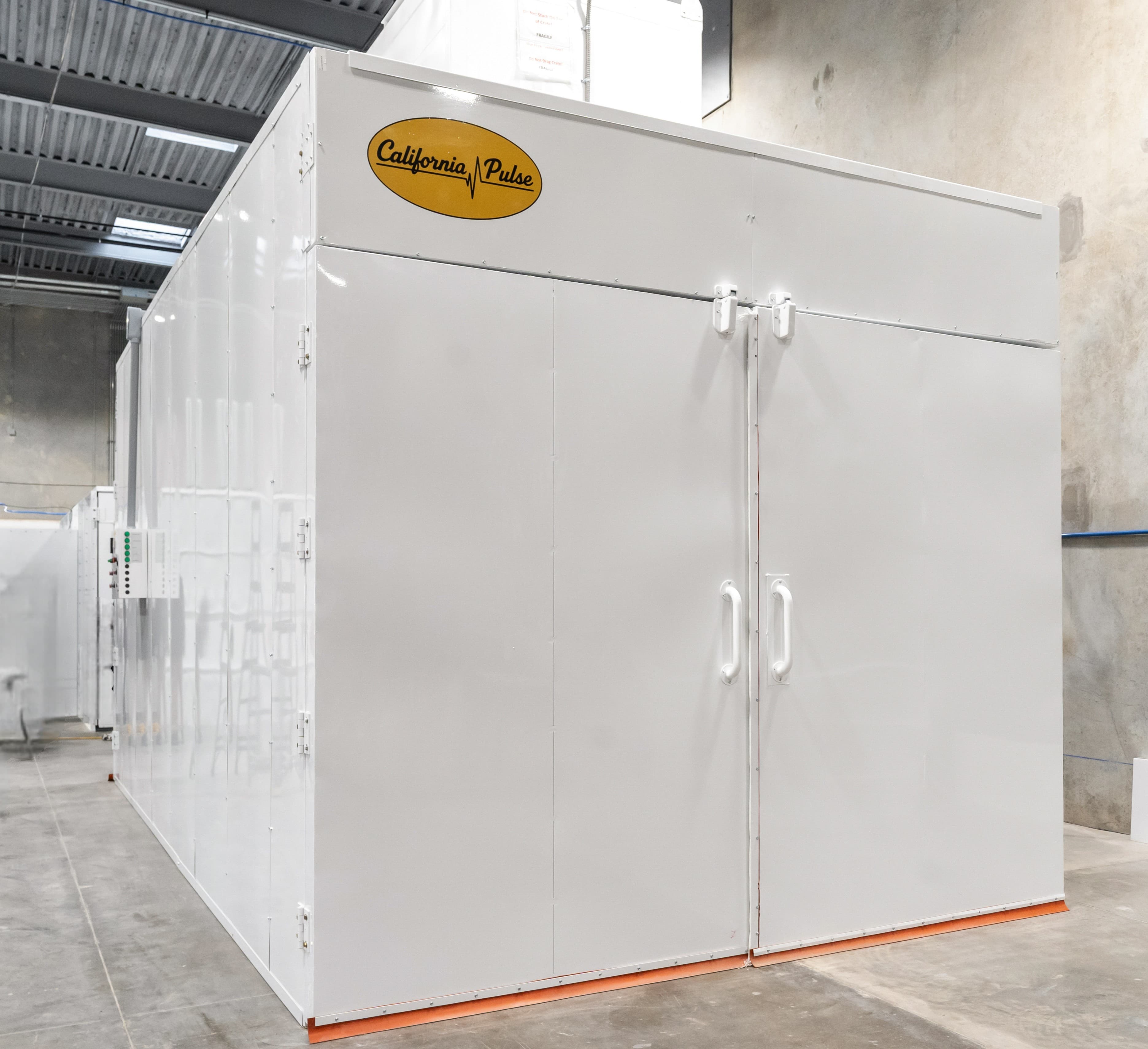
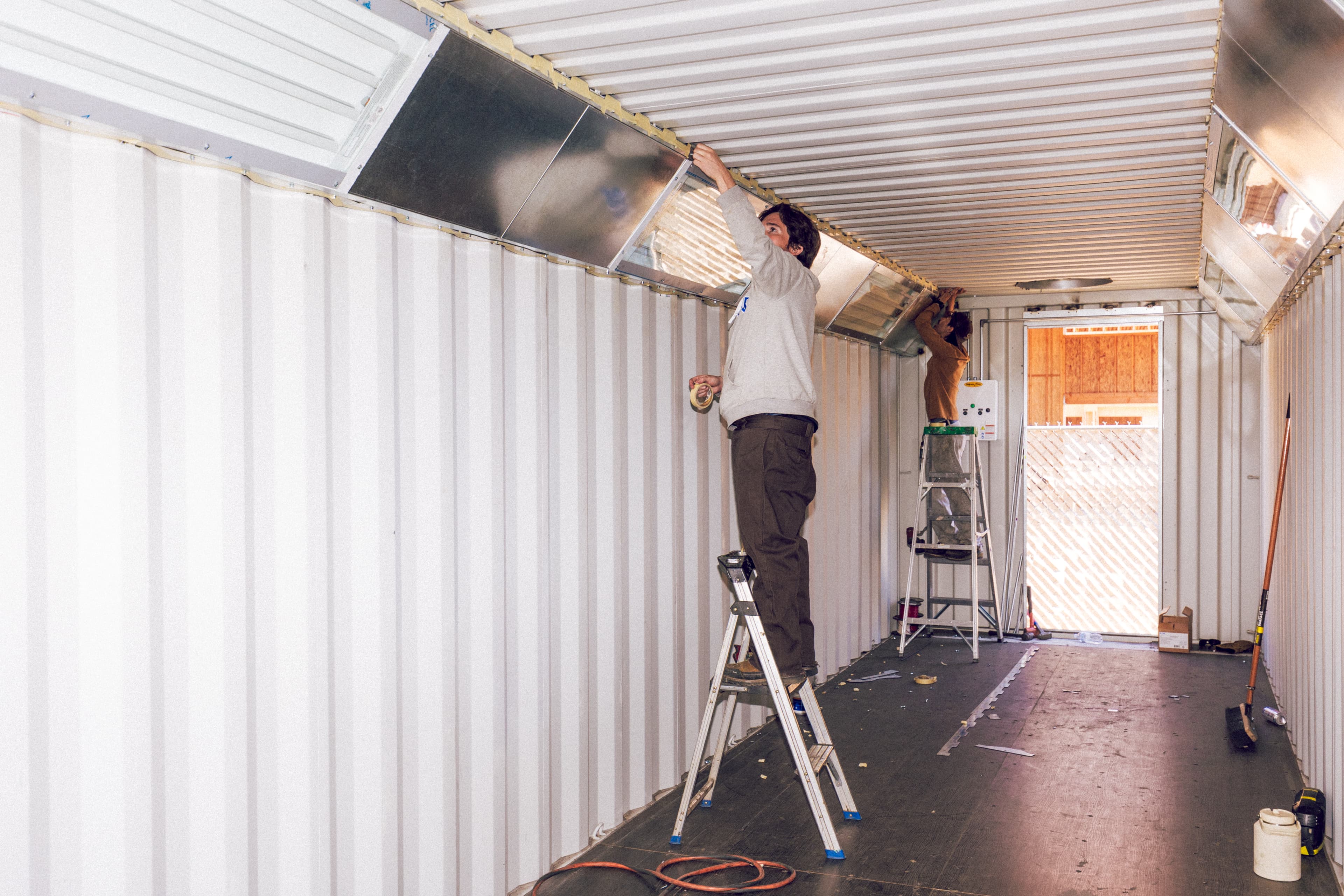
Heating equipment we have built
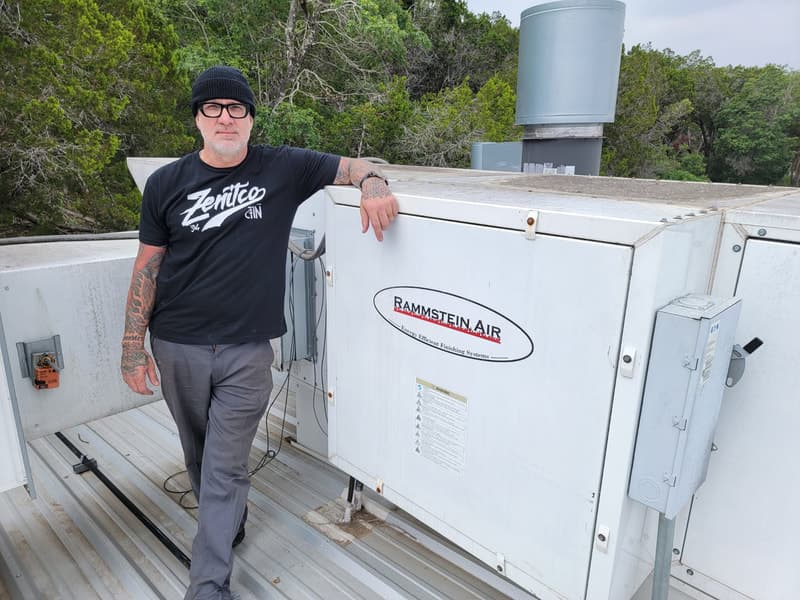
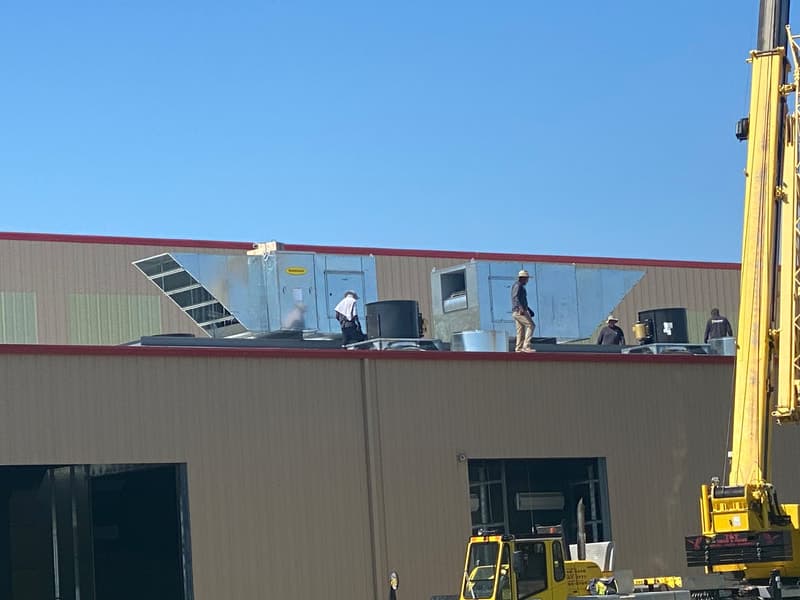
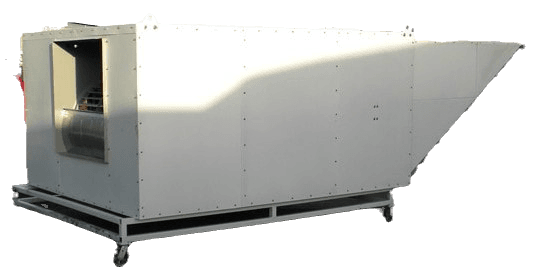
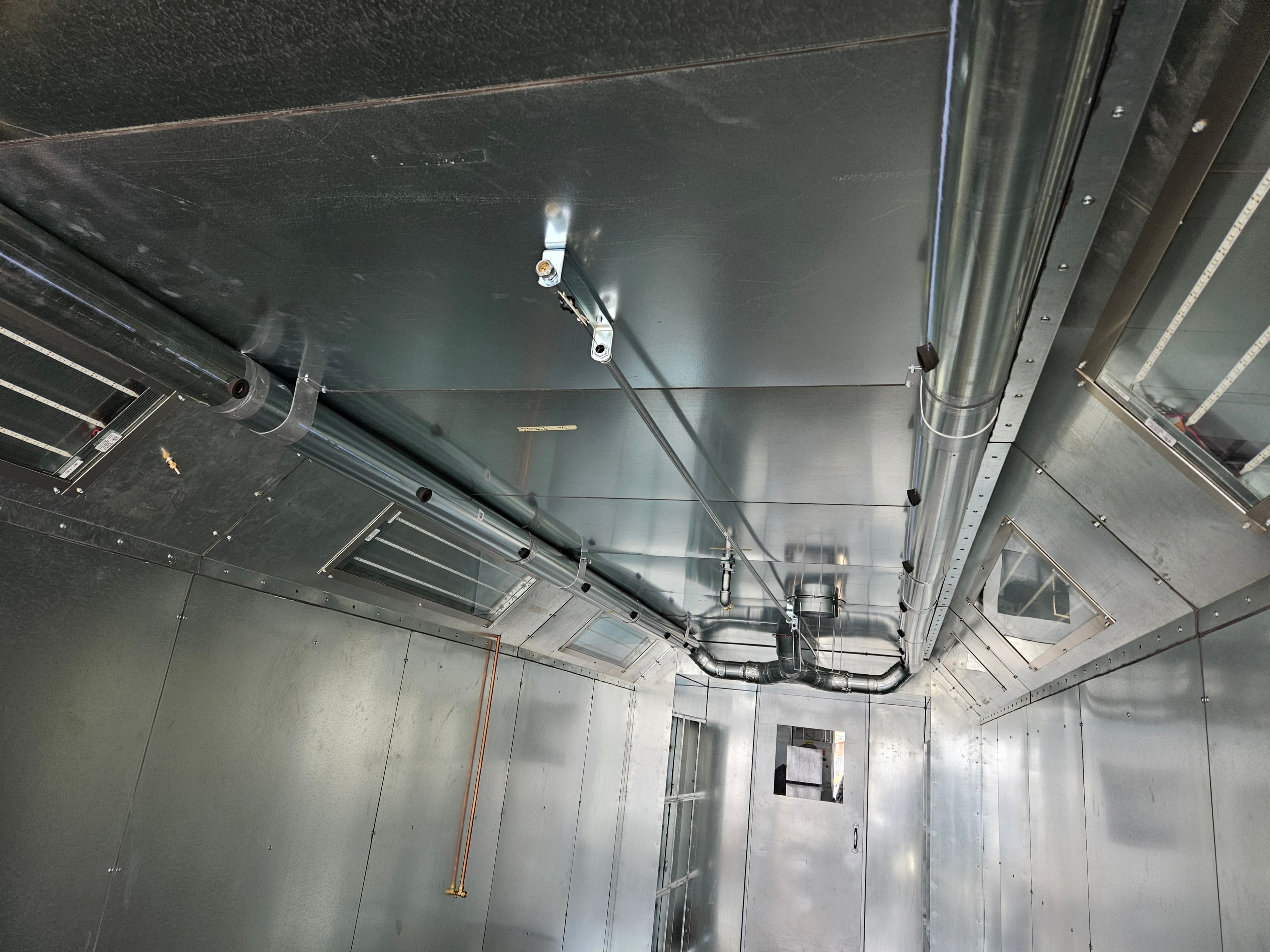
Units on pads and roofs, ductwork, panels, and the booths they serve.
Equipment
What goes on a heated booth
Gas Heaters & Air Makeup Units
Direct fired gas heating and makeup air sized to booth airflow, for high temperature rise across a long heating season.
Electric Heaters
Electric heating for prep stations, smaller booths, and sites where gas is unavailable or impractical to run.
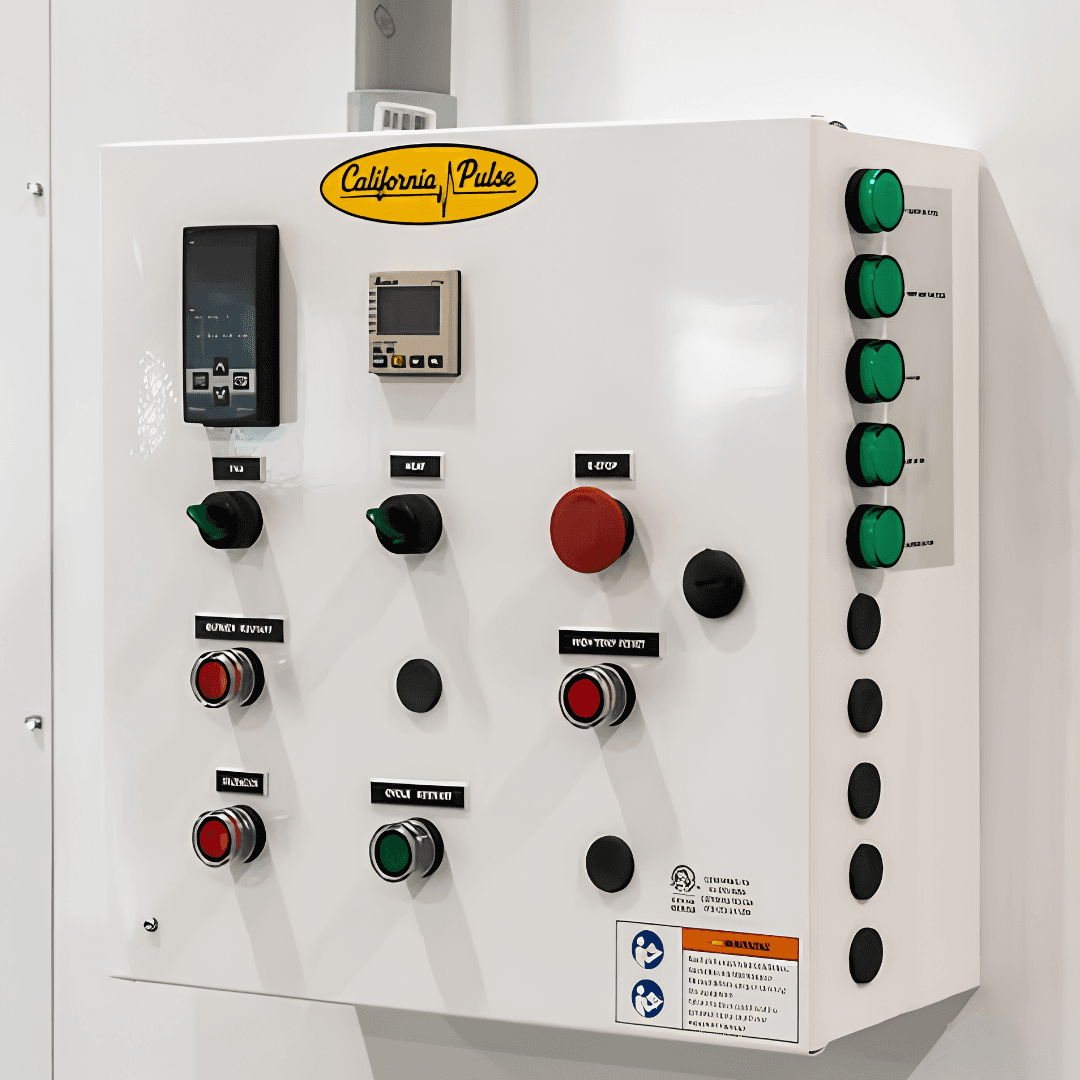
Control Panels
Mode sequencing, temperature control, VFDs, and the interlocks that keep heat and airflow tied together.
Convection Drying Systems
Where the process needs more than tempered air and cure has to be held to a schedule.
Compliance
Listed as a system, not as parts
Full-system ETL listing is available where applicable, so the booth, the heater, and the controls can be reviewed as one listed system rather than as a pile of component paperwork a plan reviewer has to assemble. It shortens review; it does not replace it, because your authority having jurisdiction still assesses how the equipment is installed.
Where a project touches NFPA 33 or NFPA 86, we supply the drawings, airflow calculations, and listing documentation the AHJ asks for, and our engineers answer reviewer questions about the equipment directly.

The Manufacturer
Engineered here, built here
We design, engineer, and build finishing equipment at our plant in Apple Valley, California. Heaters are sized against your booth's actual airflow and your local design conditions, and we say so when the airflow itself should change first. Booth dimensions, duct routing, mounting, fuel type, altitude configuration, and mode sequencing are all set to the installation.
The same engineering group supports the equipment after commissioning, which is the part that matters when a burner needs attention in the middle of February.
Answers
Cold climate heating questions
Still have a question? Send it with your booth details and our team will answer it in writing.
Working through the specification in more depth? The spray booth heating systems guide covers how booth heating works, one topic at a time.
How do I know what size spray booth heater I need for a cold climate?
What temperature rise should a cold climate booth be designed for?
Is gas or electric heat better for a spray booth in a cold climate?
What is a direct fired air makeup unit?
Can heat be added to an existing spray booth?
Does recirculation actually save fuel?
Do you supply equipment to the Upper Midwest, Northern Plains, Mountain States, and Northeast?
Are your heated booths and air makeup units ETL listed?
Get Started
Run the heat load
Send your booth dimensions, exhaust CFM, coatings, location, and the gas or electrical capacity at the building. We will come back with the heating specification and where you can spend less.
Prefer to talk it through? Call 760-957-8819 or write to Sales@californiapulse.com.
Equipment
Related equipment
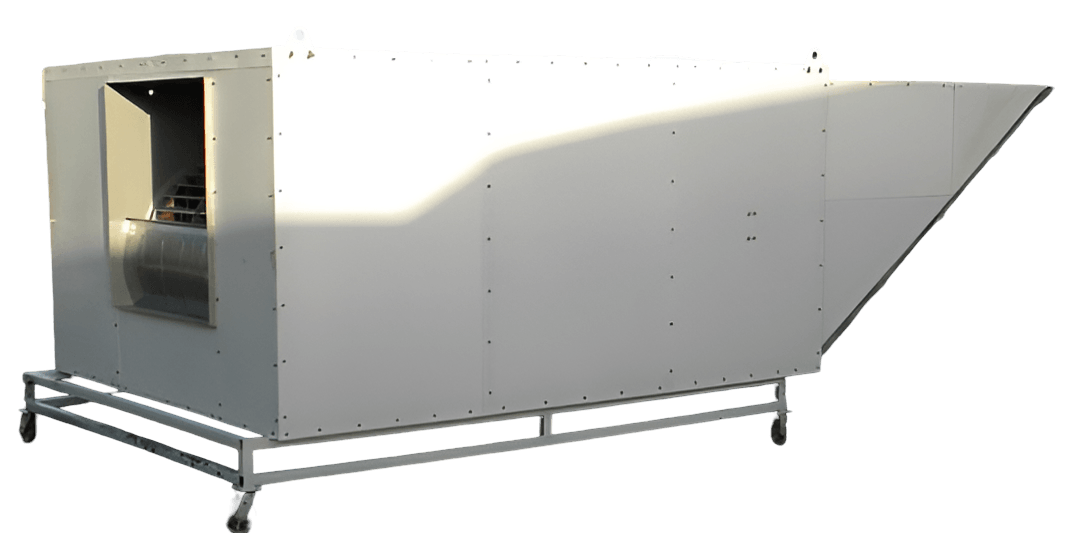 Gas heaters and air makeup unitsDirect-fired and indirect gas heat with tempered make-up air for spray booths.
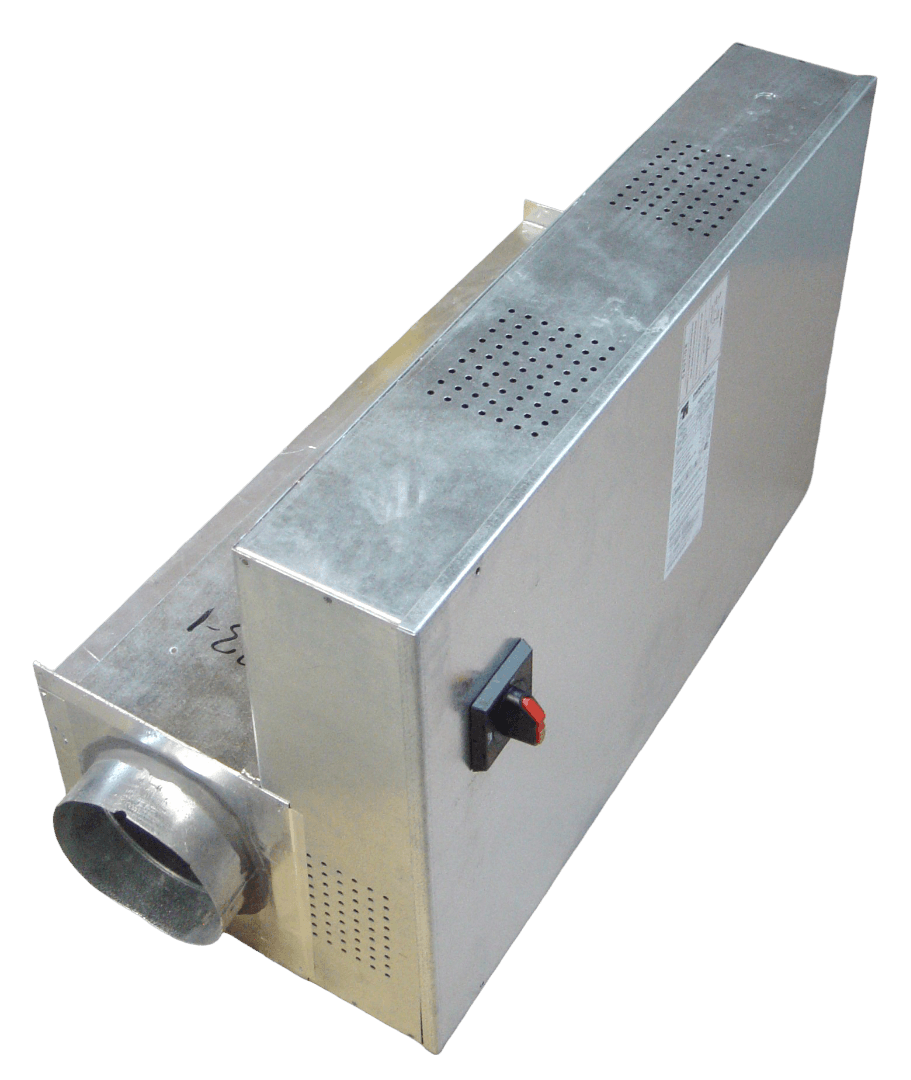 Electric heatersClean electric heat for shops without gas service or with strict emissions limits.
 Temperature and humidity controlHolding booth conditions steady so finish quality does not move with the weather.