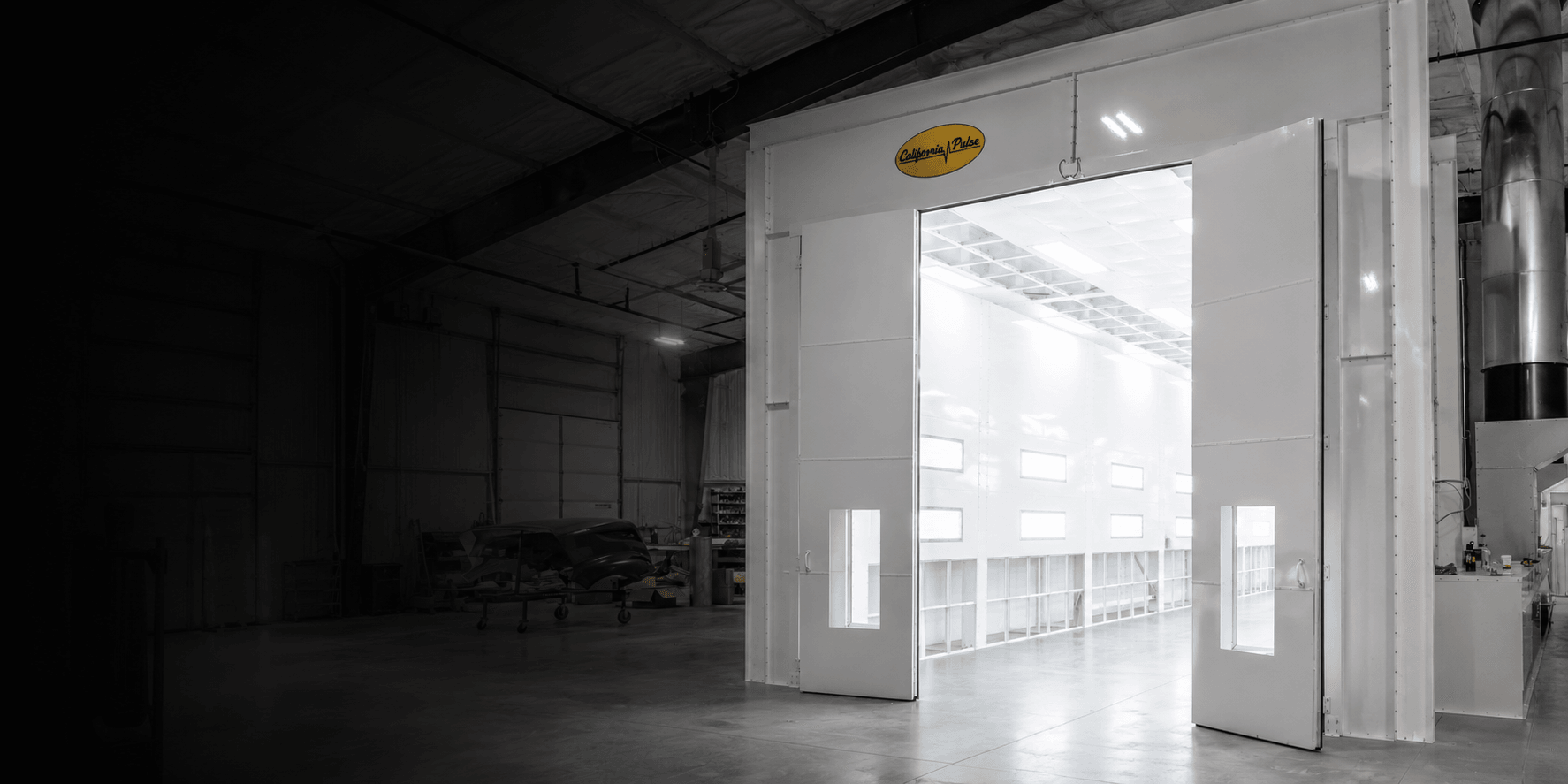
Built in Apple Valley, California
Looking for a Paint Booth?
Every industrial paint booth we build comes down to four answers: what you are painting, how large it is, how often it moves through, and what your local authority requires. Get those four right and the rest of the specification follows.
- Every booth engineered to your part and your building
- ETL Listed by Intertek, built to NFPA 33 and NFPA 86
- Drawings and airflow calculations for your permit
- Manufactured in-house, not resold
Where to Start
Start with the part, not the booth
Booth size is set by the largest part you will finish, plus the room a painter needs to work around it, plus the space the air needs to move past it. Sizing to the part alone is the most common mistake we see, and it is expensive to correct later, because the enclosure, the airflow, and the heat are all sized together.
Write these six things down before you ask anyone for a quote. They are also the fastest way to get a number that means something.
- 01The largest part
- Including its cart, fixture, or hanger. Not the part on its own.
- 02Working clearance
- Room on every side the painter actually has to reach.
- 03How it gets in
- Rolled in, driven in, lifted by crane, or carried on a conveyor.
- 04Parts per shift
- Which decides whether you need a full cure or only a dry-off.
- 05Indoor or outdoor
- Inside an existing building, or outside on a pad.
- 06What you spray
- Solvent, waterborne, and powder each change ventilation and filtration.
The Booths We Build
Match the booth type to the work
Booth types are not tiers of quality. They are answers to different handling and space problems. Every one of these is built to order, so treat them as starting points rather than fixed models.
Cars, light trucks, panels, body shop workIndoor Automotive Spray Booths
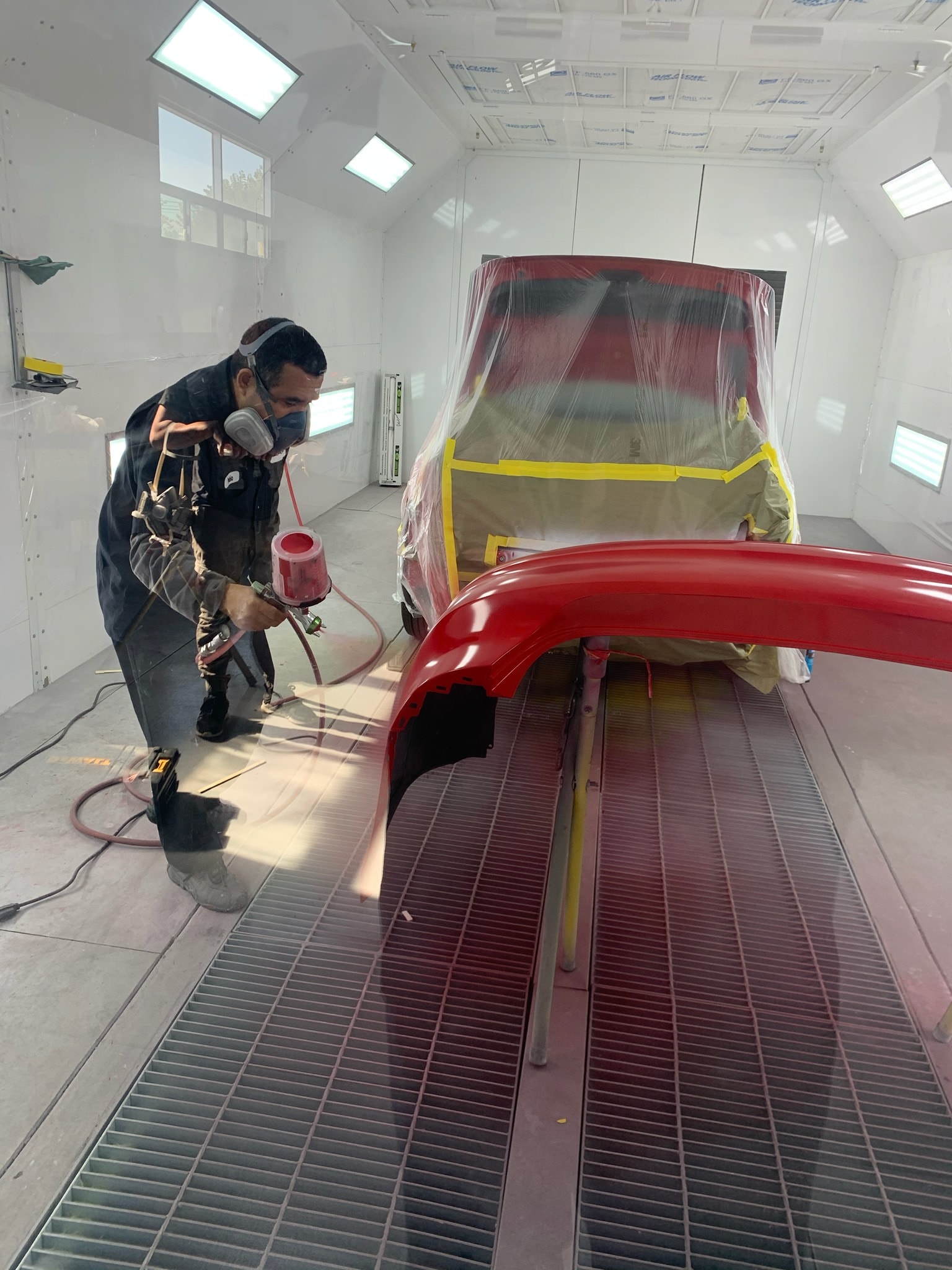
Enclosed downdraft and semi-downdraft booths for vehicle and body shop work inside an existing building. Filtered air enters overhead and leaves through the floor, which is what keeps dust off a wet panel.
View details →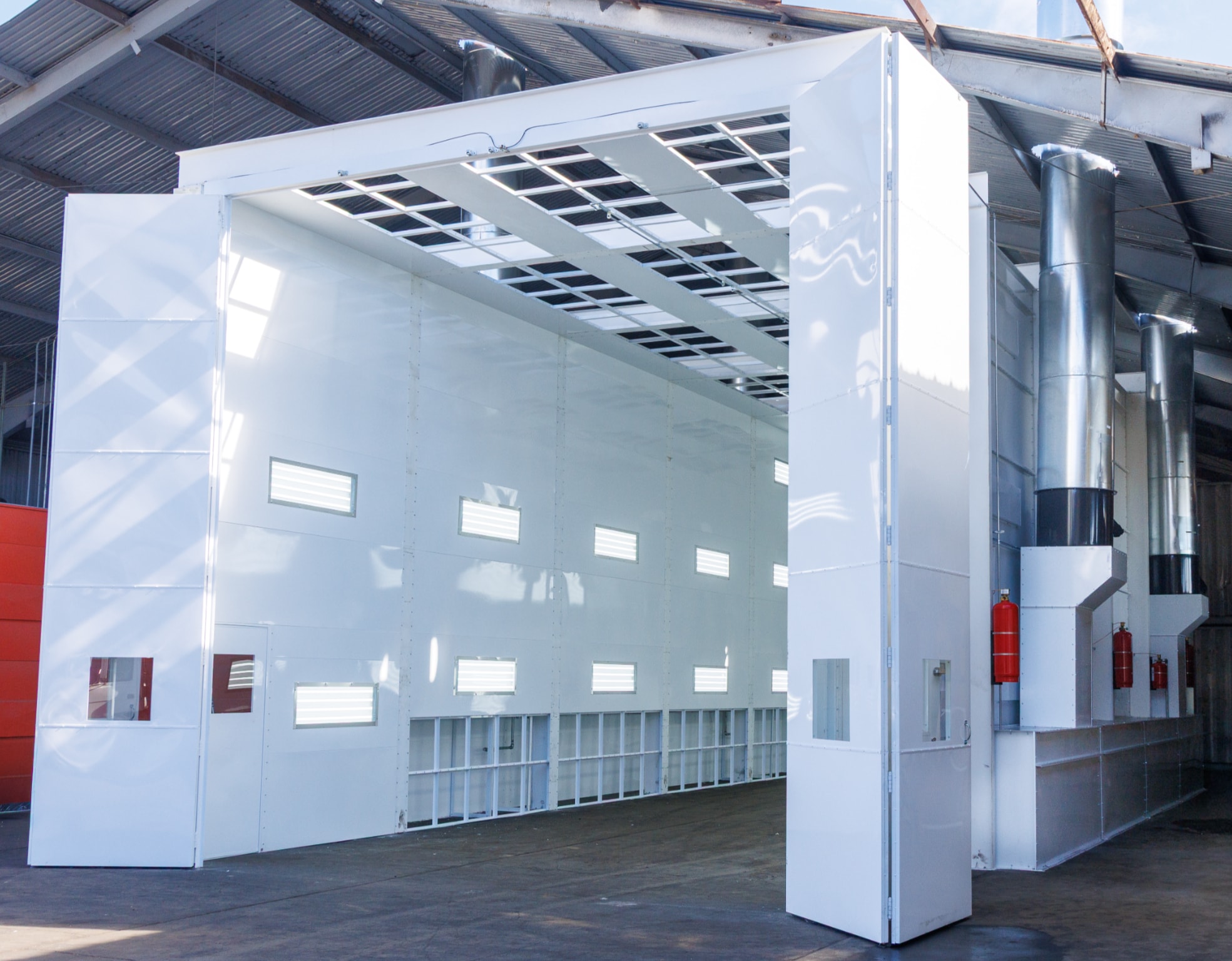 Trucks, trailers, buses, heavy equipment
Truck & Large Equipment Booths
Drive-in booths sized for trucks, trailers, buses, and heavy equipment, with the door openings, structure, and airflow to match a part you cannot pick up.
View details →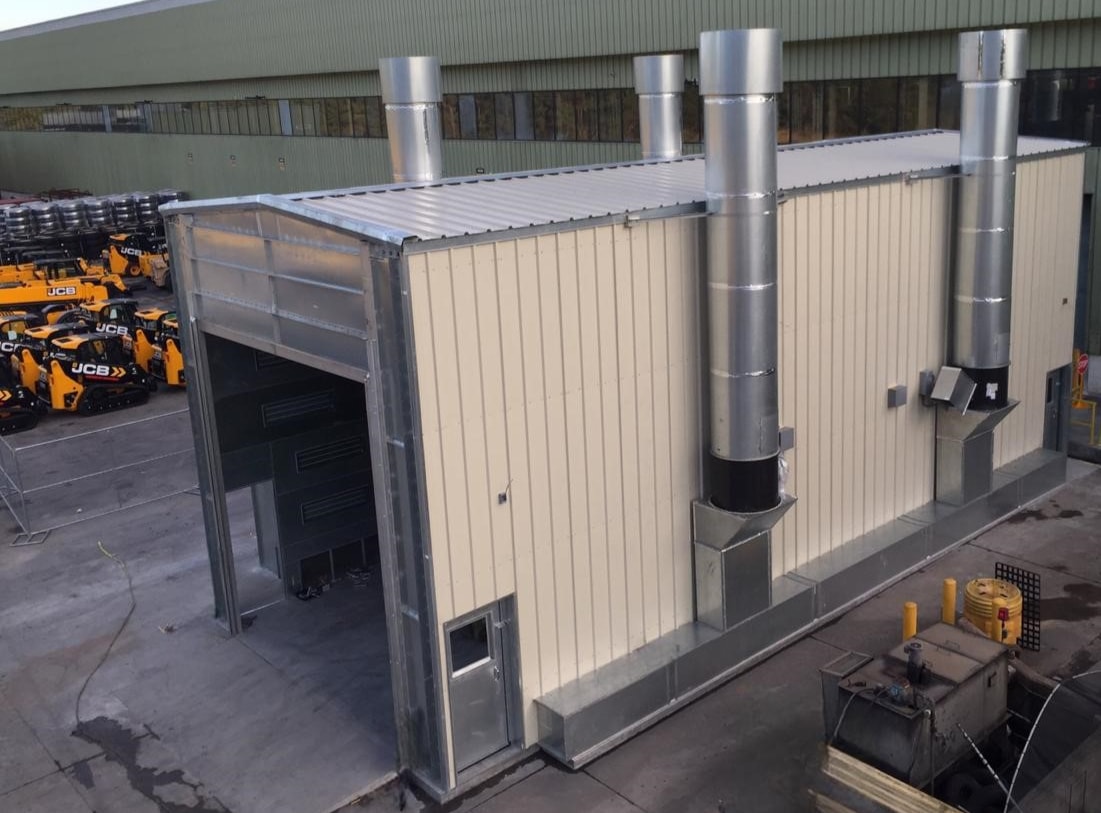 Sites with no floor space to spare
Outdoor Spray Booths
Weather-rated booths set on a pad outside the building. The usual reason to choose one is that you have no interior space to give up, or the part will not fit through your door.
View details → Smaller parts, lower volumes, tight budgets
Open Face Spray Booths
A ventilated work face rather than a full enclosure, for smaller parts and lower volumes where a complete booth is more equipment than the job needs.
View details → Remote sites, fast deployment, leased premises
Container Spray Booths
A complete finishing system built into a shipping container, wired and plumbed before it leaves us. It arrives as one piece and needs a pad, power, and a connection rather than a build.
View details →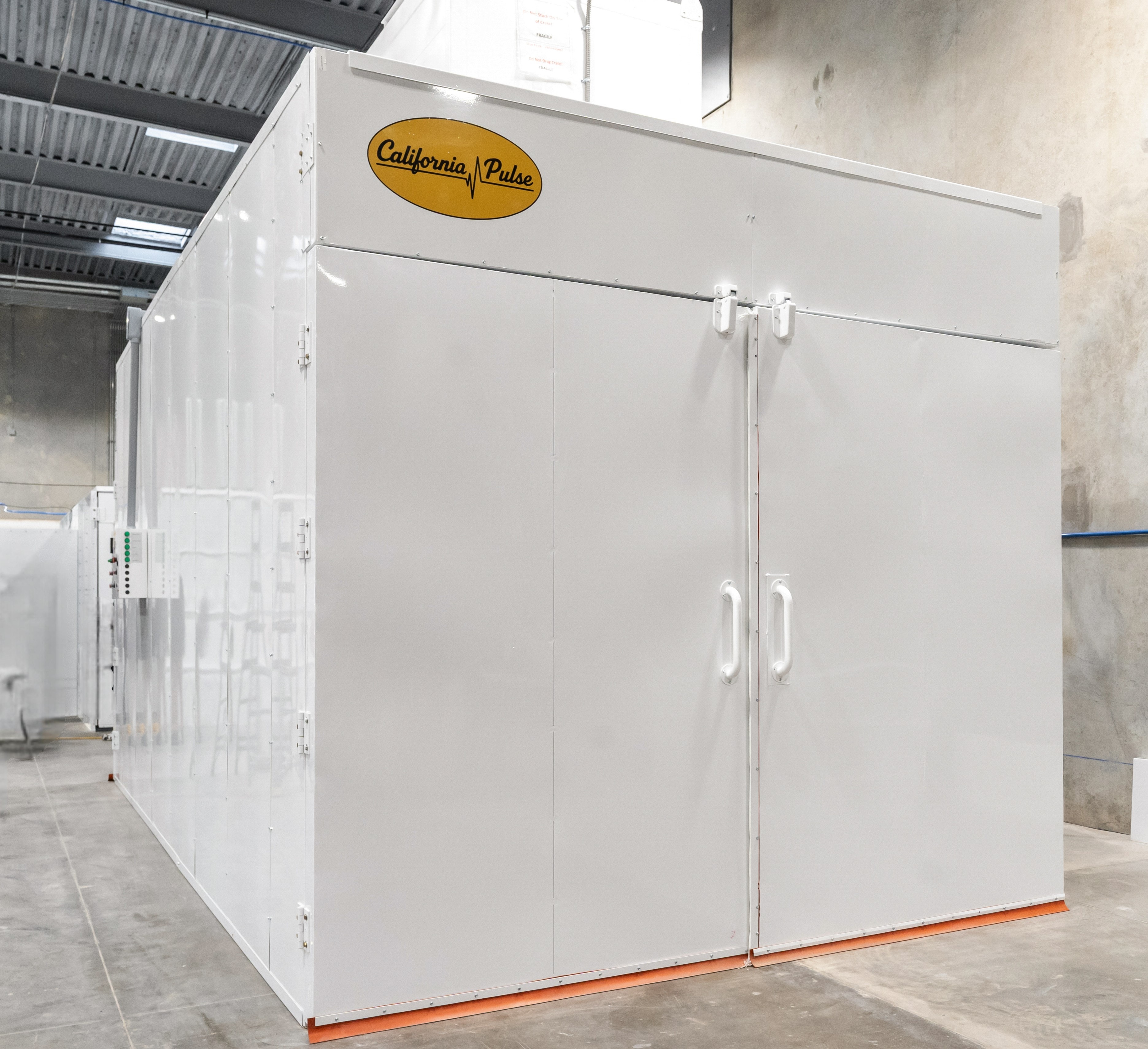 Powder finishing, batch or conveyorized
Powder Coating Booths & Ovens
Application booths, powder collection, and cure ovens. Powder is a different set of requirements from liquid finishing, and the oven side brings NFPA 86 into the picture.
View details →What Comes With It
A booth is a system, not an enclosure
This is the scope a quote should cover. When two prices are far apart, the gap is almost always in this list rather than in the sheet metal.
Heat and air makeup
Direct or indirect fired gas, or electric, with the make-up air designed in so the booth is not stealing air from the rest of your shop.
Lighting
Fixtures rated and positioned for a spray area, placed so the light reaches the lower half of a large part instead of only the top.
Control panel
The interlocks, cycle control, and safety chain that turn an enclosure into a system. Built in-house, and where quotes quietly differ most.
Structure and finish
Galvanized steel panel construction, doors and openings sized to how the part actually enters, and the sealing that lets the booth hold pressure.
Drawings and documentation
Engineered drawings, airflow and ventilation calculations, and electrical documentation, prepared for submittal to your authority.
Installation and support
Install with your own contractor using our drawings and remote support, or ask us to scope on-site installation with the quote.
The Fundamentals
What a proper paint booth gets right
Six things decide whether a booth produces a clean finish and keeps producing it. Two booths can look identical on a quote sheet and differ on every one of them.
Airflow, calculated rather than assumed
Airflow carries overspray away from the part and out of the painter's breathing zone, and it has to be adequate and maintained the whole time spraying happens. Ask any supplier to show the calculation, and ask what the airflow will be when the filters are loaded, not only when they are new.
Heat, and whether you need cure or dry-off
There is a real difference between tempering incoming air and running a bake cycle. A system sized only to temper air will not deliver a cure, and a system designed to bake is a larger specification with additional controls. Where a genuine cure is involved, NFPA 86 comes into play. Settle which one you need before comparing heater prices.
Filtration sized for the coating
Both intake and exhaust filters load up over time, and both change the airflow as they do. What matters is filter area, the right grade for your coating, how easy the change is, and how you will know when it is due. Filters are the cheapest thing to neglect and the most reliable cause of a finish problem blamed on something else.
Light you can inspect a finish under
A painter cannot correct what they cannot see. Too few fixtures, or fixtures in the wrong places, produce rework that never shows up in the purchase price. Look at count and placement, colour temperature, and whether light actually reaches the lower half of a large part, which is where weak booths go dark.
Pressure balance and make-up air
A booth exhausting air out of your building has to get that air back from somewhere. Without make-up air designed in, it pulls air under doors and through gaps, dragging dust with it and pulling heat out of the shop in winter. A balanced booth holds slight positive pressure so leakage moves outward.
Controls and the safety chain
Interlocks that prevent spraying without ventilation, a defined sequence for spray and dry cycles, and safety controls on gas fired equipment are part of the equipment, not extras. A panel is harder to compare across quotes than sheet metal, which is exactly why it is worth comparing.
Photo Gallery
Booths we have built
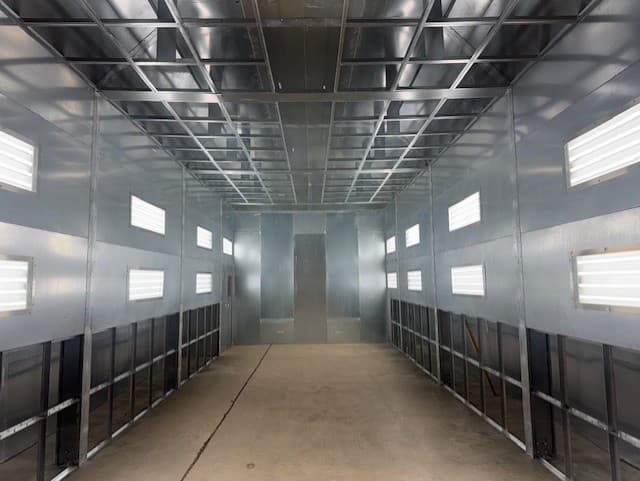
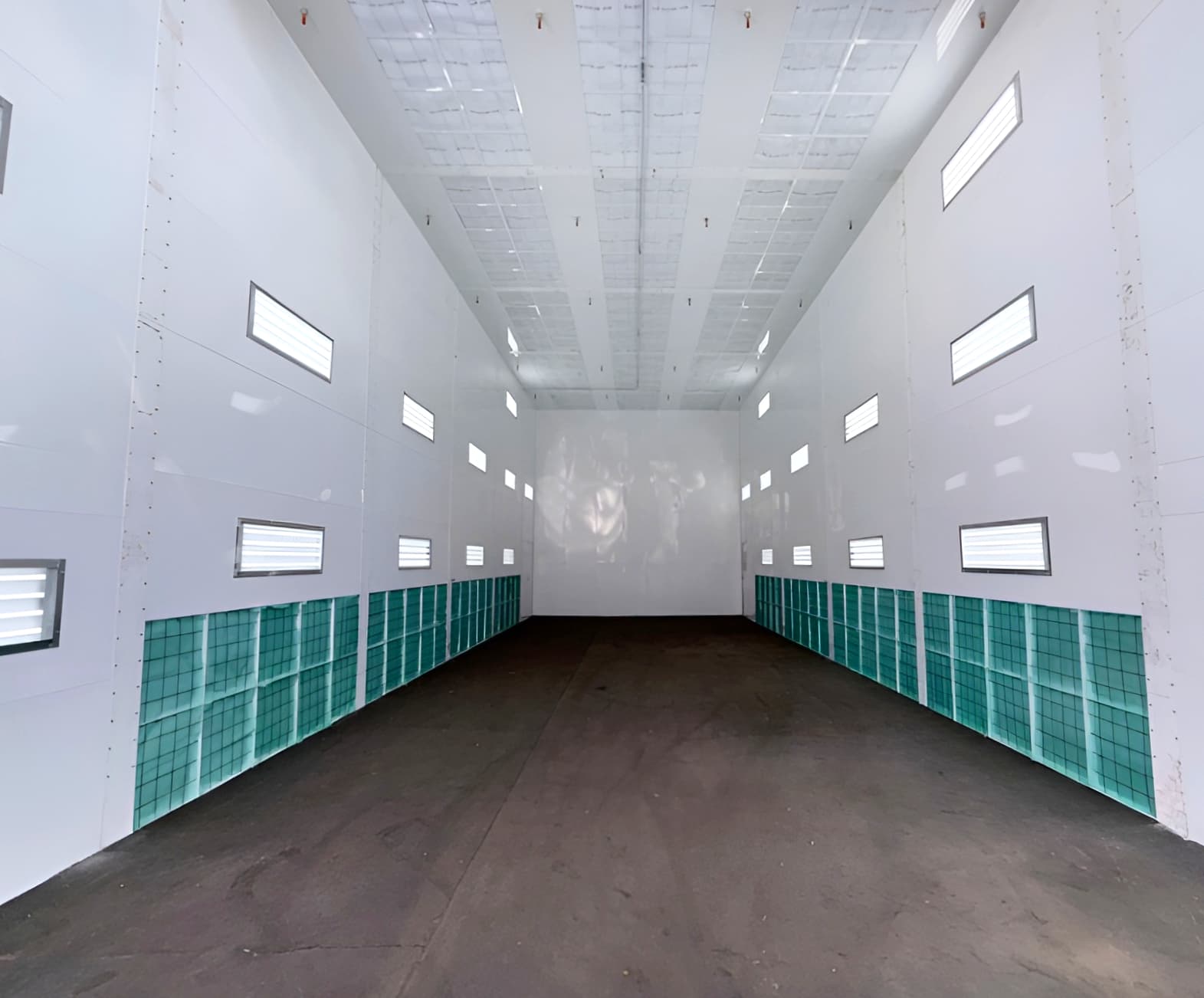
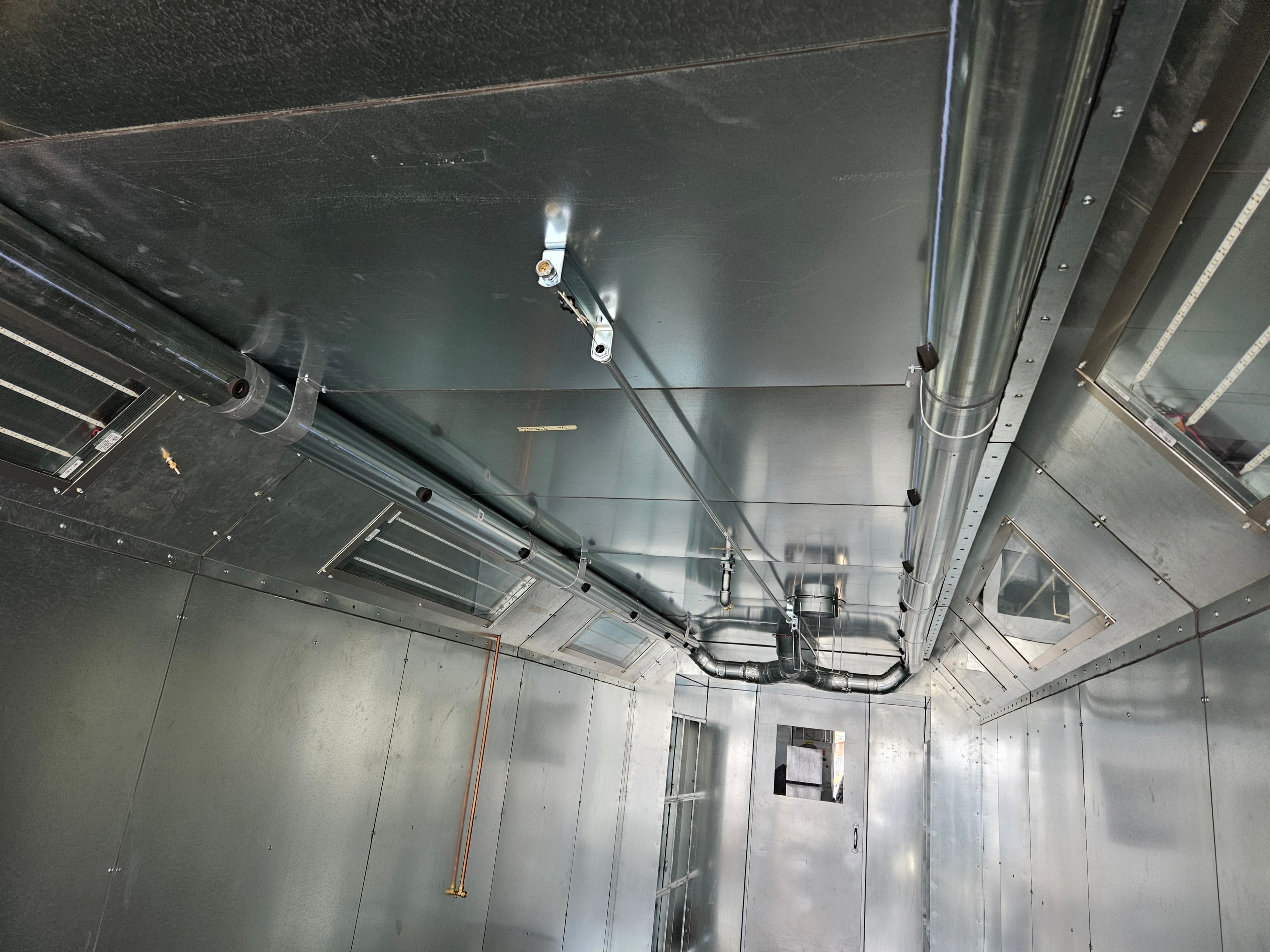
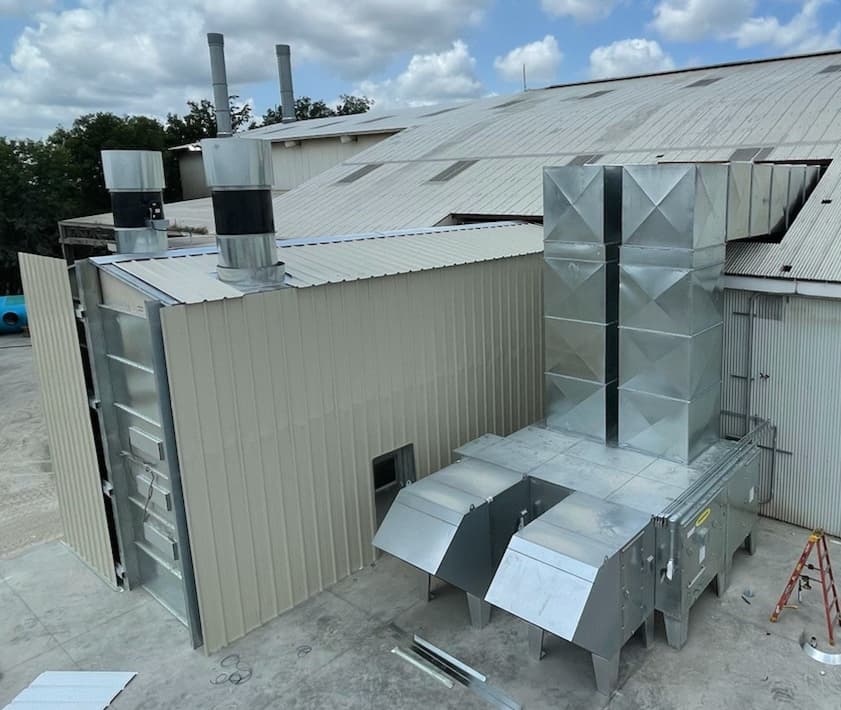
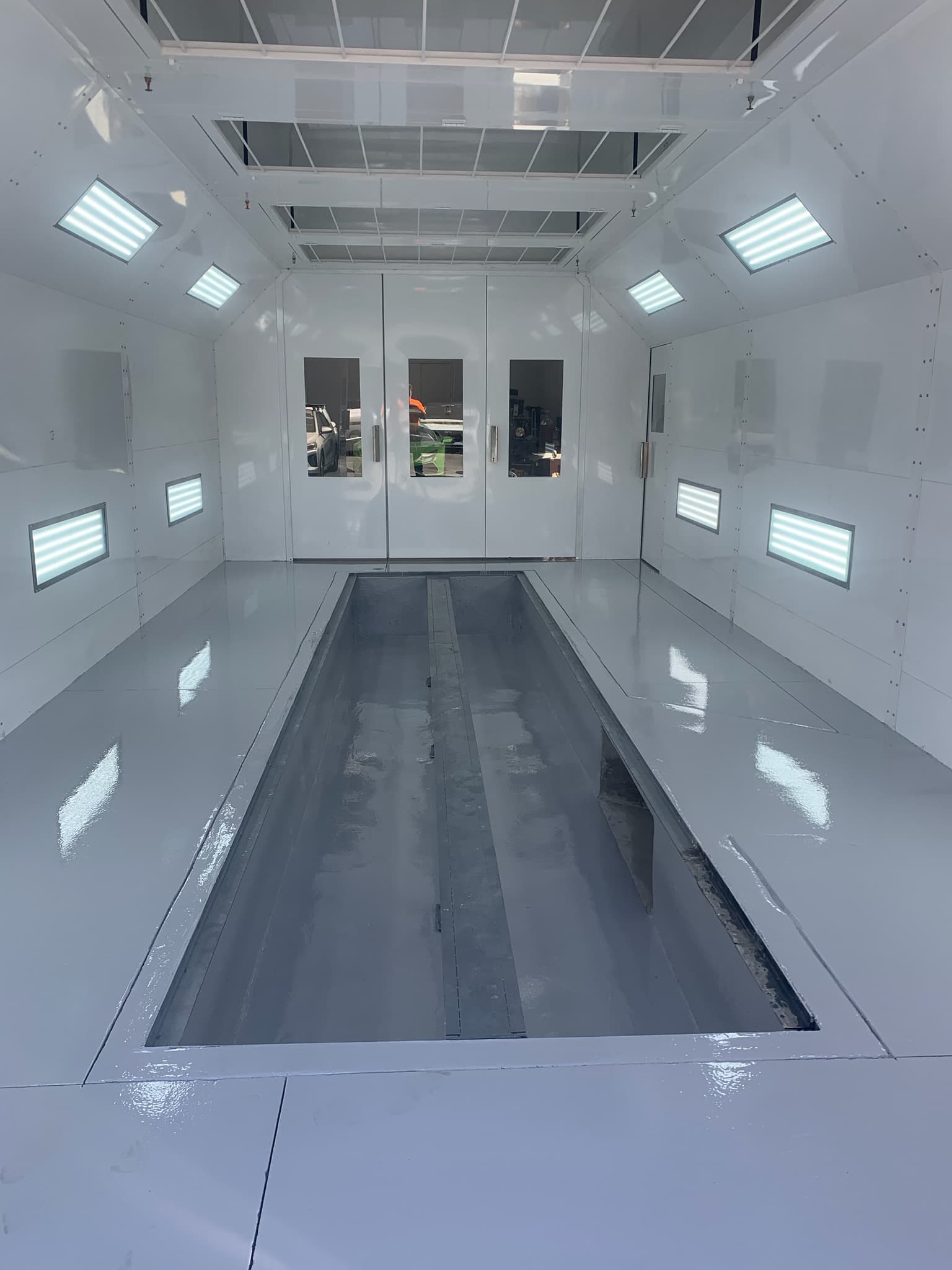
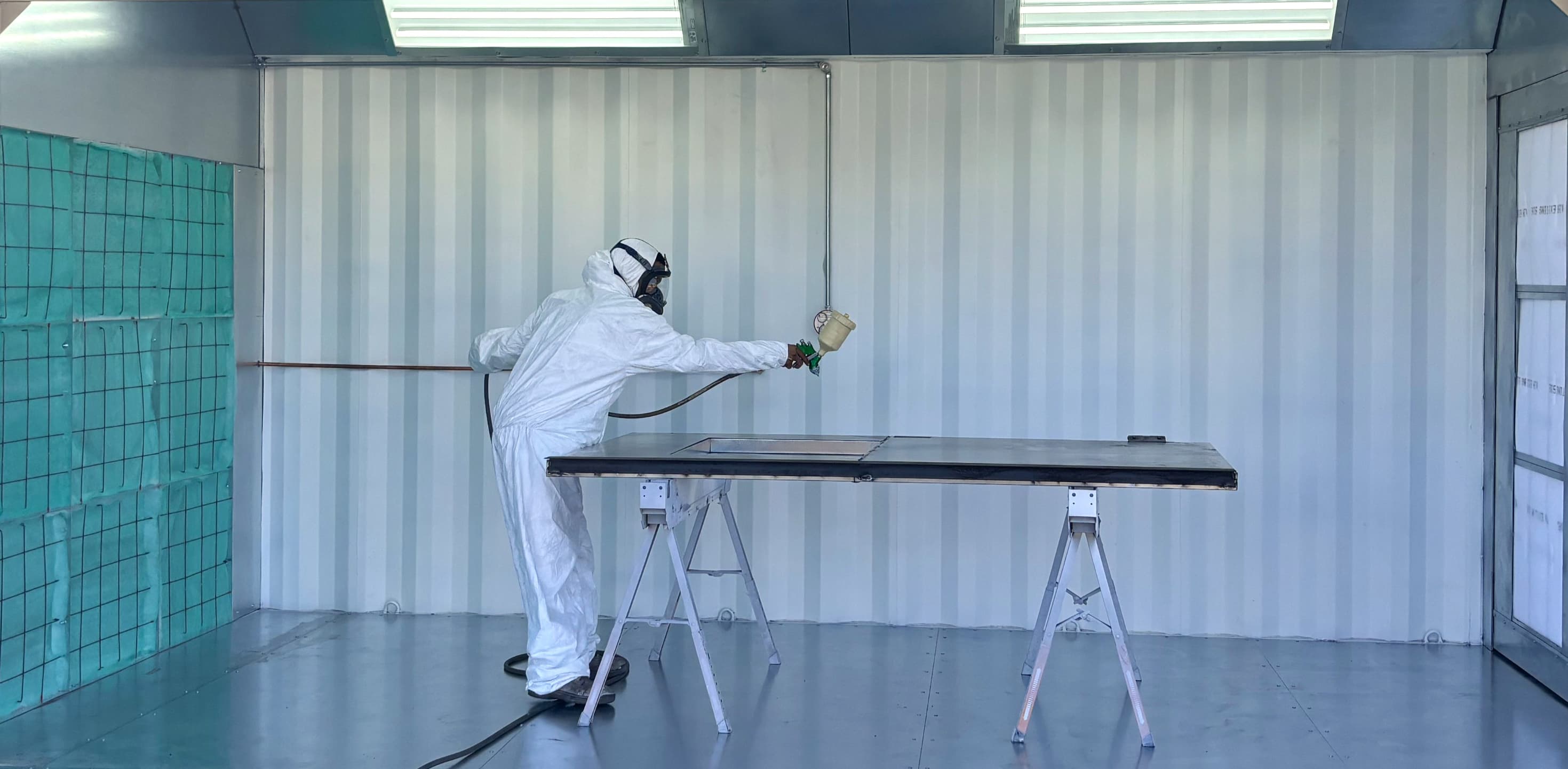
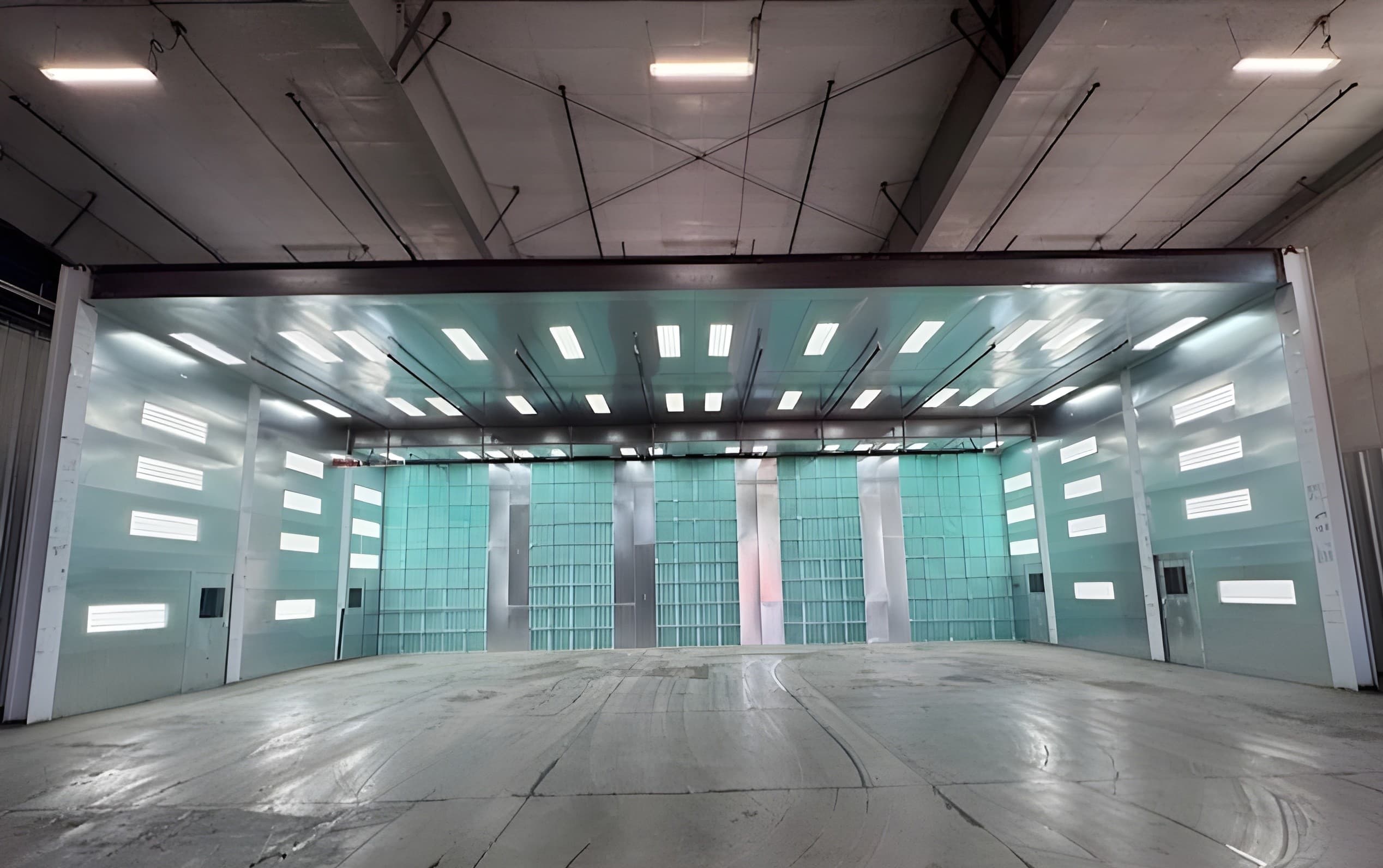
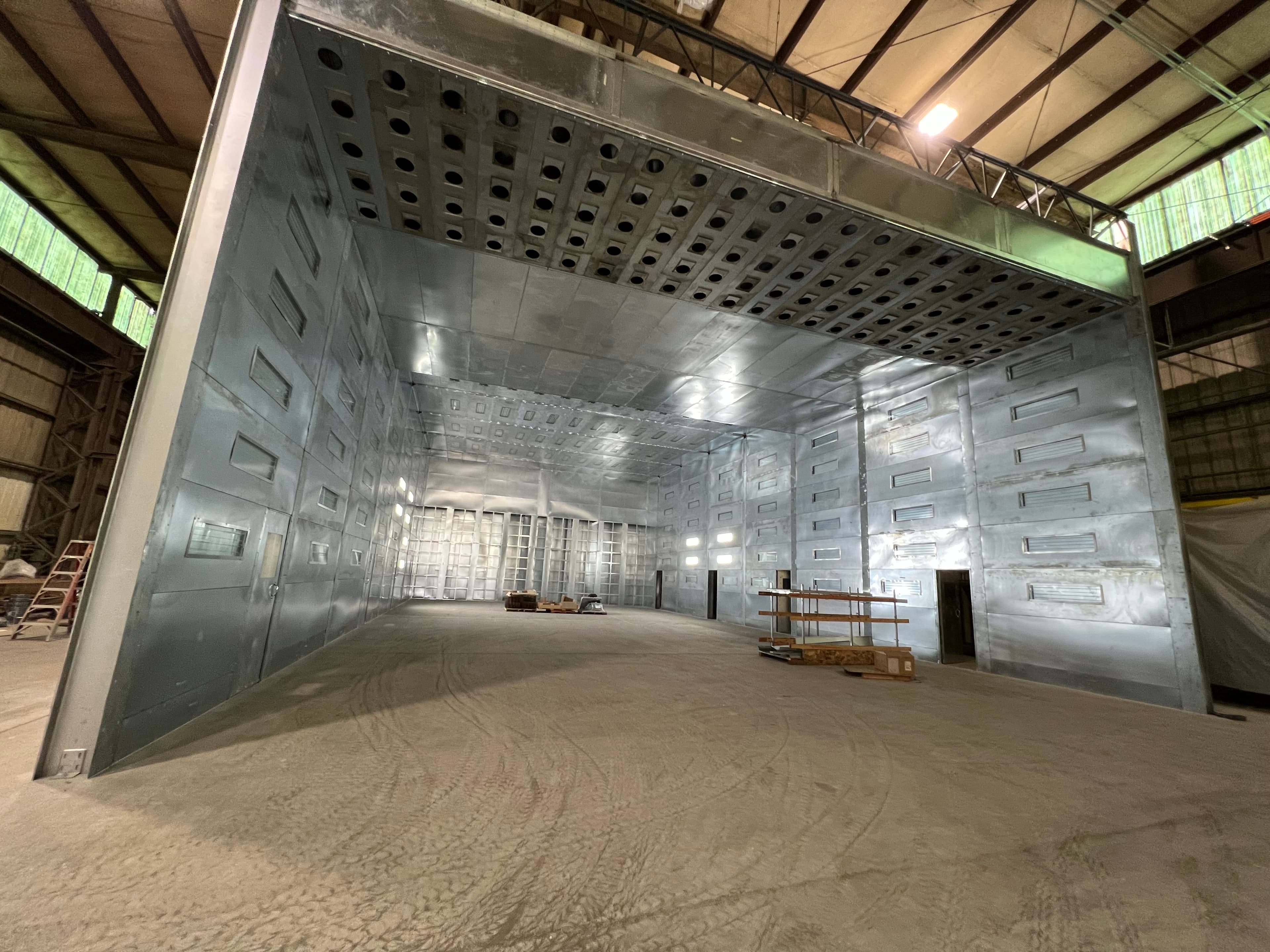
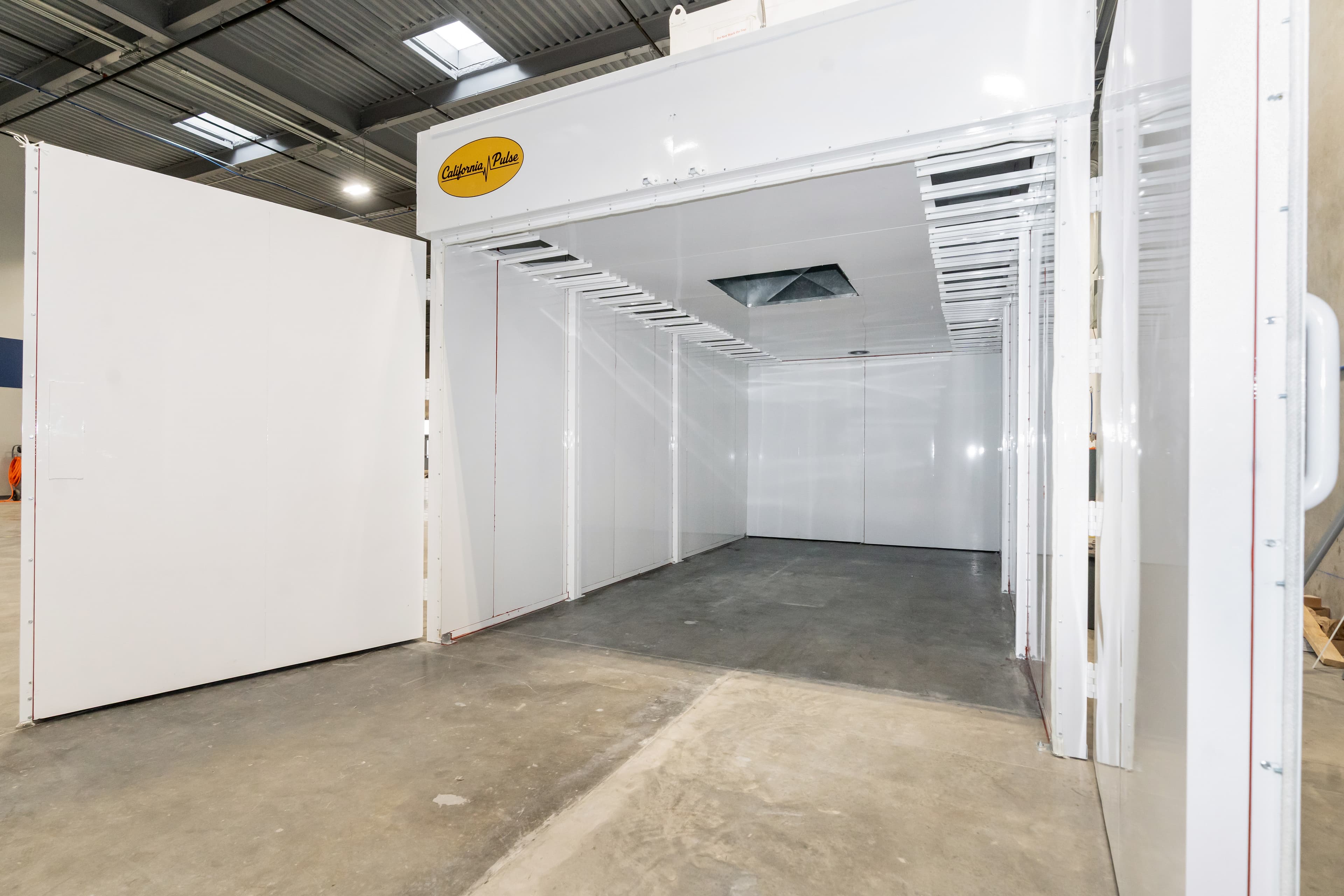
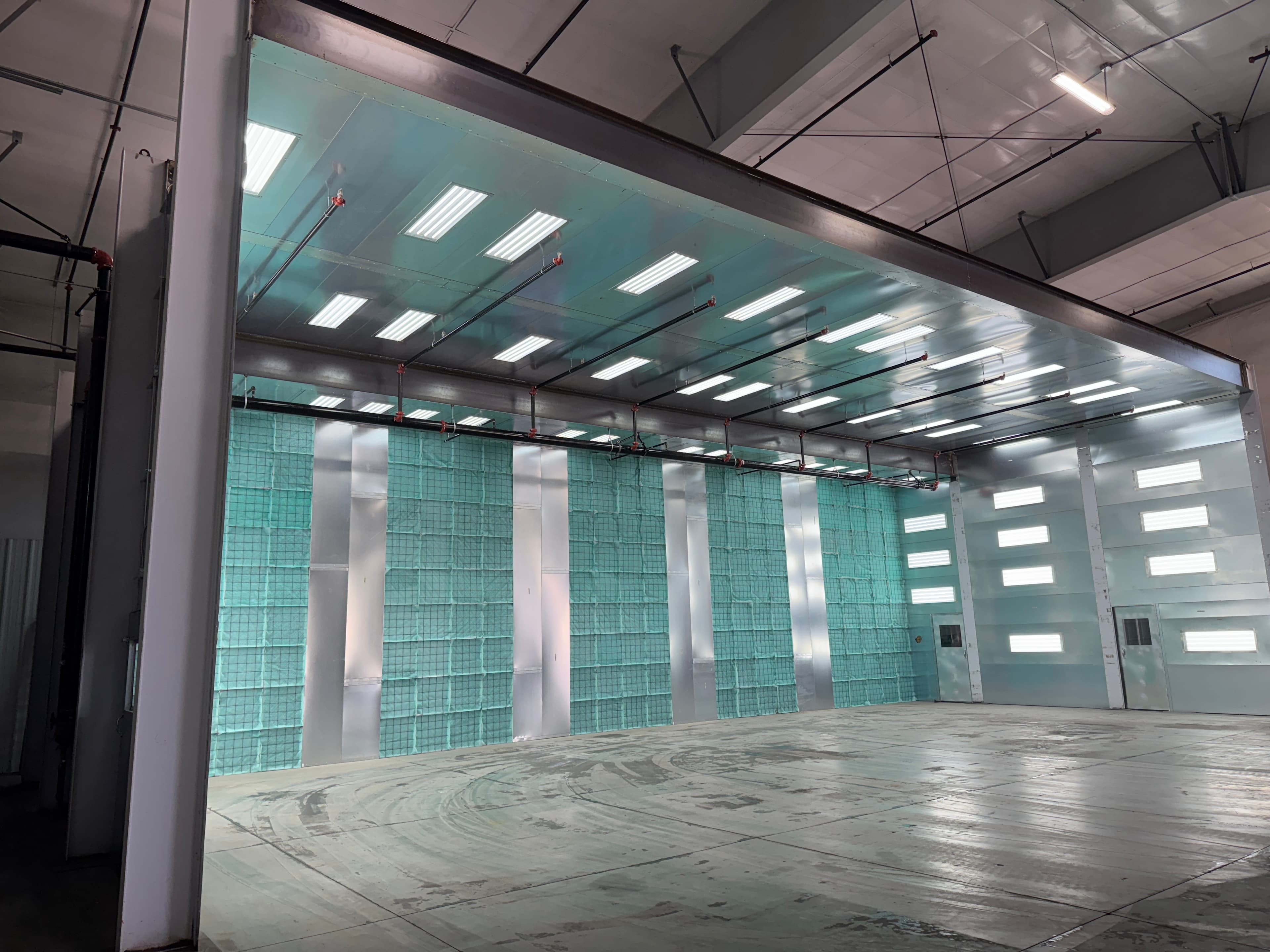
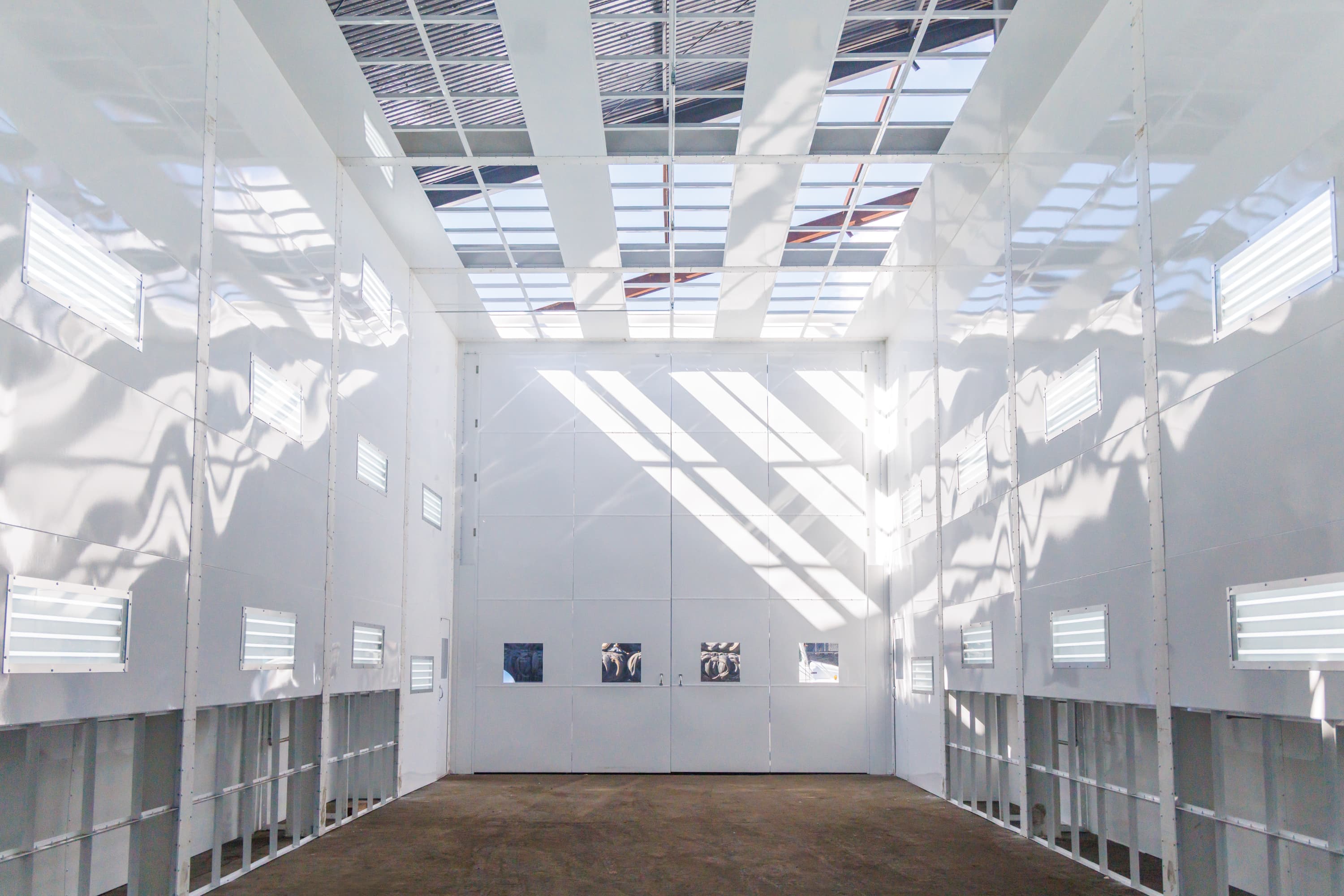
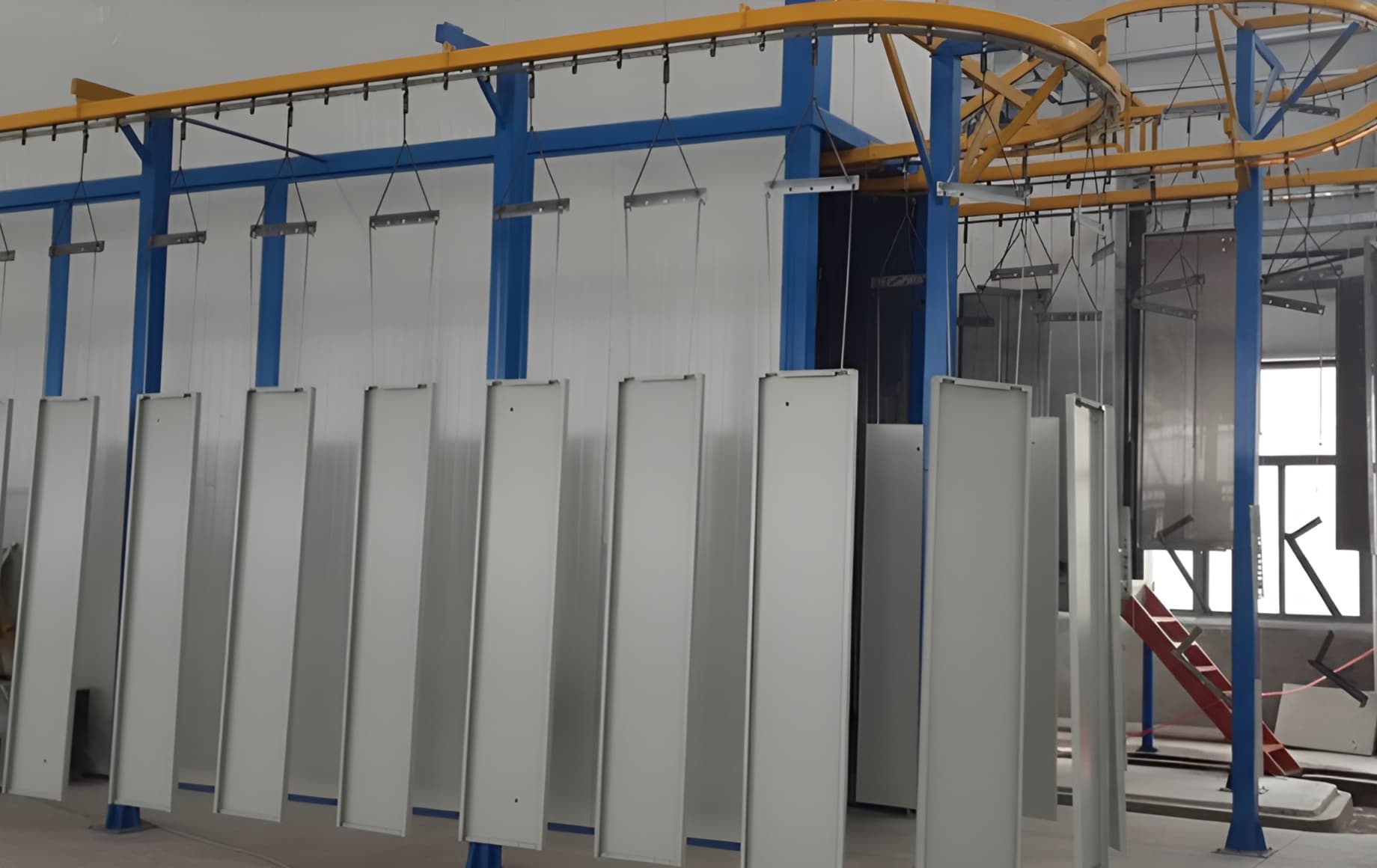
Installations, interiors, and equipment from projects across aerospace, trucking, manufacturing, and general industry.
Beyond the Basics
What makes a paint booth a smart one
A proper booth does the job. A smart booth tells you how it is doing it, and costs less to run while doing it. Most of this is difficult to retrofit, so it is worth specifying at purchase.
Airflow monitoring
Filter loading shows up as a reading instead of as a finish defect.
Variable frequency drives
One booth runs correctly at more than one condition, and uses less energy at part load.
Cycle control
Spray, flash, and bake repeat the same way across shifts and operators.
Recorded temperature data
Matters the moment a customer asks you to prove a cure.
Heat recovery
Where process and code allow it. Exhausting heated air is the largest running cost in most booths.
Panel diagnostics
A fault becomes a message rather than an afternoon with a meter.
Where two quotes for the same booth part ways
- Airflow
- Encloses the work
A fan picked from a stock size list.
- Engineered for the job
A fan sized from the booth cross section, the part, and the coating.
- Heat
- Encloses the work
Quoted separately, as an add-on line.
- Engineered for the job
Heater and make-up air sized together with the booth.
- Filtration
- Encloses the work
A filter part number on the bill of materials.
- Engineered for the job
Filter area matched to the coating, with loading you can read.
- Lighting
- Encloses the work
A fixture count.
- Engineered for the job
Fixtures placed so the whole part can be inspected, not only the top.
- Compliance
- Encloses the work
Left to the buyer to sort out with the authority.
- Engineered for the job
ETL Listed equipment, with drawings and calculations ready for submittal.
- Controls
- Encloses the work
A switch that starts and stops the fan.
- Engineered for the job
Interlocks, cycle control, and a panel that names its own faults.
Codes & Compliance
Compliance is built in, not added afterwards
NFPA 33 is the standard most often cited for spray application of flammable and combustible materials. NFPA 86 applies where an oven or cure process is involved. OSHA covers the workplace side, and local building, fire, mechanical, electrical, and air quality authorities apply their own rules on top.
Our systems are ETL Listed by Intertek and built to NFPA 33 and NFPA 86 standards, and we supply engineered drawings, airflow and ventilation calculations, and electrical documentation for submittal. That is designed to make plan review straightforward, though the final determination always rests with your authority having jurisdiction. Ask them what they enforce before equipment is ordered, not after it arrives.

The Manufacturer
Where California Pulse fits
We design, engineer, and build finishing equipment at our plant in Apple Valley, California, and have done since 2008. We are the manufacturer rather than a reseller, which is why booth sizes, door openings, airflow, and controls are specified for the project instead of picked from a catalogue of fixed models.
Aerospace, defense, trucking, rail, marine, woodworking, and general manufacturing customers run our equipment, and the same engineering group handles a single open face booth and a full conveyorized line.
- 2008
- Building booths since
- 2,000+
- Projects delivered
- 4.6★
- From 20 Google reviews
Answers
Paint booth questions, answered
Still have a question? Send it with your project details and our team will answer it in writing.
Working through the specification in more depth? The Learning Center covers sizing, ventilation, heating, requirements, and cost one topic at a time.
How much does a paint booth cost?
What size paint booth do I need?
How long does it take to build a paint booth?
Do I need a permit for a paint booth?
What is the difference between a paint booth and a spray booth?
Can a paint booth be installed outdoors?
What does ETL Listed mean for a paint booth?
Do you build custom sizes, or only standard models?
Get Started
Tell us about the part
Send the largest part you finish, your throughput, and your building. We will come back with a specification and pricing, including where you can spend less.
Prefer to talk it through? Call 760-957-8819 or write to Sales@californiapulse.com.
Equipment
Related equipment
- Industrial spray booth rangeThe full catalogue of booth types California Pulse builds, from open face to fully enclosed downdraft.
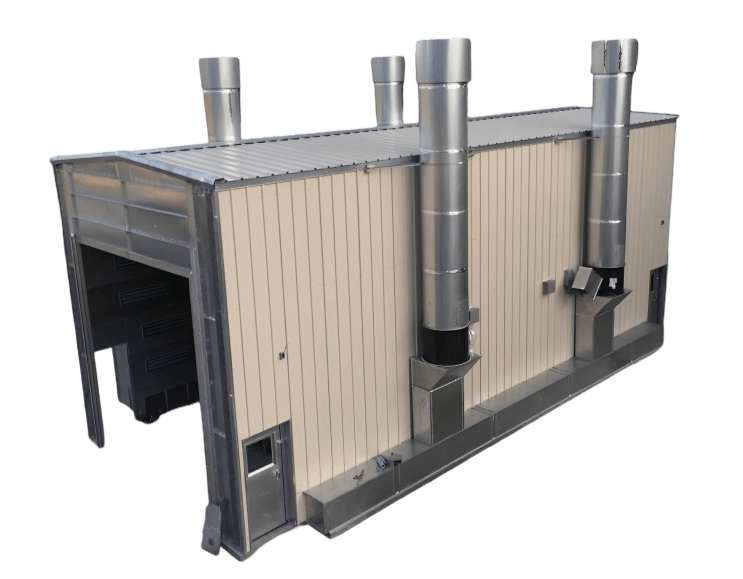 Outdoor paint boothsWeatherproof booths for shops that have run out of indoor floor space.
 Custom engineered systemsBooths and ovens designed around your part, your building, and your jurisdiction.
Ready to build a custom solution for your business?
Before you specify
Worth reading first
- How to Choose an Industrial Spray BoothThe complete buyer's guide, from the part you finish to the manufacturer you choose, in the order the decisions should be made.
- Industrial Spray Booth CostThe variables that move spray booth pricing, why a single published price is misleading, and how to build a realistic project budget.
- Industrial Spray Booth SizesSizing starts with the part, not a catalogue number. Clearances, door openings, handling, facility limits, and future capacity.