Spray Booth Airflow Designs
Airflow is the first decision in any spray booth design, because almost everything else follows from it: how clean the finish comes out, how well the painter is protected, how much air the fans have to move and heat, and whether your floor has to be excavated.
There are only a handful of basic designs, and each one trades cost, installation and finish quality differently. California Pulse builds all five. Below is how the air moves through each one, stage by stage, and the work each one suits.
Airflow Designs
Design 01
Crossdraft Airflow Design
Recommended for
Industrial manufacturing and most general finishing
- Lowest cost to buy and run
- Installs on an existing floor
- Simple filter maintenance
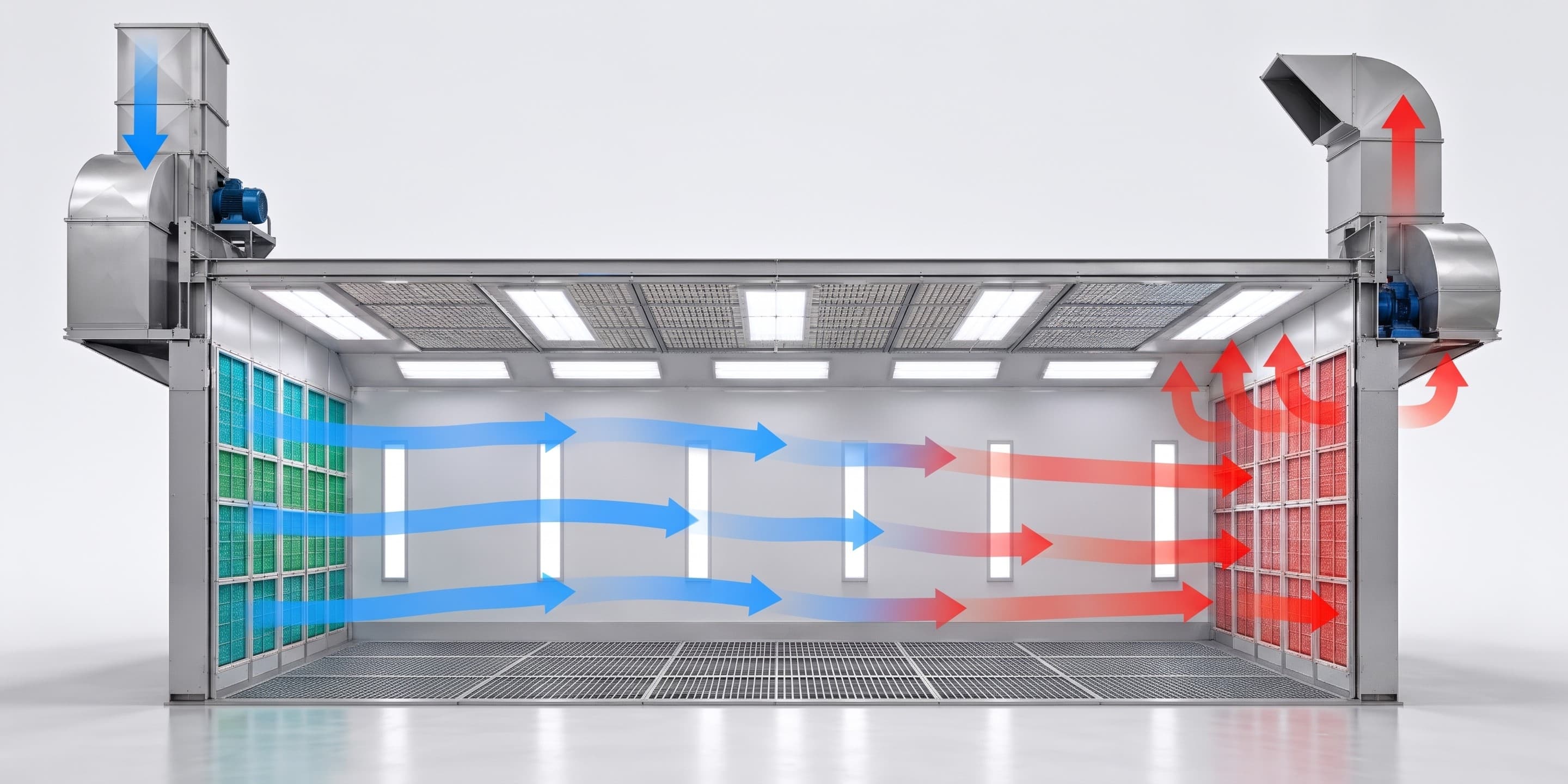
Crossdraft is the most widely used airflow design and the starting point for most industrial finishing. Air travels horizontally from one end of the booth to the other, across its cross-section, which is where the name comes from. With no ceiling plenum and no pit, it fits in almost any building and is the least expensive booth to own and operate. It is the right choice when the finish needs to protect the part more than impress the customer.
Booths offered with this airflow
Stage 1
Shop air is drawn in through filter media set into the front doors or intake wall. The filters stop dust before it reaches the work zone, and the full door area spreads the air evenly across the booth's width and height.
Stage 2
The air sweeps horizontally from front to back at a steady velocity, carrying overspray off the part and away from the painter, who works with the airflow at their back.
Stage 3
Paint-laden air reaches the filter bank in the rear wall, where the overspray is captured. A plenum behind the filters evens out the draw across the whole wall, and the exhaust fan discharges the cleaned air through the stack.
Design 02
Downdraft Airflow Design
Recommended for
Automotive and Aerospace and high-appearance finishing
- The cleanest finish of any design
- Needs a pit or raised floor
- Moderate maintenance
Downdraft is the design for work where the finish is the product. Air enters through the whole ceiling and leaves through the floor, so clean air reaches every surface first and overspray is carried straight down, away from the part and out of the painter's breathing zone. The trade-off is the floor: the exhaust needs either a pit cut into the slab or a raised basement under the booth.
Booths offered with this airflow
Stage 1
Tempered air from the make-up air unit fills a plenum above the booth and passes down through filters across the whole ceiling. The filters trap fine dust and act as a diffuser, so the air arrives as an even curtain rather than in drafts.
Stage 2
The curtain of air moves straight down every side of the part at once, so overspray from one panel never drifts onto another. It is drawn through the floor grates into the pit below.
Stage 3
Filters in the pit capture the overspray, and the exhaust fan pulls the cleaned air along the pit and up the stack. Fan and filter area are sized together so the booth holds its design airflow as the filters load.
Design 03
Semi-Downdraft Airflow Design
Recommended for
Automotive and Woodworking and fleet and equipment refinishing
- Cleaner finish than crossdraft
- No pit required
- Simple filter maintenance
Semi-downdraft combines the two designs above. Air enters overhead like a downdraft, then leaves horizontally through the rear wall like a crossdraft. The part gets clean air from above and a better finish than a crossdraft delivers, while the booth still sits on the existing floor. That balance of quality, cost and easy installation makes it the most common upgrade from crossdraft.
Booths offered with this airflow
Stage 1
Filtered supply air enters through a ceiling plenum at the front of the booth, usually fed by a make-up air unit, and drops onto the part from above instead of blowing in through the doors.
Stage 2
The air moves down over the part and travels toward the back of the booth, carrying overspray low and away from the top surfaces that have already been painted.
Stage 3
Exhaust filters low in the rear wall capture the overspray, and the fan discharges the cleaned air through the stack. Everything happens above the slab, so no excavation is needed.
Design 04
Side Downdraft Airflow Design
Recommended for
Large truck and Construction and agriculture and other large equipment
- Close to full downdraft quality
- No pit required
- More filters and ductwork to service
Side downdraft, also called modified downdraft, gives a part the vertical airflow of a full downdraft without excavating the floor. Air falls from a full-length ceiling plenum and is drawn out low along both side walls instead of through a pit. It is the usual answer for large equipment in a building where a pit is not possible, at the cost of a wider footprint and more exhaust filters to change.
Booths offered with this airflow
Stage 1
Make-up air enters a plenum running the length of the booth and passes down through ceiling filters, giving the same even, filtered curtain of air as a full downdraft.
Stage 2
The air travels down past the part. Near the floor it turns toward exhaust openings along the bottom of both side walls, taking the overspray with it.
Stage 3
Filters in the side plenums capture the overspray, and the air rises through the plenums to the exhaust fans and stacks. Balancing the two sides keeps the airflow centred over the part.
Design 05
Reverse Flow Airflow Design
Recommended for
Automotive and shops that want heated supply air without floor work
- Heated, filtered supply air
- Installs on an existing floor
- Simple filter maintenance
Reverse flow runs the crossdraft path backwards. Supply air enters at the rear of the booth and travels forward to exhaust filters at the door end. Because the doors are no longer the intake, they can be solid and sealed, and every cubic foot of supply air comes through a make-up air unit instead of straight off the shop floor.
Booths offered with this airflow
Stage 1
Air from the make-up air unit enters through a filtered plenum high at the back of the booth, so it is heated and cleaned before it reaches the work.
Stage 2
The air sweeps forward along the length of the booth, carrying overspray away from the rear and toward the doors.
Stage 3
Exhaust filters beside the doors capture the overspray, and the exhaust fan discharges the cleaned air through a stack at the front of the booth.
Booths We've Built
Ecoat
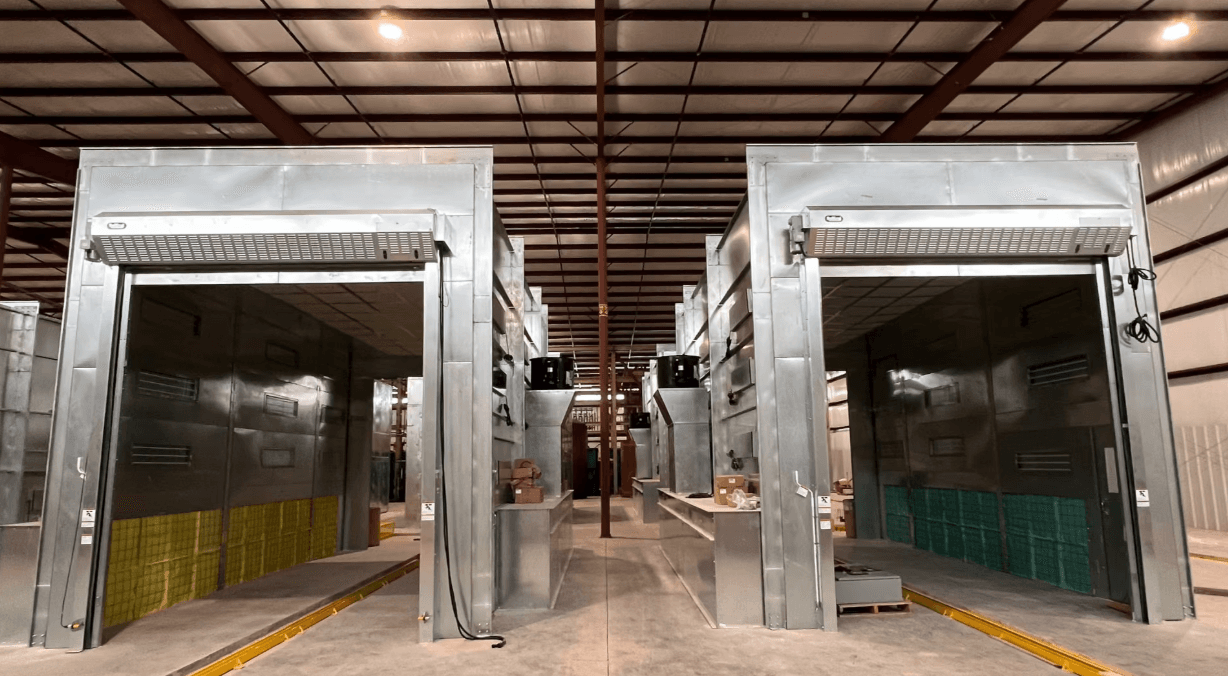
A powder coating process that used to take two days now runs in 58 minutes.
Read the story →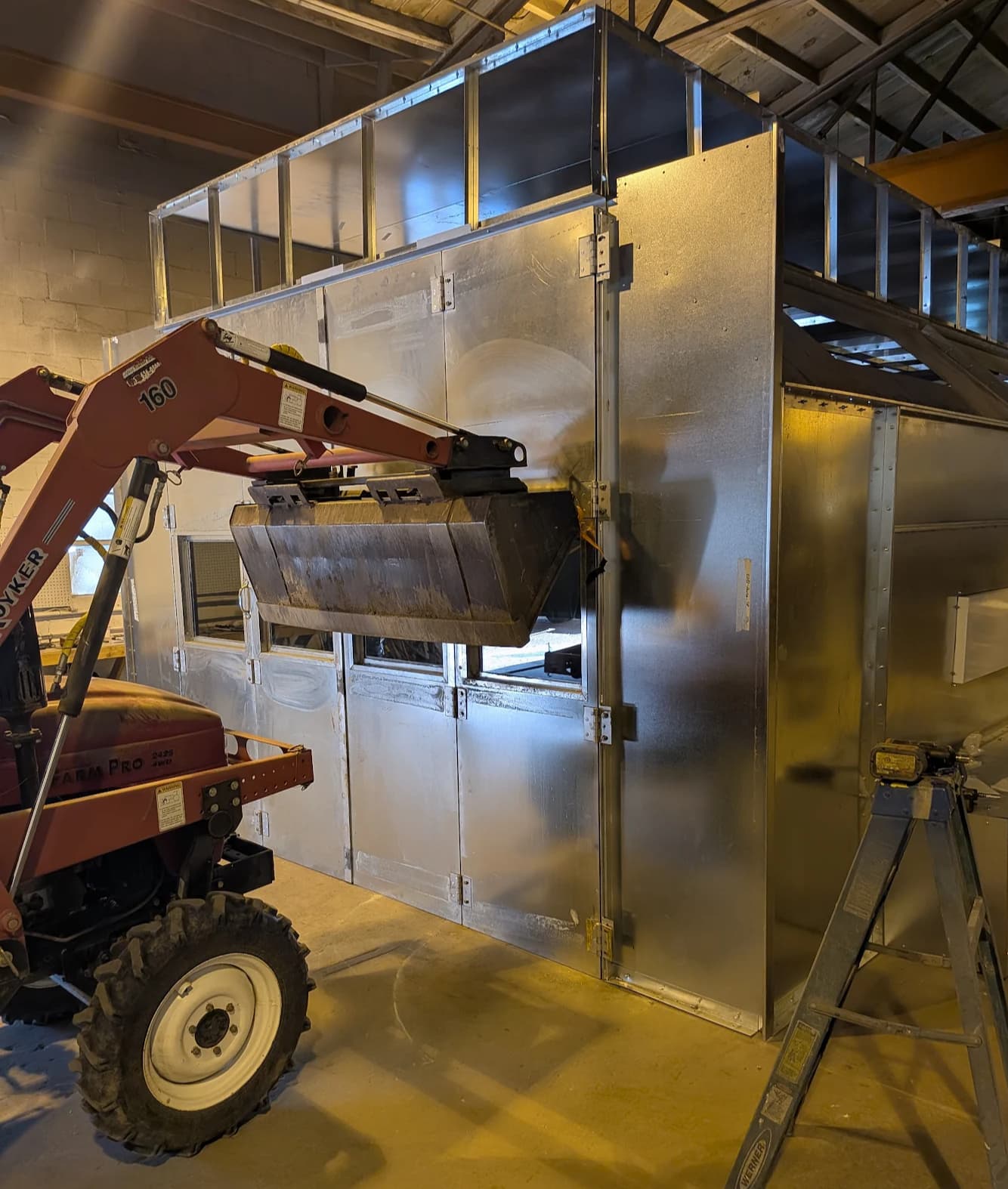
Kodiak Auto Body & Paint
A collision shop in Farmington, New Mexico that cut recoating jobs by half and grew in a competitive market.
Read the story →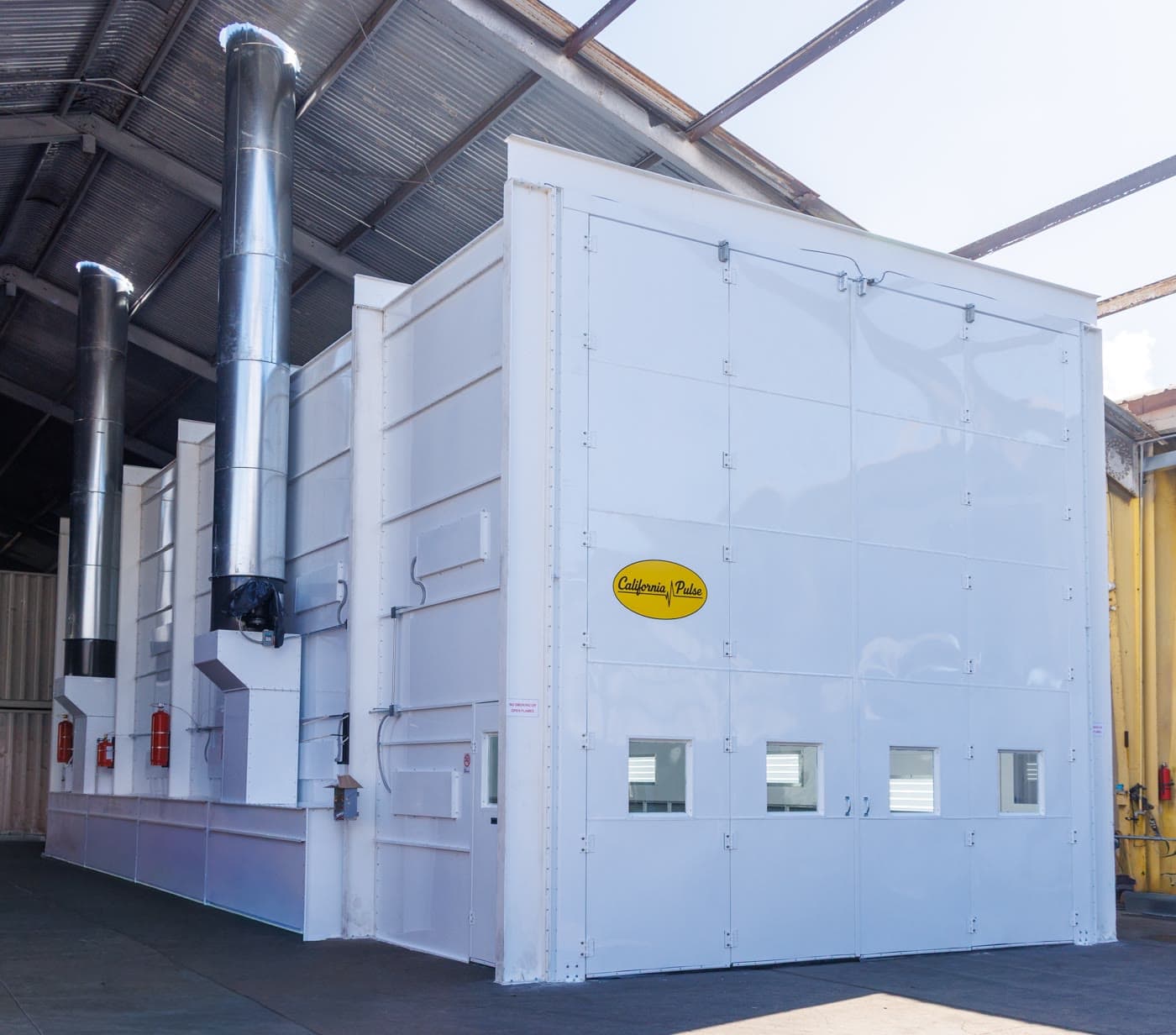
Paint Box LLC
A Hawaii shop that doubled its finishing capacity and became the only one on the island able to paint oversized trucks and heavy equipment.
Read the story →