What Most Shops Get Wrong About Airflow
January 13, 2026
In paint and powder coating operations, airflow is not just about moving air, it is about controlling it. Yet many shops treat airflow as a simple box to check: “Is the fan running? Yes? Good enough.” This mindset leads to chronic finish issues, energy waste, compliance problems,

In paint and powder coating operations, airflow is not just about moving air, it is about controlling it. Yet many shops treat airflow as a simple box to check: “Is the fan running? Yes? Good enough.” This mindset leads to chronic finish issues, energy waste, compliance problems, and frustrated operators.
Airflow is a system made up of volume (CFM), velocity, pressure balance, filtration, and temperature. When any one of these is misunderstood or ignored, the entire finishing process suffers. Most airflow problems don’t come from bad painters or bad paint—they come from bad air.
The Most Common Airflow Mistakes
1. Thinking More Air Is Always Better
Many shops assume that higher airflow automatically means better performance. In reality, excessive airflow can:
- Blow material off parts
- Create turbulence that traps overspray
- Increase energy consumption dramatically
- Reduce transfer efficiency
Airflow must be engineered to hit a specific velocity range—not simply “as much as possible.”
2. Ignoring Air Balance
Airflow is not just exhaust—it is supply and exhaust working together. Shops often upgrade exhaust fans without matching make-up air, which causes:
- Negative pressure that pulls in dirt and debris
- Door and panel leakage
- Poor temperature control
- Operator discomfort
An unbalanced booth will never perform consistently.
3. Not Accounting for Filter Loading
Filters restrict airflow as they load with paint or powder. Many systems are designed around clean-filter conditions but are never adjusted for:
- Pressure drop over time
- Reduced face velocity
- Increased turbulence as filters clog
Without accounting for filter loading, airflow performance slowly degrades until quality problems appear.
4. Poor Plenum and Duct Design
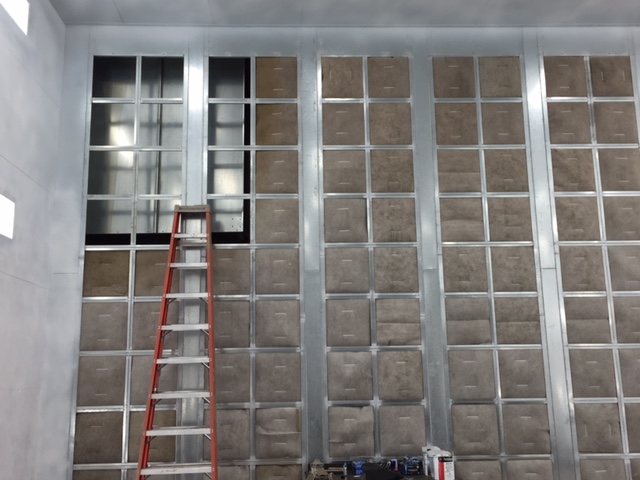
Air does not naturally distribute evenly. Without proper plenum sizing, transitions, and duct layout, airflow will:
- Favor one side of the booth
- Create dead zones
- Cause swirling or backflow
- Leave overspray hanging in the air
Good airflow requires geometry, not guesswork.
5. Treating Airflow as a One-Time Setup
Shops often commission a booth and never re-check airflow again. But changes in:
- Production volume
- Part size
- Filter type
- Temperature requirements
All affect airflow behavior. Air systems must be evaluated over time—not just at install.
Why Airflow Matters More Than You Think
When airflow is engineered correctly, it:
- Improves finish consistency
- Reduces rework and rejects
- Improves transfer efficiency
- Stabilizes temperature and humidity
- Reduces energy waste
- Improves worker comfort and safety
Airflow is not just a quality issue—it is a productivity and cost issue.
How Proper Airflow Engineering Works
A properly designed finishing airflow system considers:
- Required CFM based on booth size and process
- Target face velocity for the coating type
- Static pressure across filters and ducting
- Plenum design for even distribution
- Exhaust and make-up air balance
- Heater sizing and air temperature control
The goal is smooth, uniform, predictable airflow—not turbulence, drafts, or pressure swings.
Why Most Shops Get It Wrong
Most airflow problems come from:
- Using generic fan selections
- Copying old booth designs
- Prioritizing cost over engineering
- Treating airflow as “just ventilation”
Without proper design, shops are forced to “work around” their booth instead of letting the booth work for them.
Why California Pulse Designs Airflow First
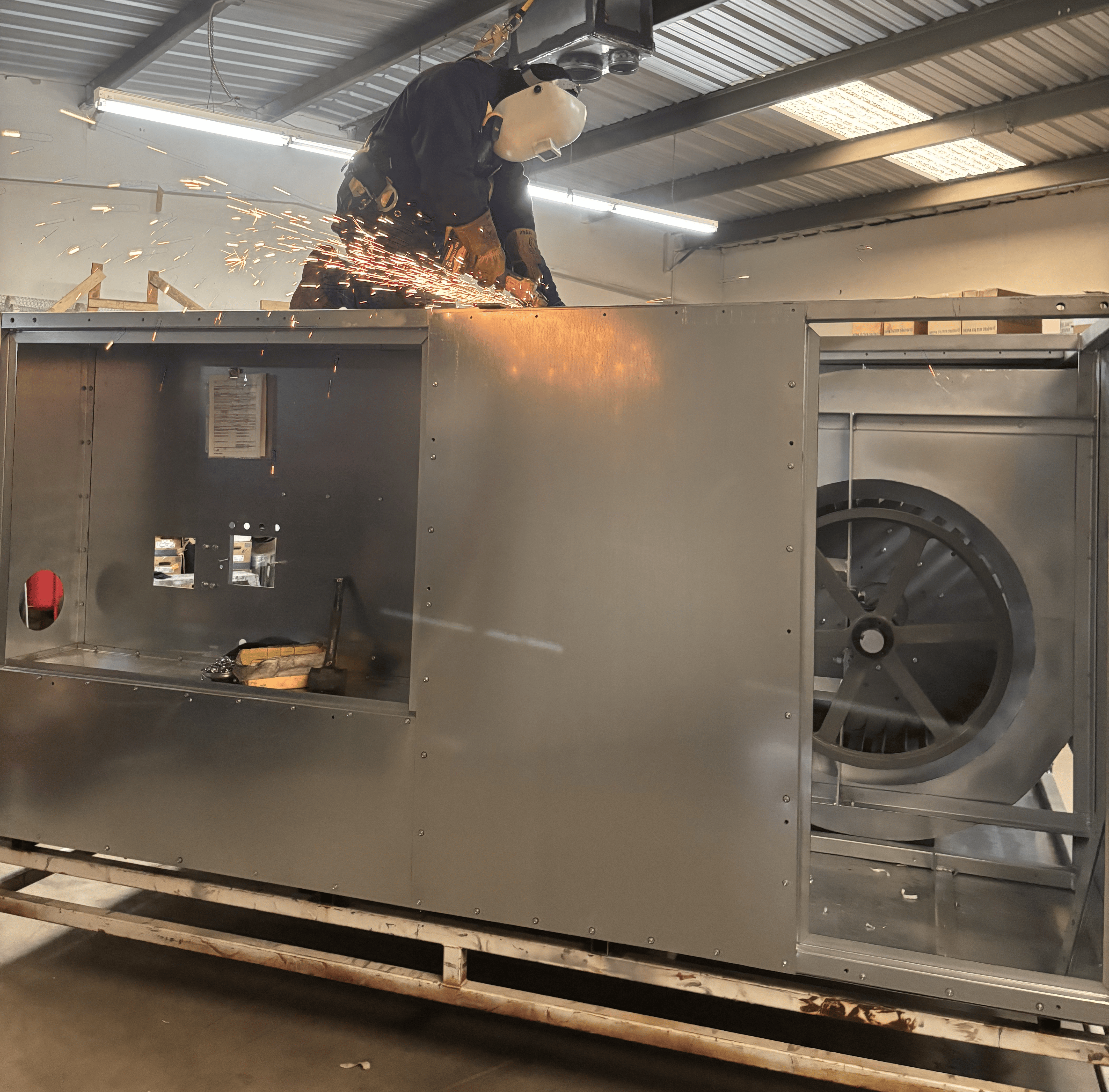
At California Pulse, airflow is not an afterthought—it is the starting point. Every booth is designed around:
- Balanced exhaust and make-up air
- Proper velocity targets
- Engineered plenum and duct geometry
- Filter loading calculations
- Integration with heaters and controls
We design systems that move air where it needs to go, at the speed it needs to move, for the process it needs to support.
Contact California Pulse to evaluate your airflow design and build a finishing system that works with your process, not against it.