Liquid Paint vs. Powder Coating: Choosing the Right Finishing Process
January 29, 2026
Selecting the right coating method is a critical decision that impacts finish quality, durability, production speed, and long-term operating costs. Liquid paint and powder coating are the two most common finishing technologies used across industrial, aerospace, and manufacturing
Quick Answer
Liquid paint gives finer cosmetic control, a wider range of colors and gloss levels, and works on heat-sensitive substrates. Powder coating gives a thicker, more durable film with minimal VOC emissions and reclaimable overspray, but it needs an oven and parts that tolerate the cure temperature. The right choice depends on product size and material, appearance requirements, production volume, the regulatory environment, and available floor space and utilities. Many facilities run both to keep that flexibility.
Selecting the right coating method is a critical decision that impacts finish quality, durability, production speed, and long-term operating costs. Liquid paint and powder coating are the two most common finishing technologies used across industrial, aerospace, and manufacturing environments—but they serve very different purposes.
Understanding how each process works, where it excels, and what it requires from a finishing system helps manufacturers choose the right solution for their products, compliance needs, and production goals.
Understanding Liquid Paint Systems
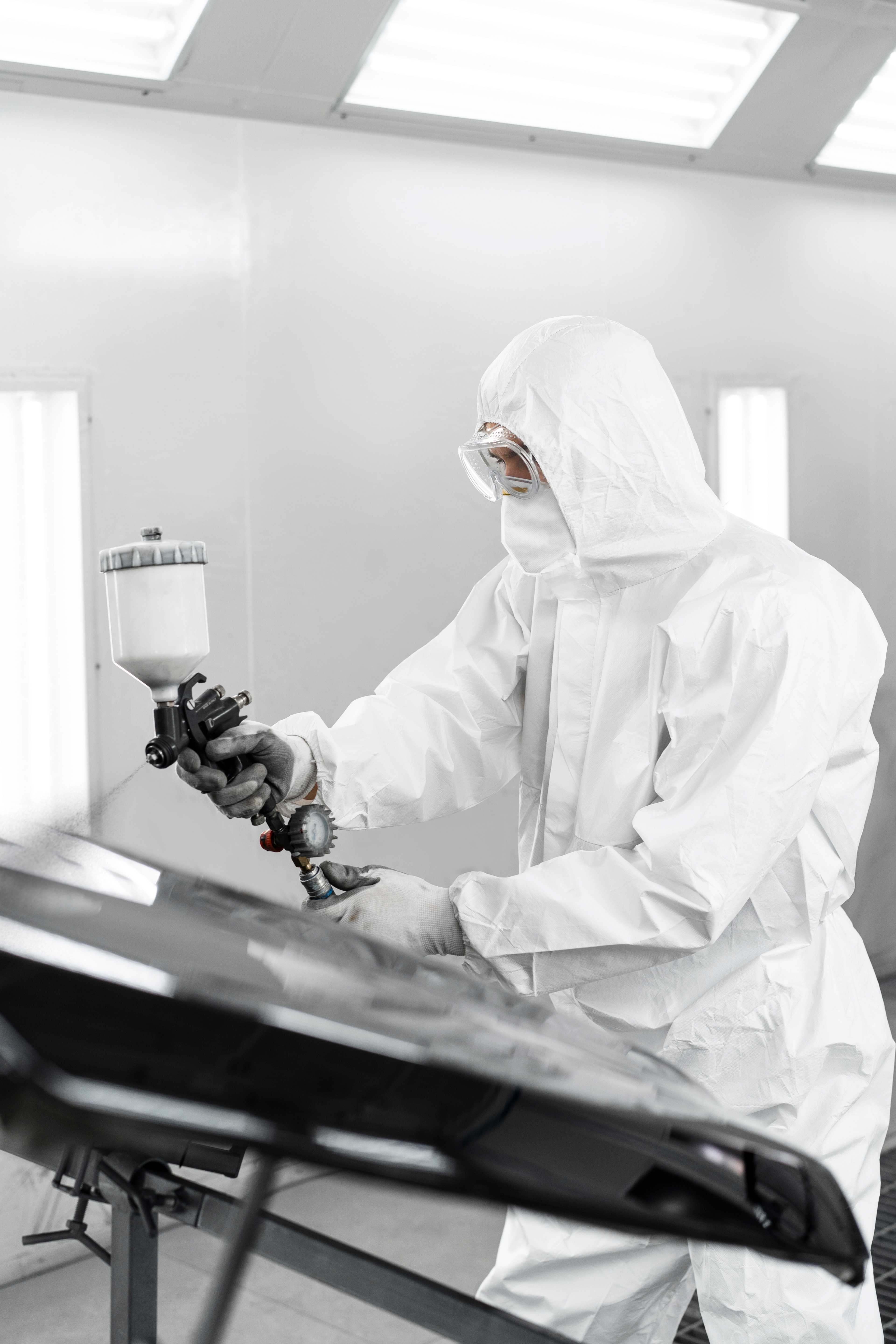
Liquid paint is applied as a wet coating using solvents or water as a carrier. After application, the coating flashes off and cures through air drying or heat.
Advantages of Liquid Paint
- Wide range of colors, textures, and gloss levels
- Ability to coat large, complex, or assembled parts
- Suitable for heat-sensitive substrates
- Easier color changeovers for short production runs
- Commonly used in aerospace, automotive refinishing, and industrial equipment
Liquid coatings excel where precision color matching, thin film builds, or specialty coatings are required.
Challenges of Liquid Paint
- VOC emissions requiring ventilation and filtration
- Longer drying and cure times
- Higher overspray waste
- Greater sensitivity to contamination and environment
- More frequent rework if airflow or preparation is inconsistent
Liquid painting demands a highly controlled finishing environment to achieve repeatable results.
Understanding Powder Coating Systems
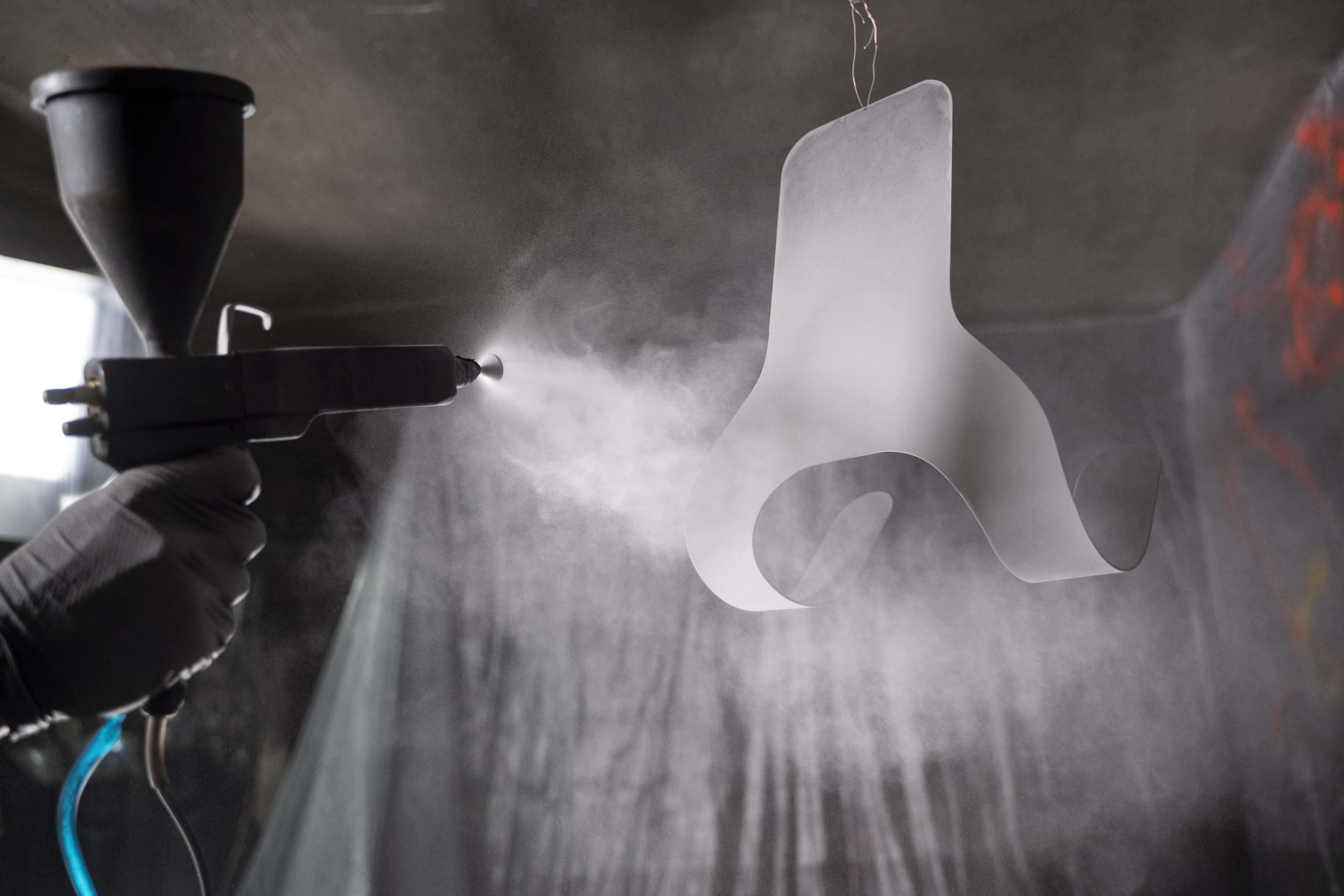
Powder coating uses electrostatically charged dry particles that adhere to grounded parts. The coating is cured by heat, melting and flowing into a uniform film.
Advantages of Powder Coating
- No solvents and minimal VOC emissions
- High transfer efficiency and reclaimable overspray
- Thicker, more durable coatings
- Excellent resistance to corrosion, abrasion, and chemicals
- Faster cure cycles once parts reach temperature
Powder coating is ideal for high-volume production and durable finishes.
Challenges of Powder Coating
- Requires ovens capable of elevated cure temperatures
- Limited suitability for heat-sensitive materials
- More complex color changeovers
- Less flexibility for multi-color or touch-up work
- Film thickness control can be challenging on sharp edges
Powder systems require precise temperature control and material handling to ensure consistent results.
Comparing Finish Quality and Appearance
Liquid paint typically provides superior cosmetic control, making it the preferred choice for:
- High-gloss finishes
- Complex geometries
- Tight appearance specifications
Powder coating offers a more robust finish but may show limitations in ultra-smooth or thin-film applications.
The right choice often depends on whether appearance precision or long-term durability is the priority.
Environmental and Regulatory Considerations
Liquid paint systems must manage:
- VOC emissions
- Air permitting requirements
- Explosion-proof electrical classifications
- Fire suppression and ventilation systems
Powder coating systems reduce many environmental concerns but still require:
- Dust collection and containment
- Proper grounding and electrical safety
- Oven emissions management
Both systems must comply with OSHA, NFPA, EPA, and local code requirements.
Production Throughput and Efficiency
Powder coating often delivers higher throughput due to:
- Shorter cure times
- Minimal rework
- High material utilization
Liquid paint provides flexibility for:
- Short runs
- Frequent color changes
- Custom or specialty coatings
Production volume and scheduling play a major role in determining which process delivers the best return.
Choosing the Right Finishing Environment
Both liquid and powder coatings require purpose-built finishing systems to perform correctly.
Key system considerations include:
- Airflow design
- Filtration efficiency
- Temperature control
- Lighting quality
- Safety interlocks and controls
A poorly designed booth or oven can compromise either process, regardless of coating type.
Liquid vs. Powder: Which Is Right for Your Operation?
There is no universal answer. The best coating solution depends on:
- Product size and material
- Finish appearance requirements
- Production volume
- Regulatory environment
- Available floor space and utilities
Many facilities successfully operate both systems to maximize flexibility and production capability.
Why Choose California Pulse for Finishing System Design
California Pulse designs finishing environments that support both liquid and powder coating applications through:
- Engineered airflow and filtration
- Code-compliant safety systems
- Precision temperature control
- Custom layouts for efficient workflow
- Long-term reliability and serviceability
We help customers select and design the right system for their coating process—not the other way around.
Design the Right Finish From the Start
Choosing between liquid paint and powder coating is a strategic decision that affects quality, cost, and compliance.
California Pulse can help you evaluate your process, compare system requirements, and design a finishing solution that delivers consistent results and maximum return.
Answers