How to Choose Between a Batch Oven and Conveyor Oven for Industrial Finishing
June 17, 2026
Selecting the right curing oven configuration is one of the most consequential decisions a finishing operation will make. The wrong choice affects throughput, energy consumption, labor requirements, and floor space allocation for years after installation. Understanding the mechan
Selecting the right curing oven configuration is one of the most consequential decisions a finishing operation will make. The wrong choice affects throughput, energy consumption, labor requirements, and floor space allocation for years after installation. Understanding the mechanical and operational differences between batch ovens and conveyor ovens is the foundation of any sound equipment specification.
This post covers the defining characteristics of each oven type, the production parameters that favor one over the other, and the facility and operational factors that should guide the final decision.
What Is a Batch Oven and How Does It Operate
A batch oven processes parts in discrete loads. Operators load parts onto racks, carts, or hangers, move the loaded assembly into the oven chamber, and run a defined heat cycle before removing the entire load.
- Loading method: Parts are staged outside the oven and moved in manually or with carts, requiring operator intervention at each cycle
- Cycle control: Temperature and dwell time are set per batch, allowing different cure profiles to run consecutively without line changeover
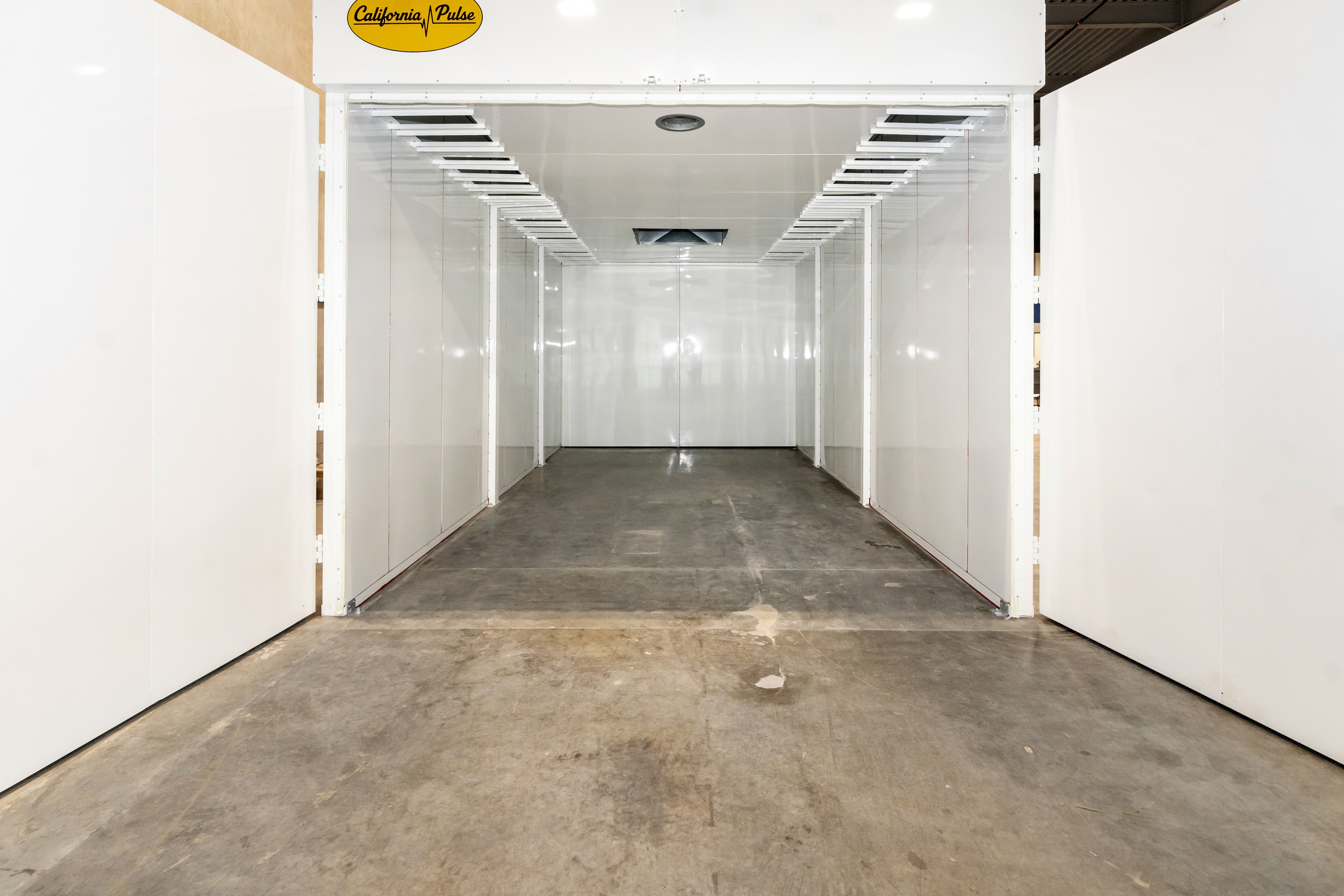
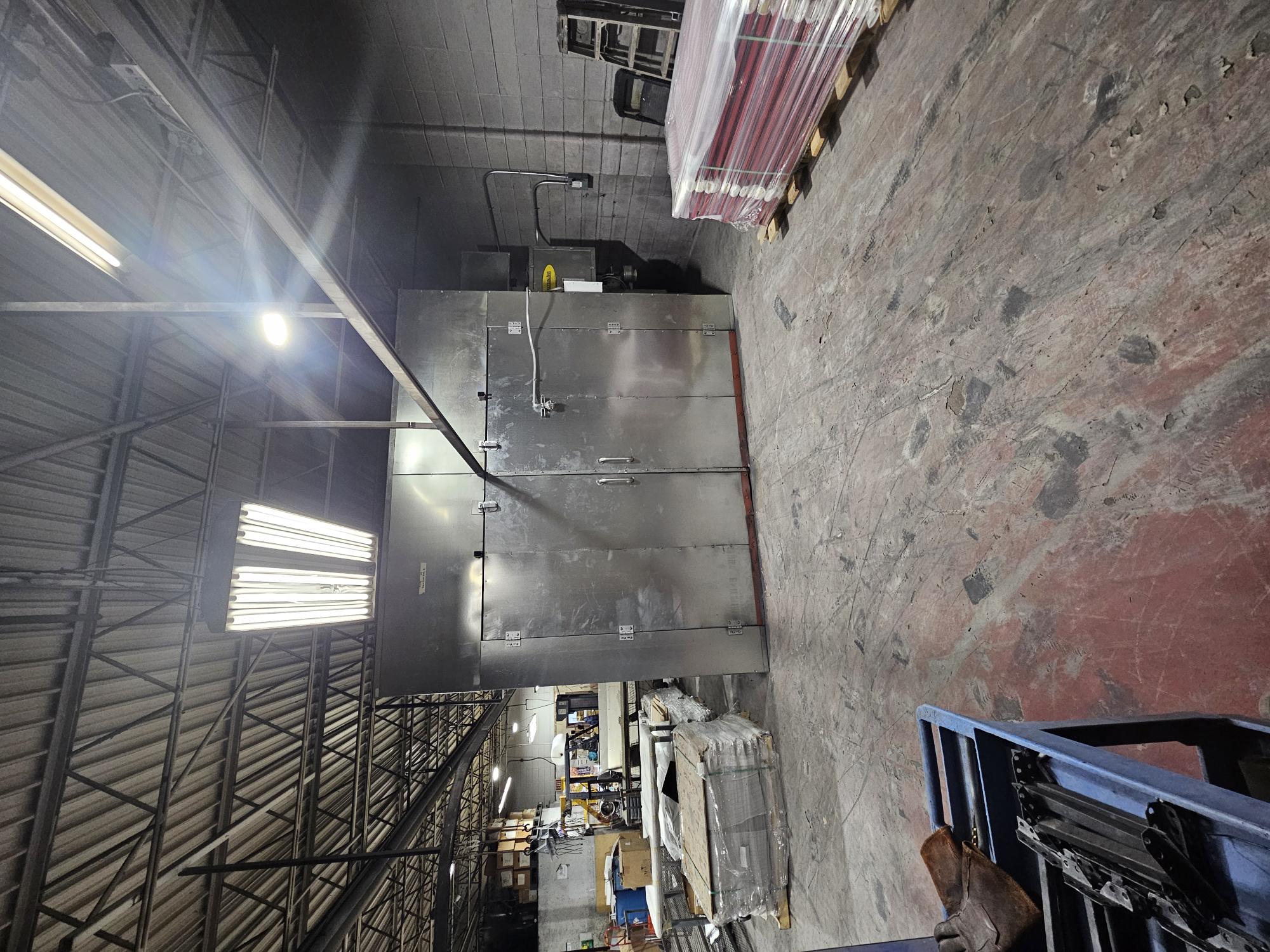
- Chamber design: Fixed four-wall enclosure with a single access door or roll-up door, sized to the maximum anticipated load
- Footprint: Compact relative to rated capacity because there is no conveyor infeed or outfeed zone
- Labor demand: Higher per-part labor because loading and unloading requires dedicated operator time at each cycle
What Is a Conveyor Oven and How Does It Operate
A conveyor oven moves parts through a heated tunnel on a continuous or indexing transport system. Parts enter at one end, travel through defined heat zones, and exit at the other end in a continuous flow.
- Transport mechanism: Overhead monorail, flatbed chain, or roller conveyor carries parts through the oven at a set line speed
- Throughput rate: Production volume is determined by line speed, part spacing, and oven length rather than cycle time
- Zone configuration: Multi-zone heating allows independent temperature control across preheat, cure, and cool-down sections
- Integration potential: Conveyor systems connect directly to upstream spray booths and downstream inspection or packaging stations
- Labor demand: Lower per-part labor once the line is running because parts flow without individual handling between stations
Production Volume and Part Mix
Production volume is the primary differentiator between appropriate oven types. Low-to-medium volume operations with varied part geometry and coating specifications are generally well-served by batch equipment. High-volume lines producing consistent part families at steady run rates align with conveyor configurations.
- Annual volume threshold: Batch ovens are typically cost-effective below 50,000 parts per year depending on part size and cycle time; above that threshold, conveyor economics improve
- Part variety: Wide variation in part size, weight, or cure profile within a single production day favors batch because each load can carry different specifications
- Changeover frequency: Operations running more than three or four distinct coating chemistries per week absorb significant downtime on conveyor lines during profile changes
- Prototype and short-run work: Engineering and fabrication shops producing custom or one-off parts benefit from the flexibility of batch processing
- Dedicated production lines: Automotive, appliance, and high-volume industrial manufacturers with fixed product families can optimize conveyor speed and spacing for a single cure profile
Floor Space and Facility Layout
Physical plant constraints directly influence oven selection independent of throughput preferences. A conveyor oven requires linear floor space for the oven tunnel plus infeed and outfeed staging zones.
- Tunnel length: A standard powder coating conveyor oven with preheat and cure zones typically requires 30 to 60 linear feet of floor space plus approach clearance on each end
- Ceiling height: Overhead monorail conveyor systems require clearance above the oven envelope for the rail, carriers, and part hang length
- Batch oven depth: A batch oven serving the same rated capacity occupies a fraction of the linear floor space, making it compatible with smaller or irregularly shaped facilities
- Material flow direction: Conveyor systems dictate a fixed material flow path; batch ovens can be positioned anywhere accessible to the loading cart or rack
- Expansion planning: A batch oven can be added in modules; expanding a conveyor system typically requires engineering a longer tunnel or second parallel line
Energy Consumption and Operating Cost
Both oven types consume significant energy, but the consumption profile differs in ways that affect operating cost calculations across different production schedules.
- Idle loss: A batch oven loses heat only during the door-open loading interval; a conveyor oven loses heat continuously through open inlet and outlet portals even when no parts are running
- Air seal systems: High-volume conveyor ovens use air curtain or vestibule designs to reduce portal heat loss, adding capital cost and energy to maintain the seal
- Heating efficiency per part: At high throughput, conveyor ovens spread heat loss across more parts per hour, improving efficiency; at low utilization, idle portal loss makes per-part energy cost high
- Gas versus electric: Both oven types are available in gas-fired and electric configurations; selection depends on facility utility infrastructure and local energy rates
- Scheduled operation: Batch ovens can be shut down between production runs without significant warm-up penalty; conveyor ovens require steady-state operation to maintain throughput economics
Maintenance and Serviceability
Mechanical complexity affects maintenance burden and downtime risk differently between the two configurations.
- Moving components: Conveyor systems include drive motors, chain or rail assemblies, carriers, and tensioning hardware, all of which require periodic inspection and replacement
- Batch oven simplicity: Batch equipment has fewer moving parts, typically limited to burner assemblies, recirculating fans, and door hardware
- Chain lubrication: Overhead conveyor chains in high-temperature environments require scheduled lubrication and wear monitoring to prevent unexpected line stops
- Spare parts inventory: Conveyor systems require a broader spare parts inventory to minimize downtime risk from carrier or drive failures
- Cleaning access: Batch oven interiors are fully accessible through the loading door; conveyor oven interiors require tunnel access panels and may require line stoppage for cleaning
Summary
The decision between a batch oven and a conveyor oven rests primarily on production volume, part mix consistency, available floor space, and the operational model of the finishing department. Batch ovens offer flexibility, lower capital cost, and compact footprint appropriate for varied, lower-volume operations. Conveyor ovens deliver throughput efficiency and labor savings that justify their capital and space requirements only when production volume and part consistency are sufficient to keep the line running at or near capacity.
Why Choose California Pulse for Industrial Curing Ovens
We engineer and manufacture both batch ovens and conveyor ovens at our facility in Apple Valley, California, and sell direct from the manufacturer without distributor markups. Our engineering team works with customers during the specification phase to analyze part load data, production schedules, and facility drawings before recommending a configuration, so the equipment matches the actual operation rather than a generic catalog description.
We support every installation with post-sale technical guidance, including commissioning assistance, cure profile setup, and long-term parts availability. Whether the requirement is a single batch oven for a job shop or a fully integrated conveyor finishing line for a high-volume production facility, we configure equipment to the specification rather than adapting a standard product to an unfit application.