How to Train New Operators on Spray Booth Safety Protocols
May 27, 2026
Spray booth environments present a concentrated set of hazards that demand structured, repeatable operator training. Flammable solvents, atomized coating particles, high-velocity airflow systems, and electrical components operate in close proximity during every finishing cycle. F
Quick Answer
An effective spray booth operator training program covers five areas: the hazard profile of the booth as a classified location under NFPA 33 and OSHA 29 CFR 1910.94, hands-on equipment familiarization and pre-shift inspection, PPE matched to the specific coating chemistry in use, rehearsed emergency procedures, and documented competency verification. Training without documentation provides no legal protection and no operational baseline, so records and practical assessments are part of the program rather than an afterthought.
Spray booth environments present a concentrated set of hazards that demand structured, repeatable operator training. Flammable solvents, atomized coating particles, high-velocity airflow systems, and electrical components operate in close proximity during every finishing cycle. Facilities that treat operator onboarding as informal or abbreviated expose themselves to regulatory violations, equipment damage, and preventable injuries. Establishing a disciplined training framework for new spray booth operators is one of the most operationally significant decisions a finishing facility can make.
This post covers the core components of an effective spray booth operator training program, including hazard recognition, equipment familiarization, emergency procedures, PPE requirements, and documentation practices that satisfy OSHA and NFPA compliance standards.
Understanding the Hazard Profile of a Spray Booth Environment
Before any operator touches a spray gun or control panel, they must understand what makes a spray booth a classified hazardous location. NFPA 33 and OSHA 29 CFR 1910.94 define spray finishing operations as environments where ignition and inhalation risks are continuously present. This baseline knowledge shapes every decision an operator makes during a shift.
- Flammable vapor accumulation: Solvent-based coatings release vapors that reach explosive concentration levels quickly in enclosed or semi-enclosed spaces, requiring active airflow management at all times.
- Overspray particulate: Atomized coating material suspended in air is both a respiratory hazard and a combustion risk if allowed to accumulate on booth surfaces or exhaust filters.
- Ignition sources: Electrostatic spray equipment, lighting fixtures, and static discharge from ungrounded parts or carts are all potential ignition sources within the booth perimeter.
- Exhaust filter loading: Saturated filters restrict airflow and increase the risk of flash fire; operators must understand the relationship between filter condition and safe booth operation.
- Chemical interaction: Many primers, topcoats, and hardeners contain isocyanates or other reactive compounds that require specific handling and storage separation protocols.
Equipment Familiarization and Pre-Shift Inspection Procedures
New operators should receive hands-on orientation with every major component of the spray booth system before conducting any finishing work. Equipment familiarity reduces errors, accelerates response time during abnormal conditions, and reinforces the connection between mechanical function and safety outcomes.
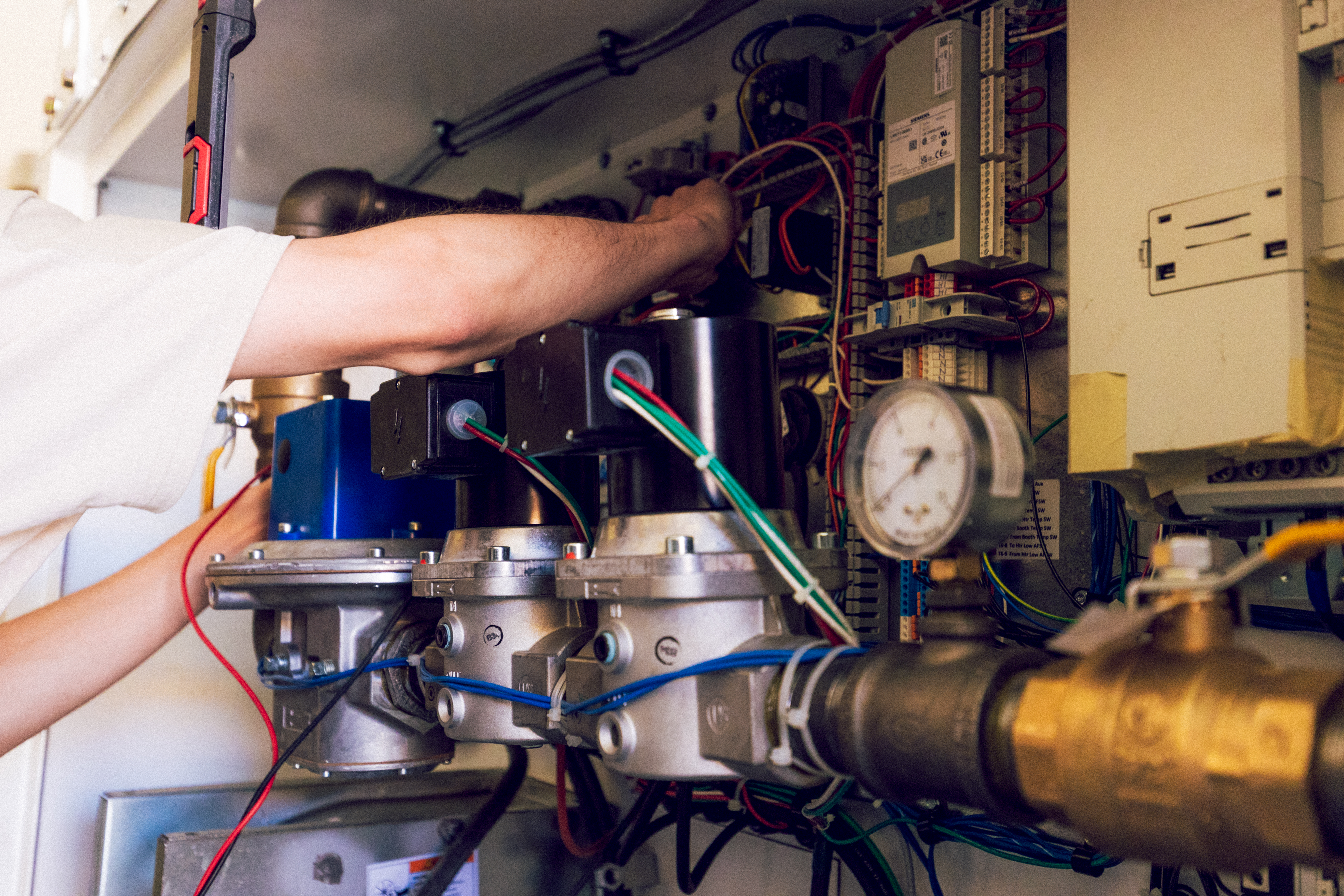
- Airflow and ventilation controls: Operators must locate and operate supply and exhaust fan controls, understand rated CFM for the booth, and confirm airflow direction relative to the spray zone and operator position.
- Makeup air unit (MAU) function: Direct-fired and indirect-fired MAUs provide tempered air to maintain air balance; operators should understand how temperature setpoints affect both finish quality and solvent vapor dilution.
- Lighting and electrical interlocks: Booth lighting must be explosion-proof rated; operators should verify that electrical interlocks disable non-rated equipment before opening product access doors.
- Filter inspection protocol: Teach operators to check paint arrestor and exhaust filter media for loading at the start of each shift, documenting condition and replacing filters per the facility's maintenance schedule.
- Grounding and bonding verification: All conductive components, including parts hangers, carts, and spray equipment, must be verified as properly grounded before each production run.
Personal Protective Equipment Requirements for Spray Booth Operations
PPE selection in spray booth environments must correspond to the specific coatings in use, the spray method, and the duration of exposure. A generalized approach to PPE fails operators who work with varying product chemistries throughout a shift.
- Supplied-air respirators (SAR): When spraying isocyanate-containing materials, organic vapor cartridge respirators are insufficient; supplied-air respirators or self-contained breathing apparatus are required per OSHA 1910.134.
- Chemical-resistant gloves: Nitrile or neoprene gloves selected to the SDS recommendation for each coating; latex gloves provide inadequate chemical resistance for most solvent-based systems.
- Eye and face protection: Chemical splash goggles or a full-face supplied-air respirator provide protection from solvent splatter and overspray during spray and cleanup operations.
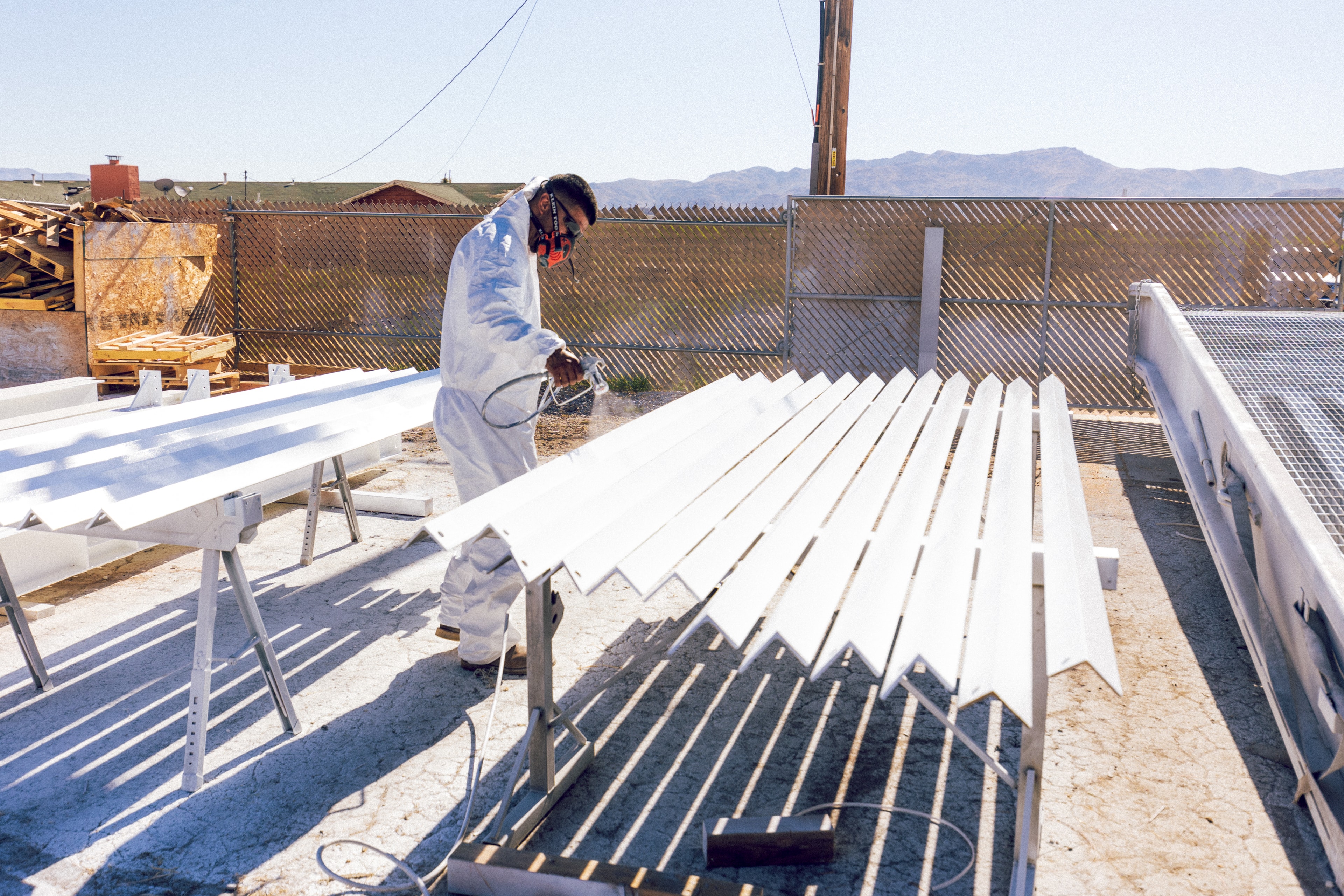
- Protective coveralls: Disposable or reusable coveralls prevent dermal absorption of coating materials, particularly for two-component urethane and epoxy systems.
- Footwear: Conductive or static-dissipative footwear maintains the grounding path between the operator and the booth floor, reducing static discharge risk.
Emergency Procedures and Incident Response Training
Emergency response training must be conducted as a distinct module, not mentioned briefly during general orientation. Operators who have rehearsed emergency procedures respond faster and with greater accuracy under stress than those who have only read a procedure document.
- Fire suppression system activation: Operators should physically locate fixed suppression system controls, understand manual versus automatic activation, and know evacuation routes from the spray area.
- Emergency ventilation: Some booth configurations include emergency high-volume purge settings; operators must know the activation sequence and understand that purge mode is used before re-entry after a solvent release.
- Spill containment and cleanup: Training should include the location of spill kits, proper absorbent materials for flammable liquids, and waste disposal procedures for solvent-contaminated materials.
- Shutdown sequence: A clearly posted and trained shutdown sequence prevents residual spray material from accumulating in ductwork and reduces post-shift fire risk during afterhours operation.
Documentation, Competency Verification, and Regulatory Compliance
Training without documentation provides no legal protection and no operational baseline. A structured record-keeping system supports OSHA compliance, insurance requirements, and internal quality standards.
- Written training records: Maintain dated records that identify the trainer, the content covered, the specific booth or equipment trained on, and the trainee's acknowledgment signature.
- Competency assessments: Practical evaluations conducted by a qualified supervisor confirm that operators can perform inspections, identify hazards, and execute emergency procedures correctly before independent operation.
- SDS access and comprehension: Operators must demonstrate familiarity with the Safety Data Sheets for all coatings in use, including flash point, exposure limits, and first aid procedures.
- Retraining triggers: Define the conditions that require retraining, including incident involvement, extended absence, introduction of new coating chemistry, or equipment modification.
Building a Training Program That Holds Up Over Time
Effective spray booth operator training is not a single event conducted during onboarding week. It is a structured, documented, and periodically reviewed system that accounts for equipment changes, regulatory updates, and operator turnover. Facilities that build this framework into their standard operating procedures maintain safer work environments, lower incident rates, and stronger regulatory standing.
Why Choose California Pulse for Spray Booth Equipment and Support
We design and manufacture spray booths and finishing systems with operator safety integrated into every configuration decision, from airflow engineering to explosion-proof electrical specifications. Our direct-from-manufacturer model means that customers receive technical documentation, system-specific training guidance, and post-installation support from the engineers who built the equipment.
We work with finishing operations across aerospace, automotive, industrial manufacturing, and rail applications to configure spray booths that meet facility-specific throughput requirements and applicable safety codes. When you purchase a spray booth from California Pulse, you receive detailed operational documentation and access to our technical team to support your operator training program from day one.
Answers