Common Causes of Slow Cure Times in Powder Ovens
March 5, 2026
In many finishing operations, the curing stage quietly becomes the primary bottleneck in production. Parts move efficiently through preparation and coating, only to slow dramatically once they reach the oven.
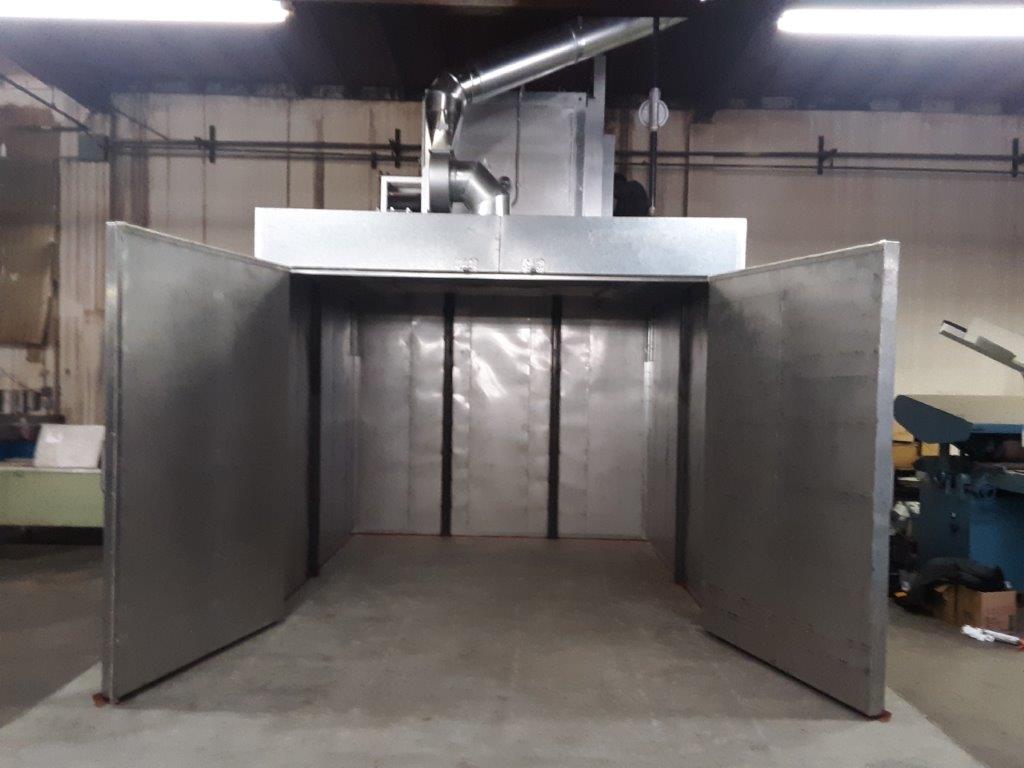
In many finishing operations, the curing stage quietly becomes the primary bottleneck in production. Parts move efficiently through preparation and coating, only to slow dramatically once they reach the oven.
When cure times begin stretching beyond expectations, the immediate assumption is often that the coating itself requires more time or temperature. In reality, extended cure cycles are frequently the result of equipment performance issues, airflow inefficiencies, or thermal design limitations.
Understanding why cure ovens slow down can help facilities recover lost throughput, reduce energy consumption, and improve finishing consistency.
Cure Time vs. Oven Performance
Every coating system has a specified cure schedule based on part metal temperature (PMT) rather than simply oven air temperature. Achieving that temperature efficiently requires proper heat transfer from the oven environment to the coated part.
If a system struggles to raise the part temperature quickly, the oven must run longer to achieve the required cure conditions.
Several operational factors commonly cause this issue.
1. Insufficient Heat Input
One of the most common reasons cure ovens run longer than expected is simply insufficient heating capacity.
Over time, production conditions often change:
- Larger parts are introduced
- Higher throughput is required
- Heavier substrates are coated
- Coating formulations change
If the oven was originally sized for lighter production loads, it may struggle to reach target temperatures efficiently.
Symptoms of insufficient heat input include:
- Slow temperature ramp-up
- Large temperature drops when new parts enter the oven
- Burners running continuously at maximum output
When this occurs, the system must compensate with longer dwell times.
2. Poor Airflow Circulation Inside the Oven
Heat distribution inside an oven is just as important as burner capacity.
Industrial cure ovens rely on forced convection airflow to transfer heat to coated parts. If circulation fans or ducting do not distribute air evenly, temperature variations develop within the oven.
This leads to:
- Cold spots within the chamber
- Uneven curing across parts
- Extended dwell times to ensure full cure
Even when average air temperature appears correct, poor airflow patterns can significantly reduce heat transfer efficiency.
3. Excessive Heat Loss
Thermal efficiency plays a major role in oven performance. When ovens lose heat faster than they can maintain it, recovery time increases.
Common sources of heat loss include:
- Worn or damaged door seals
- Poor insulation performance
- Large or frequent door openings
- Inefficient exhaust balancing
Older ovens are especially susceptible to insulation degradation, which allows heat to escape through walls or ducting.
As heat loss increases, ovens must run longer to maintain target curing conditions.
4. Inaccurate Temperature Measurement
Temperature sensors and controllers play a critical role in curing performance.
If sensors drift out of calibration or are poorly located, the system may not accurately reflect the true oven environment.
Possible issues include:
- Temperature probes positioned away from parts
- Sensors affected by direct burner airflow
- Controller calibration drift
- Slow sensor response times
In these cases, operators may increase cure time unnecessarily to compensate for uncertainty.
5. Part Loading and Production Practices
Production workflow can also influence oven performance.
Heavy part loading, dense rack configurations, or inconsistent spacing can reduce airflow around coated surfaces. When heated air cannot circulate freely, heat transfer slows dramatically.
Common production issues include:
- Parts packed too tightly on racks
- Inconsistent part spacing
- Large thermal mass entering the oven simultaneously
- Parts entering the oven at lower-than-expected temperatures
These conditions force ovens to work harder to raise the temperature of each part.
6. Air Balance and Exhaust Issues
Cure ovens require controlled exhaust to remove solvents, moisture, or combustion byproducts. However, excessive exhaust airflow can remove heated air faster than the oven can replace it.
Improper air balance can lead to:
- Temperature instability
- Increased burner runtime
- Reduced thermal efficiency
Properly balancing supply air, recirculation air, and exhaust airflow ensures that heat remains within the system while maintaining safe operation.
7. Aging Equipment and Component Wear
Like any production equipment, ovens experience performance changes over time.
Common age-related issues include:
- Reduced burner efficiency
- Fan performance degradation
- Worn ductwork or dampers
- Insulation breakdown
- Control system limitations
These gradual changes often go unnoticed until production begins slowing down.
Periodic performance evaluation helps identify these issues before they significantly impact throughput.
Improving Cure Oven Efficiency
When cure times begin increasing, the solution is rarely as simple as raising the oven temperature or extending the cycle.
Instead, facilities should evaluate:
- Heat input capacity
- Airflow distribution
- Exhaust balance
- Sensor calibration
- Production loading practices
- Overall equipment condition
Addressing these factors can often restore curing performance while reducing energy consumption and improving process consistency.
Engineering Efficient Thermal Systems
Cure ovens play a critical role in finishing operations, influencing both production throughput and coating quality. When systems are properly engineered and maintained, they deliver consistent thermal performance without unnecessary cycle delays.
Modern oven designs focus on:
- Optimized airflow circulation
- High-efficiency heating systems
- Improved insulation and thermal containment
- Precise process controls
These improvements help ensure that parts reach required cure temperatures efficiently and consistently.
California Pulse designs industrial finishing systems with airflow, thermal performance, and operational efficiency in mind.
Call today for a free quote!