Spray Booth Lighting Standards for Professional Finishing
May 21, 2026
Inadequate lighting inside a spray booth is one of the most common—and most overlooked—causes of finish defects in production environments. When technicians cannot accurately assess surface conditions, wet film thickness, color match, or overspray patterns, the result is rework,
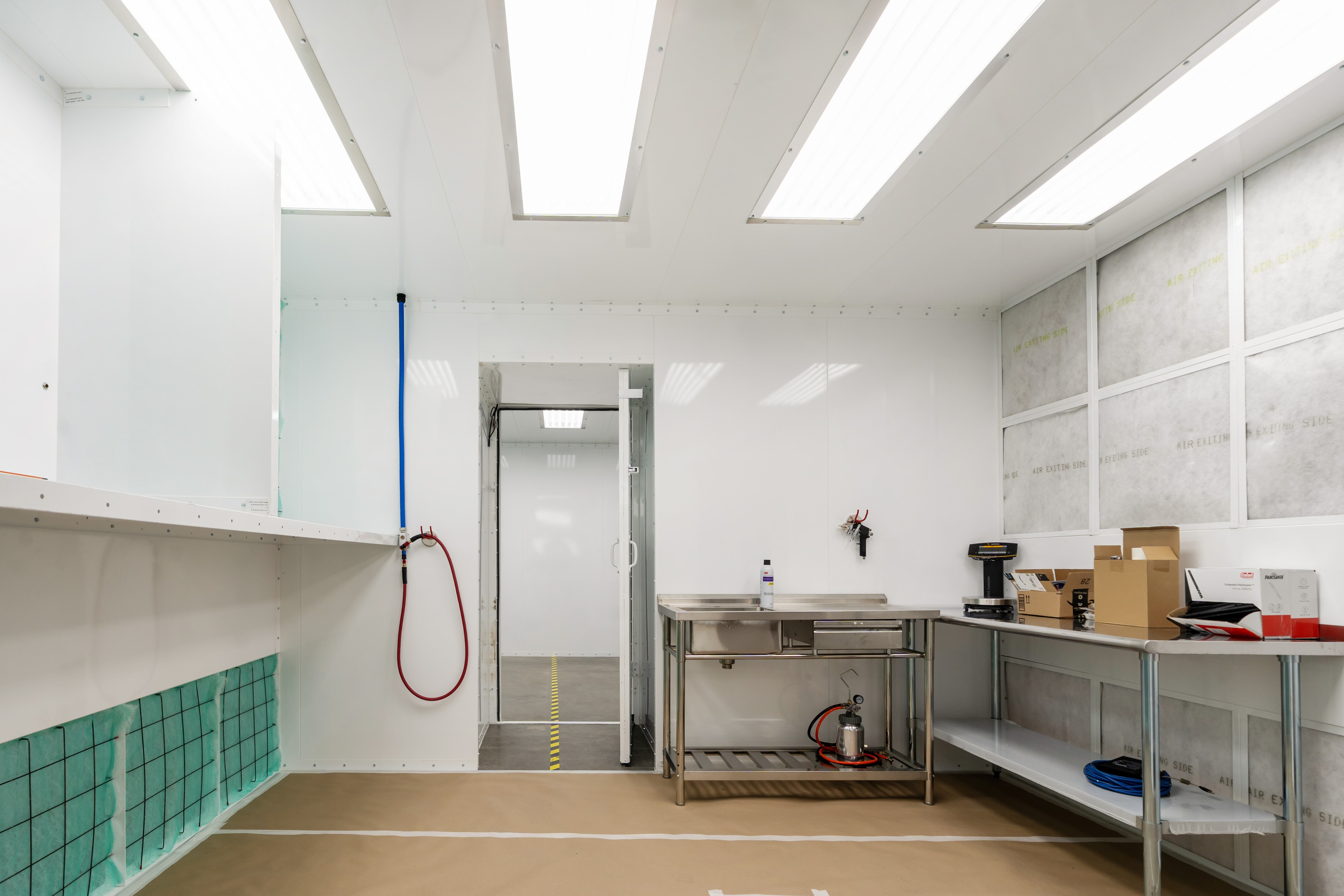
Inadequate lighting inside a spray booth is one of the most common—and most overlooked—causes of finish defects in production environments. When technicians cannot accurately assess surface conditions, wet film thickness, color match, or overspray patterns, the result is rework, material waste, and missed quality standards. For operations competing on finish quality, lighting is not a secondary concern.
This post covers the technical standards that govern spray booth lighting, the measurement criteria used to evaluate illumination levels, fixture classifications required for hazardous locations, and how lighting choices affect both finish quality and regulatory compliance.
Why Spray Booth Lighting Differs from General Industrial Lighting
Spray booths operate in environments classified as hazardous locations due to the presence of flammable vapors and particulate. Standard industrial luminaires are not rated for use in these zones. Lighting systems installed in spray booths must comply with specific classifications that address both explosion protection and illumination performance.
- Hazardous location rating: fixtures must carry a Class I, Division 1 or Division 2 rating depending on their mounting position within the booth; fixtures mounted inside the spray zone require Div 1 classification
- NEC compliance: the National Electrical Code Article 516 governs spray application equipment areas and defines the boundaries of classified zones within and around the booth
- OSHA 29 CFR 1910.94: federal occupational safety regulations require that spray booths be equipped with lighting fixtures specifically designed for hazardous locations
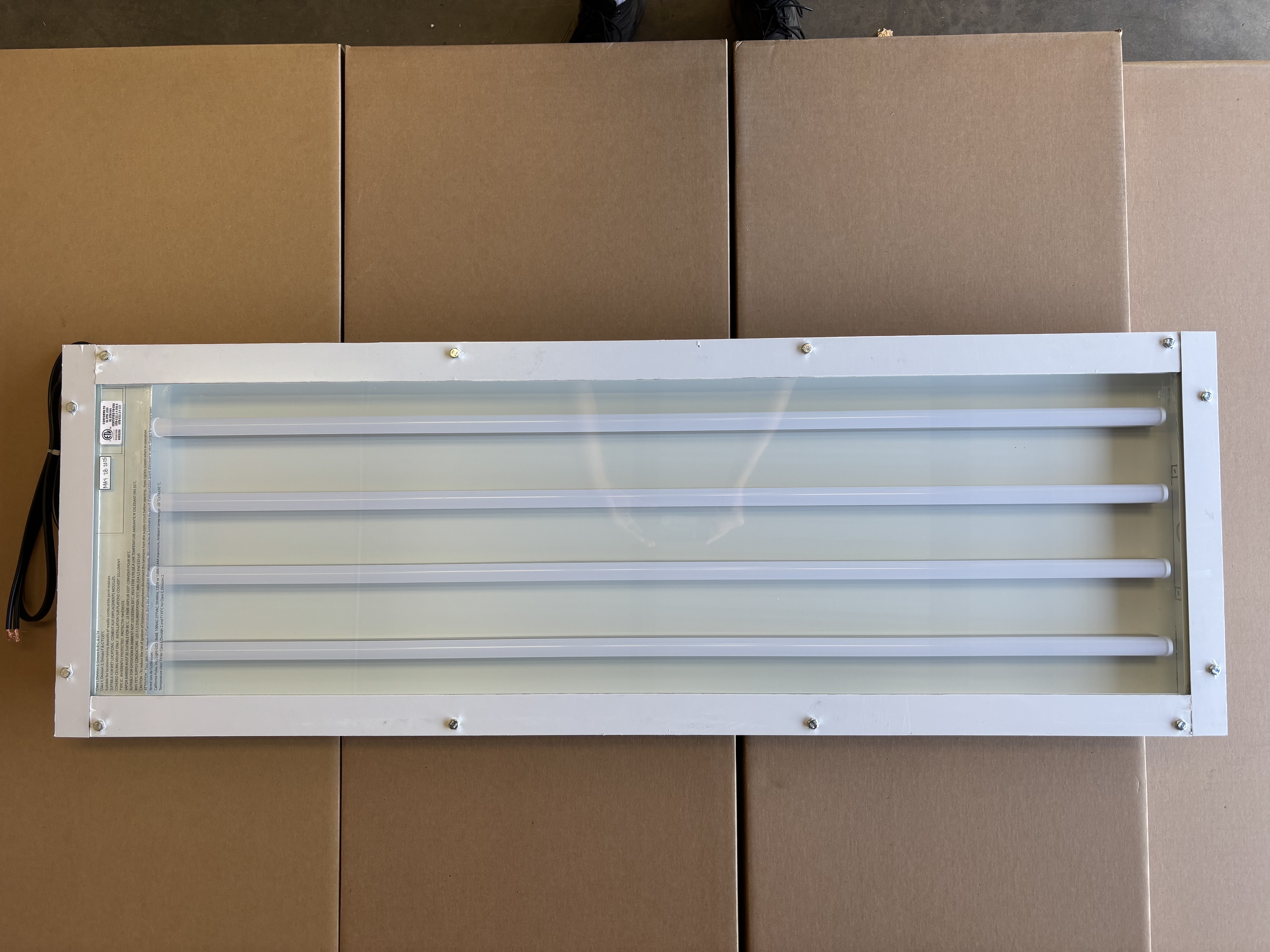
- Fixture construction: explosion-proof or vapor-tight fixtures with sealed lens assemblies prevent ignition sources from making contact with flammable atmospheres
- Listed equipment: fixtures should carry UL or ETL listing to confirm third-party verification of their hazardous location rating
Illumination Level Standards: Foot-Candles and Lux
The quantity of light delivered to the work surface determines how accurately a technician can evaluate the finish. OSHA and industry guidance documents published by organizations such as AIHA and automotive refinish associations provide specific illumination targets. Measurement is expressed in foot-candles (fc) or lux (1 fc equals approximately 10.76 lux).
- Minimum threshold: OSHA guidance and automotive refinish standards generally specify a minimum of 100 foot-candles at the work surface for detail finishing operations
- Recommended production level: many aerospace and high-tolerance automotive finishing specifications call for 150 to 200 foot-candles at the vehicle or part surface
- Uniformity ratio: the ratio of maximum to minimum illumination across the booth interior should not exceed 3:1 to avoid shadowing that masks surface irregularities
- Measurement method: readings are taken with a calibrated photometer at multiple points across the work surface plane, not at the fixture itself
- Compliance documentation: some quality management systems require periodic light level measurement records as part of finishing process control
Color Rendering Index and Its Effect on Finish Quality
Illumination intensity alone does not determine whether a technician can accurately assess color match or surface texture. The color rendering index (CRI) of the light source is an equally important specification. CRI measures how accurately a light source renders colors compared to a reference light source, on a scale of 0 to 100.
- CRI minimum: finishing booths should use light sources with a CRI of 90 or higher; sources below 85 CRI distort color perception and make accurate color matching unreliable
- Color temperature: a correlated color temperature (CCT) of 5000K to 6500K (daylight range) is preferred for color-critical applications including automotive refinishing and aerospace coatings
- LED advantages: modern LED fixtures designed for spray booths can achieve CRI values above 95 while maintaining Class I, Division 1 or Division 2 ratings
- Metamerism risk: mismatched color temperature between the spray booth and the final display or inspection environment creates metamerism errors where colors appear matched under one light source but not another
- Consistency across fixtures: all fixtures within a single booth should use the same lamp type, color temperature, and CRI rating to maintain uniform visual conditions
Fixture Placement and Booth Geometry
The physical arrangement of lighting fixtures within the booth structure determines uniformity, shadow patterns, and the technician's ability to view surfaces from multiple angles. Placement decisions depend on booth size, configuration, and the geometry of parts being finished.
- Ceiling-mounted fixtures: most production spray booths use ceiling-mounted fixture arrays with spacing calculated to achieve required uniformity ratios across the full booth floor area
- Side-wall lighting: vertical or angled side-wall fixtures supplement ceiling arrays and reduce shadows on vertical surfaces such as vehicle doors, cabinet sides, or structural components
- Tunnel booth configurations: in conveyorized tunnel booths, fixtures are typically spaced at intervals calculated against conveyor speed and part geometry to ensure full surface exposure
- Angle of incidence: raking light at low angles to the surface reveals texture defects, runs, and sags that flat overhead lighting will not reveal
- Access for maintenance: fixture mounting must allow for lens cleaning and lamp replacement without requiring entry into an active spray zone; many booths use externally accessible fixture assemblies
Maintenance Requirements and Lumen Depreciation
Light output from any fixture type degrades over time. In spray booth environments, overspray accumulation on lens surfaces accelerates effective lumen loss beyond what the fixture manufacturer's depreciation curve predicts in clean conditions.
- Cleaning frequency: lens surfaces in active production booths should be inspected and cleaned weekly; accumulated coating material on polycarbonate or glass lenses can reduce transmitted light by 30 to 50 percent
- Lamp replacement schedule: even when lamps remain operational, scheduled replacement at 70 percent of rated lumen maintenance life prevents gradual drift below minimum foot-candle thresholds
- Lens material: polycarbonate lenses resist impact but are susceptible to solvent hazing over time; tempered glass lenses offer better chemical resistance in environments with solvent-borne coatings
- Documentation: maintaining a lighting maintenance log supports quality audits and provides evidence of process control under ISO or NADCAP finishing certification programs
Summary
Spray booth lighting must satisfy two independent sets of requirements: safety compliance under NEC Article 516 and OSHA 1910.94, and photometric performance standards for finish quality. Selecting fixtures with the correct hazardous location rating, achieving minimum illumination levels at the work surface, specifying CRI values above 90, and establishing a structured maintenance program are the principal technical factors that determine whether a booth's lighting system supports consistent, auditable finishing results.
Why Choose California Pulse for Spray Booth Lighting and Finishing Systems
We engineer spray booths with integrated lighting systems specified to match the illumination and compliance requirements of each application. Whether the requirement is 150 foot-candles for automotive refinishing or a fully documented lighting layout for an aerospace NADCAP facility, we configure the fixture array, select the appropriate hazardous location classification, and provide illumination calculations as part of the system documentation package.
We manufacture and sell direct, which means the engineering decisions about fixture type, placement, and photometric performance are made by the same team that builds the booth—not delegated to a distributor. Customers receive equipment that meets their finish quality requirements from the first day of production, supported by post-sale technical assistance from staff who are familiar with the specific system installed.