How to Size a Spray Booth for Your Production Volume
March 12, 2026
One of the most common challenges manufacturers face when planning finishing equipment is determining the right spray booth size for their production needs. Too often, booths are selected based primarily on available floor space or upfront cost rather than the demands of the prod
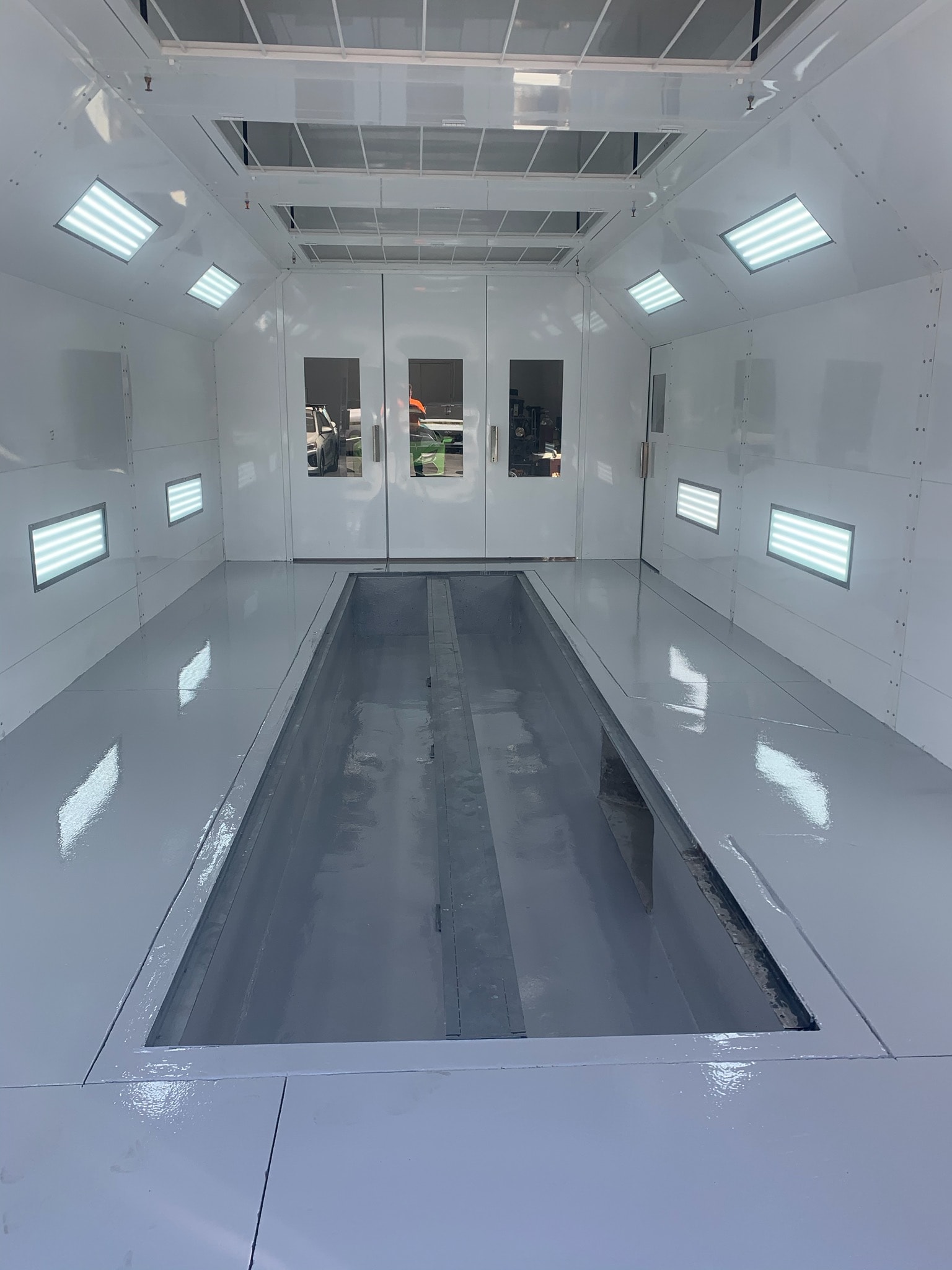
One of the most common challenges manufacturers face when planning finishing equipment is determining the right spray booth size for their production needs. Too often, booths are selected based primarily on available floor space or upfront cost rather than the demands of the production process.
An undersized booth can quickly become a bottleneck, slowing throughput and creating operational inefficiencies. An oversized booth, on the other hand, may result in unnecessary energy consumption and higher operating costs.
Proper spray booth sizing requires understanding how production volume, part size, airflow requirements, and workflow interact within the finishing process.
Start With Production Throughput
The first step in sizing a spray booth is understanding how many parts must move through the finishing operation during a typical production period.
Important questions include:
- How many parts are coated per hour?
- How large are the parts being finished?
- How long does each coating cycle take?
- Are parts processed individually or in batches?
For example, a shop coating small components may process dozens of parts per hour, while a facility coating structural steel components may process only a few parts per shift. Both operations require very different booth configurations.
Production throughput ultimately determines whether a facility needs:
- A batch spray booth
- A large equipment booth
- A conveyorized finishing line
Matching booth capacity to production demand ensures that the finishing stage does not limit the overall manufacturing process.
Consider Part Size and Clearance Requirements
Spray booths must provide enough working space not only for the part itself, but also for safe and efficient coating operations.
Typical clearance considerations include:
- Operator movement around the part
- Spray gun distance and angle
- Overspray containment
- Lighting coverage
- Airflow distribution
As a general guideline, facilities should allow adequate clearance around all sides of the largest part being coated. Tight booth spaces restrict operator movement and may lead to inconsistent finishes.
In addition, taller parts require additional vertical clearance to maintain proper airflow patterns and lighting conditions.
Understand Airflow Requirements
Airflow is one of the most critical design factors in spray booth sizing. Proper airflow ensures:
- Effective removal of overspray
- Safe control of flammable vapors
- Consistent coating quality
- Compliance with safety standards
Spray booths are typically designed to maintain a specific air velocity across the work area, which determines the amount of air that must be moved through the booth.
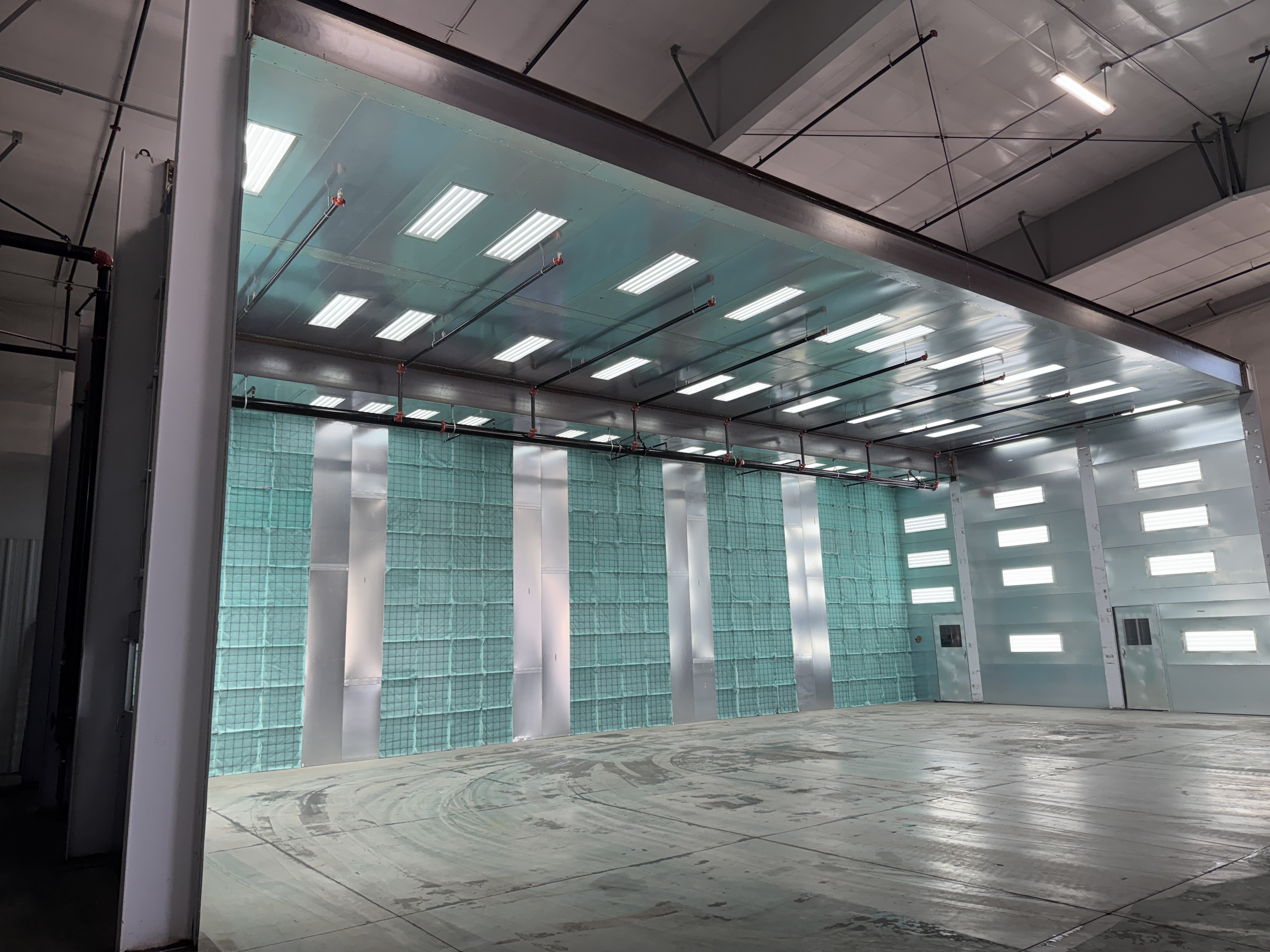
Larger booths require significantly higher airflow volumes to maintain this velocity. As booth dimensions increase, so do the fan capacity and filtration requirements.
This is why booth sizing decisions should always consider both physical dimensions and airflow engineering.
Evaluate Workflow and Material Handling
Production workflow plays a major role in determining the most efficient booth layout.
Facilities should consider how parts move through the finishing process:
- Are parts moved manually on carts or racks?
- Are forklifts required for large components?
- Does the process involve conveyors or monorail systems?
- Are multiple operators working simultaneously?
A booth that technically fits the part may still cause workflow issues if operators struggle to maneuver equipment or position parts efficiently.
Proper booth sizing supports smooth material flow, reducing delays between coating operations.
Plan for Future Production Growth
Manufacturing operations often evolve over time. Facilities may add new products, increase production volume, or introduce larger components.
When sizing a spray booth, it is important to evaluate whether the system can support future expansion.
Key considerations include:
- Potential increases in production volume
- Larger part sizes in future projects
- Additional coating processes
- Integration with curing ovens or conveyors
Designing with reasonable flexibility helps prevent the finishing system from becoming a constraint as production grows.
Avoid the “Bigger Is Always Better” Mistake
Some facilities assume that installing the largest possible booth provides the most flexibility. However, oversizing equipment can create unintended operational costs.
Larger booths require:
- Greater airflow volumes
- Larger fans and motors
- Higher energy consumption
- Increased heating demand when makeup air systems are used
Properly sized systems balance production capacity with energy efficiency.
Engineering the Right Finishing Solution
Spray booth sizing is ultimately an engineering exercise that combines production requirements, airflow design, and facility workflow considerations.
When properly sized, finishing systems:
- Maintain consistent airflow and coating quality
- Support efficient operator movement
- Avoid production bottlenecks
- Reduce unnecessary energy consumption
The result is a finishing operation that supports manufacturing productivity rather than limiting it.
California Pulse designs finishing systems around real production requirements—balancing booth size, airflow engineering, and workflow considerations to support efficient industrial finishing operations.
Contact California Pulse for a free quote today!