Robotic Finishing Systems: When Automation Makes Sense
September 4, 2026
Learn when robotic finishing systems make economic and operational sense — covering volume thresholds, part geometry, coating compatibility, and infrastructure needs.
Quick Answer
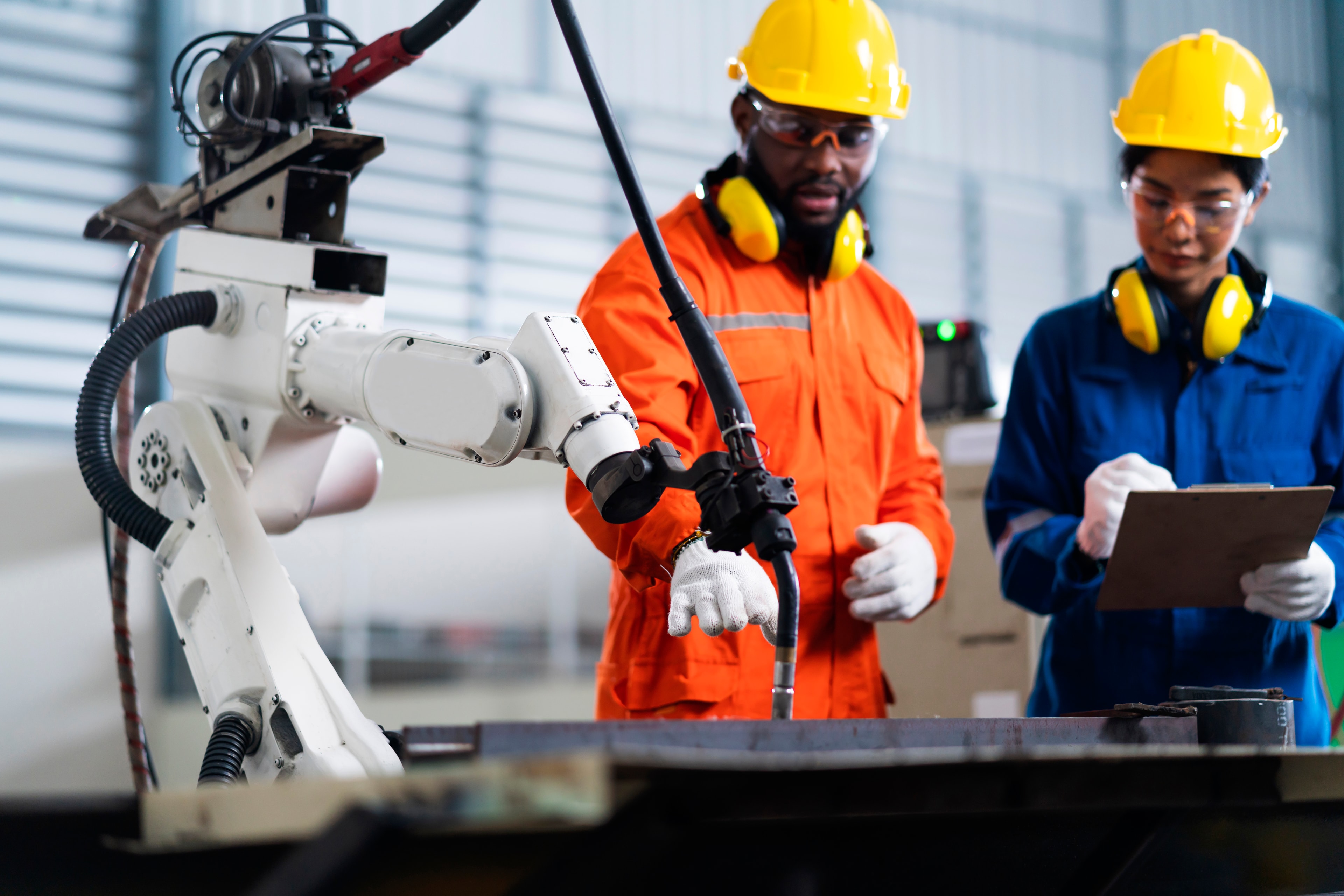
Robotic finishing pays back where volume and part geometry are stable. Operations running 200 or more identical or similar parts per shift typically see payback periods under three years. Other signals are manual application labor exceeding four to six percent of total part cost, regular overtime to meet finishing quotas, and rework above two percent. Transfer efficiency improvements of fifteen to thirty percent over manual spray are common, which reduces coating material cost directly.
Industrial finishing operations face a persistent tension between throughput demands and labor constraints. As production volumes increase and quality tolerances tighten, manual spray application becomes a limiting factor — inconsistent film builds, operator fatigue, and high rework rates erode margins and delay delivery schedules.
This post examines the operational and economic conditions under which robotic finishing systems deliver measurable returns, and identifies the facility parameters, part geometries, and production profiles that determine whether automation is the appropriate solution for a given operation.
What Robotic Finishing Systems Actually Do
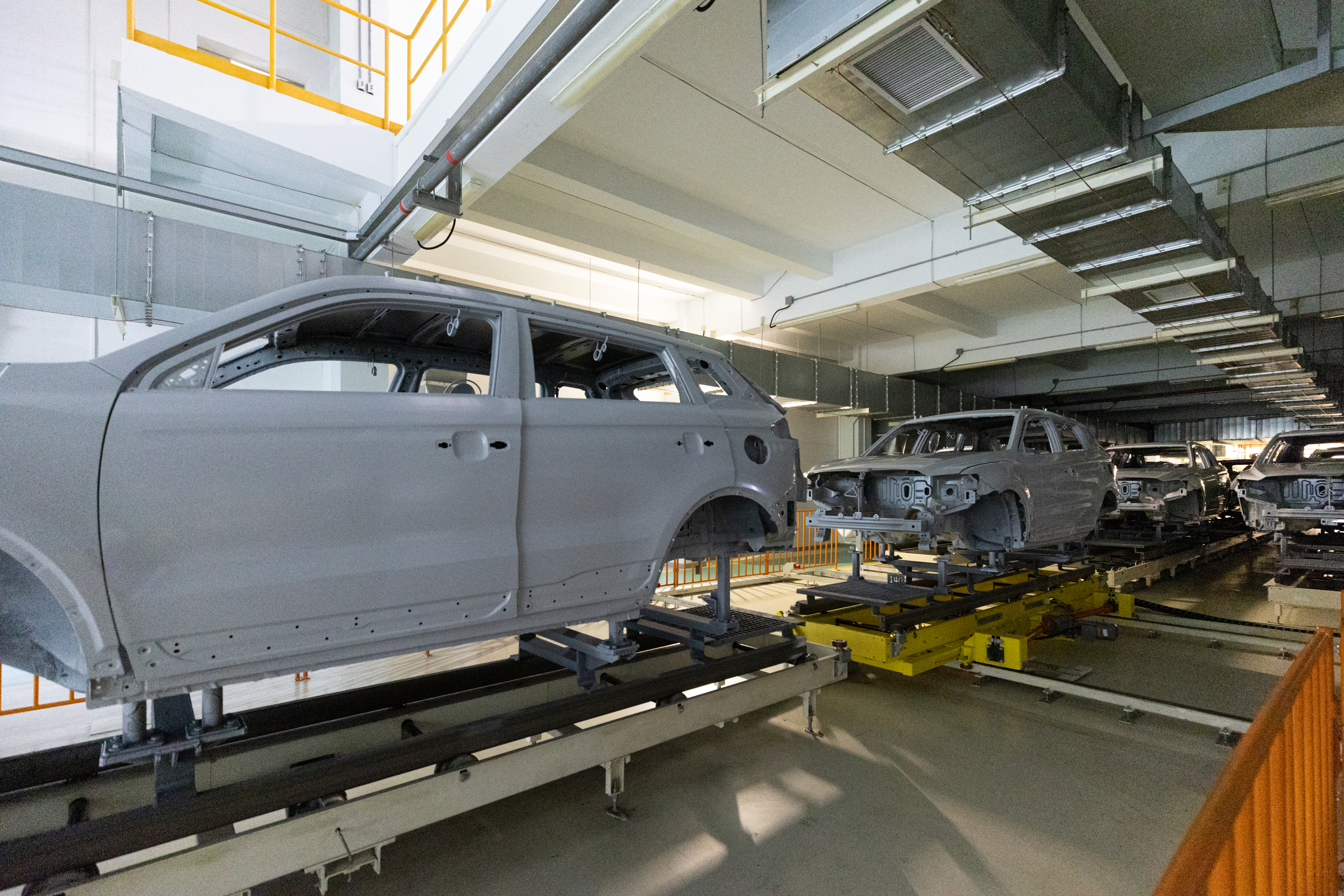
Robotic finishing systems combine programmable articulated arms, reciprocators, or gantry-mounted applicators with controlled spray environments — typically inside a dedicated spray booth or enclosed finishing cell. The robot replicates a programmed spray pattern across every cycle with micron-level consistency.
- Applicator type: The system uses electrostatic spray guns, HVLP atomizers, or airless applicators depending on the coating material and transfer efficiency requirements.
- Axis configuration: Six-axis articulated robots handle complex geometries; three-axis reciprocators serve flat or cylindrical parts more economically.
- Program storage: Modern controllers store hundreds of part programs, enabling rapid changeover between SKUs without manual re-teaching.
- Booth integration: The robot operates inside a purpose-built spray booth with controlled airflow, explosion-proof components, and automated purge cycles.
- Coating management: Integrated fluid handling systems regulate viscosity, pressure, and flow rate continuously throughout the run.
Production Volume Thresholds That Justify Automation
The economic case for robotic finishing depends heavily on part volume and repeatability of geometry. Low-volume, high-mix shops rarely recover the capital investment within acceptable timeframes.
- Shift volume: Operations running 200 or more identical or similar parts per shift typically see payback periods under three years.
- Labor cost per part: When manual application labor exceeds four to six percent of total part cost, automation begins to demonstrate cost compression.
- Overtime dependency: Facilities regularly running overtime to meet finishing quotas indicate a throughput bottleneck that automation can resolve structurally.
- Rework rate: Manual operations generating more than two percent rework on finished parts signal inconsistency that robotic systems eliminate through programmed repeatability.
- Material waste: Transfer efficiency improvements of fifteen to thirty percent are common when replacing manual spray with robotic application — this directly reduces coating material costs.
Part Geometry and Fixture Compatibility
Not every part profile is well-suited to robotic finishing. The geometry of the workpiece and its ability to be fixtured consistently are prerequisites for reliable automated results.
- Flat and planar surfaces: Highest compatibility with reciprocator-style automation; consistent standoff distance is easily maintained.
- Symmetrical profiles: Round, tubular, or prismatic parts suit robotic arms with fewer axes, lowering system complexity and cost.
- Complex geometry: Automotive body panels, aerospace structural components, and multi-plane assemblies require six-axis programming and potentially multiple spray zones.
- Fixture tolerance: Part positioning must be repeatable within plus or minus one to two millimeters to maintain programmed standoff and pattern overlap.
- Undercuts and recesses: Interior cavities, blind holes, and sharp recesses may still require manual touch-up stations integrated downstream of the robotic cell.
Coating Materials Compatible With Robotic Application
Robotic systems are compatible with a broad range of liquid coatings but require careful fluid engineering to maintain consistent application.
- Waterborne topcoats: Widely used in automotive and rail finishing; require humidity-controlled booth environments to maintain open time and film formation.
- Solvent-based primers and basecoats: Standard in aerospace and industrial applications; booth exhaust and explosion-proof equipment ratings are mandatory.
- High-solids coatings: Require heated fluid lines and temperature-regulated pots to maintain viscosity within application range.
- Two-component systems: Automated proportioning and mix ratio monitoring prevent off-ratio application, which is a leading cause of adhesion failure in manual two-component work.
- UV-cure and specialty coatings: Compatible with robotic application when integrated with in-line curing ovens or UV lamp arrays positioned within the finishing cell.
Integration With Existing Finishing Infrastructure
Robotic finishing rarely operates as a standalone investment. The surrounding infrastructure — conveyor systems, curing ovens, prep stations, and exhaust equipment — must be evaluated and often upgraded in parallel.
- Conveyor compatibility: Overhead monorail, power-and-free, and flatbed conveyors are the most common integration points; line speed must be synchronized with robot cycle time.
- Oven sequencing: Curing oven capacity must match the increased throughput a robotic system delivers, or flash-off and cure schedules become the new bottleneck.
- Air makeup units: Higher throughput means greater coating material usage; booth air makeup systems must be sized to maintain compliant face velocities and solvent concentration levels.
- Control integration: PLC-based booth controls should communicate with the robot controller to coordinate purge cycles, gun triggering, and safety interlock sequences.
- Maintenance access: Robot envelopes and fluid handling components require scheduled access for preventive maintenance; facility layout must accommodate this without disrupting production flow.
Workforce Implications and Programming Requirements
Automation changes the labor profile of a finishing department rather than eliminating it entirely. The skills required shift from application technique to system operation, programming, and maintenance.
- Programmer training: Robot programming for finishing applications requires twenty to forty hours of initial training for experienced finishing personnel; more complex geometries extend this timeline.
- Maintenance staffing: At minimum, one technician with mechanical and basic electrical competency should be dedicated to or cross-trained for robotic cell maintenance.
- Quality oversight: Human inspection remains the standard for final quality checks; automation reduces defect frequency but does not replace inspection protocols.
- Safety certification: Personnel working within or adjacent to robotic cells require training in robot safety standards, including ANSI/RIA R15.06 or ISO 10218 depending on applicable jurisdiction.
When Robotic Finishing Systems Deliver Maximum Return
Robotic finishing systems perform best when production conditions are stable, part geometry is consistent, and volume justifies the capital commitment. Operations that meet these conditions gain predictable film builds, reduced material consumption, and insulation from skilled labor shortages — all of which compound over the system's operational life.
Why Choose California Pulse for Robotic Finishing Systems
We design and manufacture spray booths, finishing cells, conveyor systems, and curing ovens configured to integrate directly with robotic finishing equipment. Our engineering team works from initial layout through commissioning, ensuring that booth airflow, exhaust capacity, fluid handling, and safety interlocks are sized and coordinated for the specific robot platform and coating process in use.
We sell direct from our manufacturing facility in Apple Valley, California, which means project teams have direct access to the engineers responsible for each system — not a regional distributor. Whether the project involves a new robotic finishing cell or upgrading an existing manual spray booth to support automation, we provide the technical depth and custom fabrication capability to deliver a complete, code-compliant finishing system.
Answers