How Modern Finishing Systems Can Reduce Operating Costs
February 26, 2026
In manufacturing, finishing operations are often viewed strictly as a production necessity, a required step between fabrication and shipment. But for many shops, paint booths and curing systems quietly represent one of the largest controllable operating expenses in the facility.
In manufacturing, finishing operations are often viewed strictly as a production necessity, a required step between fabrication and shipment. But for many shops, paint booths and curing systems quietly represent one of the largest controllable operating expenses in the facility.
Energy consumption, labor inefficiencies, rework, maintenance downtime, and compliance costs all originate within finishing systems. Older equipment, outdated airflow design, or improperly sized systems can drive operating expenses far higher than most operators realize.
Modern finishing systems are engineered not just for coating quality, but for long-term operational efficiency. Understanding where cost savings actually come from helps facilities make smarter investment decisions.
The Hidden Cost Centers in Traditional Finishing Systems
Most shops evaluate equipment primarily on purchase price. Operating cost, however, is determined by how efficiently a system performs every hour it runs.
Common cost drivers include:
- Excessive heated air exhaust
- Inefficient burner performance
- Oversized airflow systems
- Long cure times
- Manual process variability
- High filter consumption
- Rework caused by inconsistent finishes
- Compliance-related retrofits
Older booths were typically designed around fixed airflow assumptions rather than real production needs. As production changes over time, these systems become increasingly inefficient.
1. High-Efficiency Heating and Cure Systems
Legacy ovens and booth heaters often operate at lower combustion efficiency and poor heat retention.
Modern thermal systems improve efficiency through:
- High-efficiency direct-fired burners
- Improved insulation design
- Precision temperature controls
- Faster ramp-up times
- Reduced heat loss during idle periods
Shorter cure cycles directly translate into:
- Increased throughput
- Lower fuel usage per part
- Reduced labor cost per finished unit
In many facilities, heating efficiency upgrades alone produce measurable ROI within the first year.
2. Reduced Rework and Material Waste
Operating cost is not only energy — it’s consistency.
Inconsistent airflow or temperature profiles cause:
- Poor atomization conditions
- Uneven film build
- Contamination defects
- Improper curing
Modern finishing systems maintain tighter environmental control through engineered airflow patterns and stable temperature management.
Benefits include:
- Higher first-pass yield
- Less paint consumption
- Reduced sanding and refinishing labor
- Fewer rejected parts
Improved process stability often delivers savings that exceed energy reductions.
3. Automation and Process Control
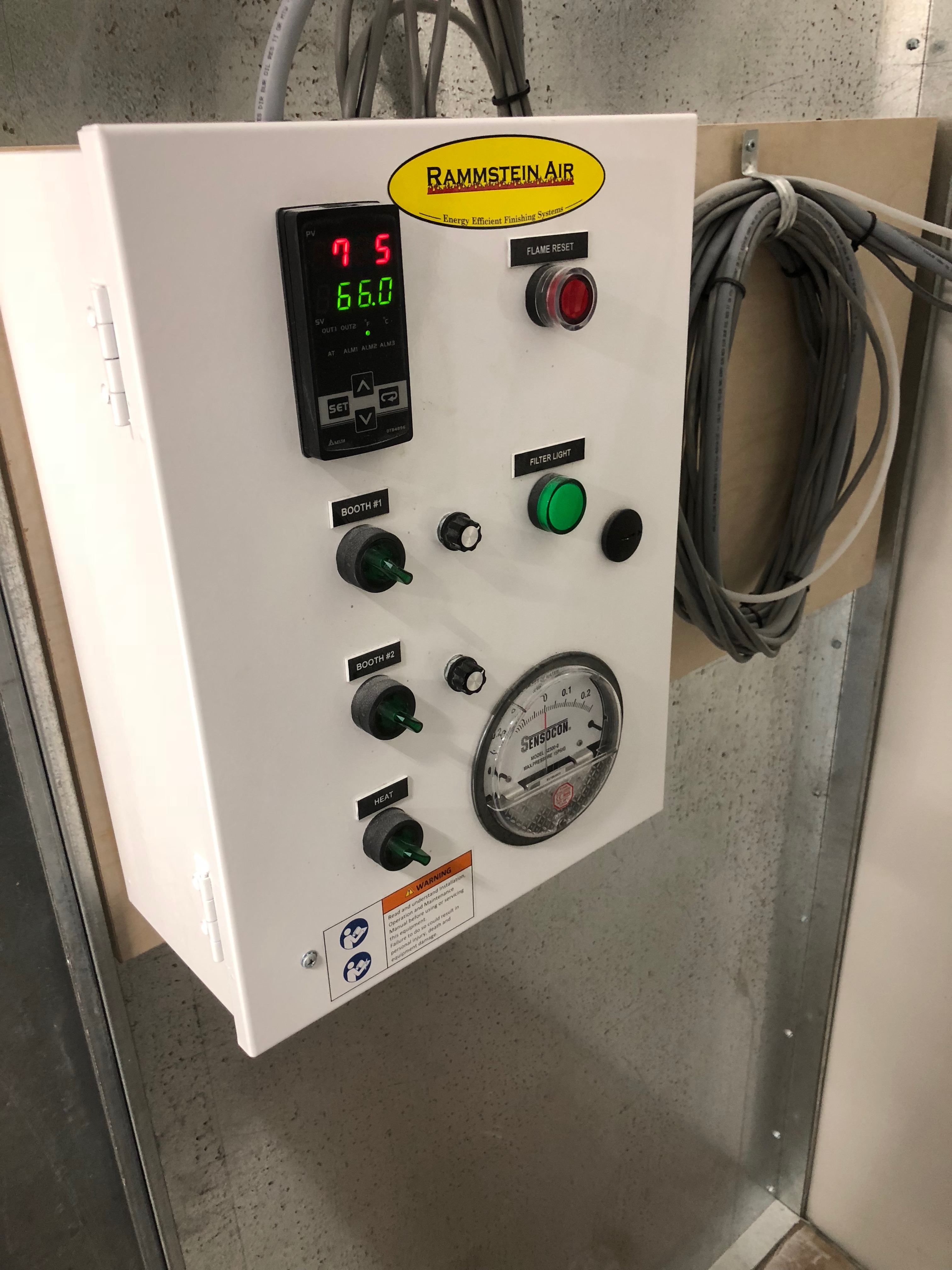
Modern finishing equipment increasingly incorporates automated monitoring and control systems.
Examples include:
- Programmable cure cycles
- Automated pressure monitoring
- Filter loading indicators
- Airflow verification sensors
- Digital system diagnostics
These features reduce reliance on operator guesswork and prevent inefficient operation.
Instead of reacting to problems, shops can maintain optimal performance continuously.
4. Lower Maintenance and Downtime Costs
Older systems frequently create hidden maintenance expenses:
- Hard-to-source components
- Inefficient filter configurations
- Excessive wear from improper airflow balance
- Unplanned shutdowns
Modern systems are designed for maintainability:
- Standardized components
- Accessible service points
- Predictable maintenance intervals
- Improved filtration design
Reduced downtime improves production scheduling reliability — an often overlooked cost advantage.
5. Compliance Efficiency Reduces Financial Risk
Regulatory compliance has a direct cost impact.
Non-compliant or aging equipment can lead to:
- Inspection delays
- Permitting challenges
- Required retrofits
- Operational interruptions
Modern finishing systems designed to current safety and electrical standards help facilities avoid reactive compliance spending.
Built-in compliance reduces administrative burden while minimizing liability exposure.
6. Lifecycle Cost vs. Purchase Price
The most important shift modern manufacturers are making is evaluating equipment based on total cost of ownership, not initial price.
A lower-cost system may consume:
- More gas
- More electricity
- More filters
- More labor hours
- More maintenance resources
Over a 10–15 year lifecycle, operating expenses often exceed the original equipment cost several times over.
Modern systems are engineered to reduce those recurring costs every day they operate.
Engineering Efficiency Into Finishing Operations
Finishing systems should no longer be treated as static infrastructure. They are active production assets that influence energy consumption, labor efficiency, and regulatory risk.
When properly engineered, modern paint booths and curing systems:
- Lower energy consumption
- Improve throughput
- Reduce rework
- Simplify compliance
- Increase operational predictability
The result isn’t just better finishing performance — it’s a measurable reduction in operating costs across the facility.
Contact California Pulse for a finishing system designed with long-term operational efficiency in mind, today!