How to Ensure Your Spray Booth Is Operating Correctly and Key Components Monitor
December 1, 2025
Consistent, high-quality finishing depends on a spray booth that operates within strict performance and safety parameters. Proper airflow, stable temperatures, clean filtration, and reliable ventilation all work together to keep operators safe and finishes predictable. Monitoring
Consistent, high-quality finishing depends on a spray booth that operates within strict performance and safety parameters. Proper airflow, stable temperatures, clean filtration, and reliable ventilation all work together to keep operators safe and finishes predictable. Monitoring these conditions daily helps prevent defects, equipment strain, and costly downtime.
California Pulse designs each booth with clear indicators, intuitive controls, and high-performance components that make system monitoring straightforward. By understanding what to watch for—and how to respond—you can keep your booth operating at peak performance throughout its life.
Key Areas to Monitor for Proper Booth Operation
A well-functioning booth delivers consistent airflow, clean lighting, stable temperatures, and safe exhaust pathways. The following checks form the foundation of daily booth performance monitoring.
1. Airflow and Pressure
Airflow is the heart of booth performance, and pressure readings provide the most direct snapshot of system health.
How to Monitor
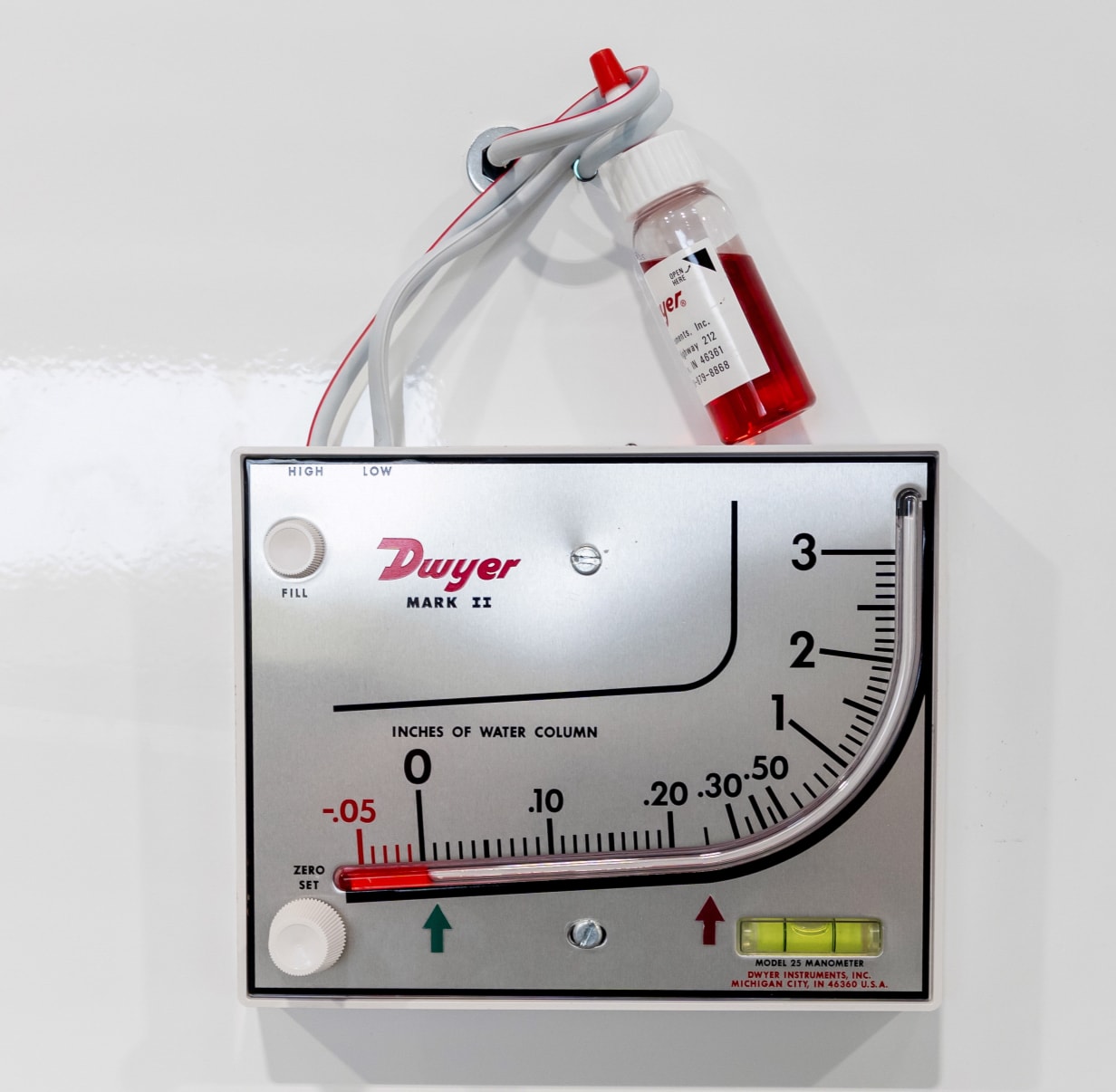
- Watch the manometer or pressure gauge on the control panel.
- Readings should remain within your booth’s specified range:–9 Pa to 9 Pa (or –.03 inWC to .03 inWC).
- A gradual increase indicates filters are loading with overspray.
- A sudden drop may signal fan issues, obstructions, or duct damage.
Best Practice
Always report readings outside normal range immediately. Custom booths have unique airflow profiles, and manufacturers provide a recommended range for each system.
2. Fan and Motor Sounds
Fans should run smoothly and quietly during spray and bake modes.
What to Listen For
- Consistent, steady fan operation
- No rattling, vibrating, or squealing
- No sudden changes in tone or speed
Unusual noises may indicate:
- Belt wear
- Motor misalignment
- Foreign objects in the fan housing
Stop operation and notify maintenance if abnormal noise continues.
3. Temperature Control
Temperature consistency is essential for proper drying and curing when using heated booths.
- The booth must reach and maintain the setpoint temperature—set according to the coating manufacturer’s instructions.
- In bake mode, discharge temperature should never exceed 160°F, which corresponds to 150°F inside the booth.
Warning Signs
- Fluctuating temperatures
- Excessive warm-up time
- Inability to reach setpoint
These issues may indicate faults in sensors, burner systems, or airflow.
Never bypass temperature controls or adjust them without authorization.
4. Lighting Quality
Proper illumination impacts finish accuracy, operator safety, and color consistency.
What to Check
- Lights should be bright and even
- No dimming, flickering, or color shifting
- No overspray buildup on windows or fixtures
Lighting issues may indicate fixture wear, electrical problems, or lens contamination.
Report issues immediately to maintain compliance and visibility.
5. Filter Condition
Filters play a critical role in airflow stability and contamination control.
- Inspect intake and exhaust filters daily.
- Replace filters when:
Airflow restriction exceeds specifications
The manometer indicates filters have reached end-of-life
- Log all filter changes in the maintenance record.
Only use California Pulse-approved filters to ensure proper fit, safety, and performance.
6. System Alarms
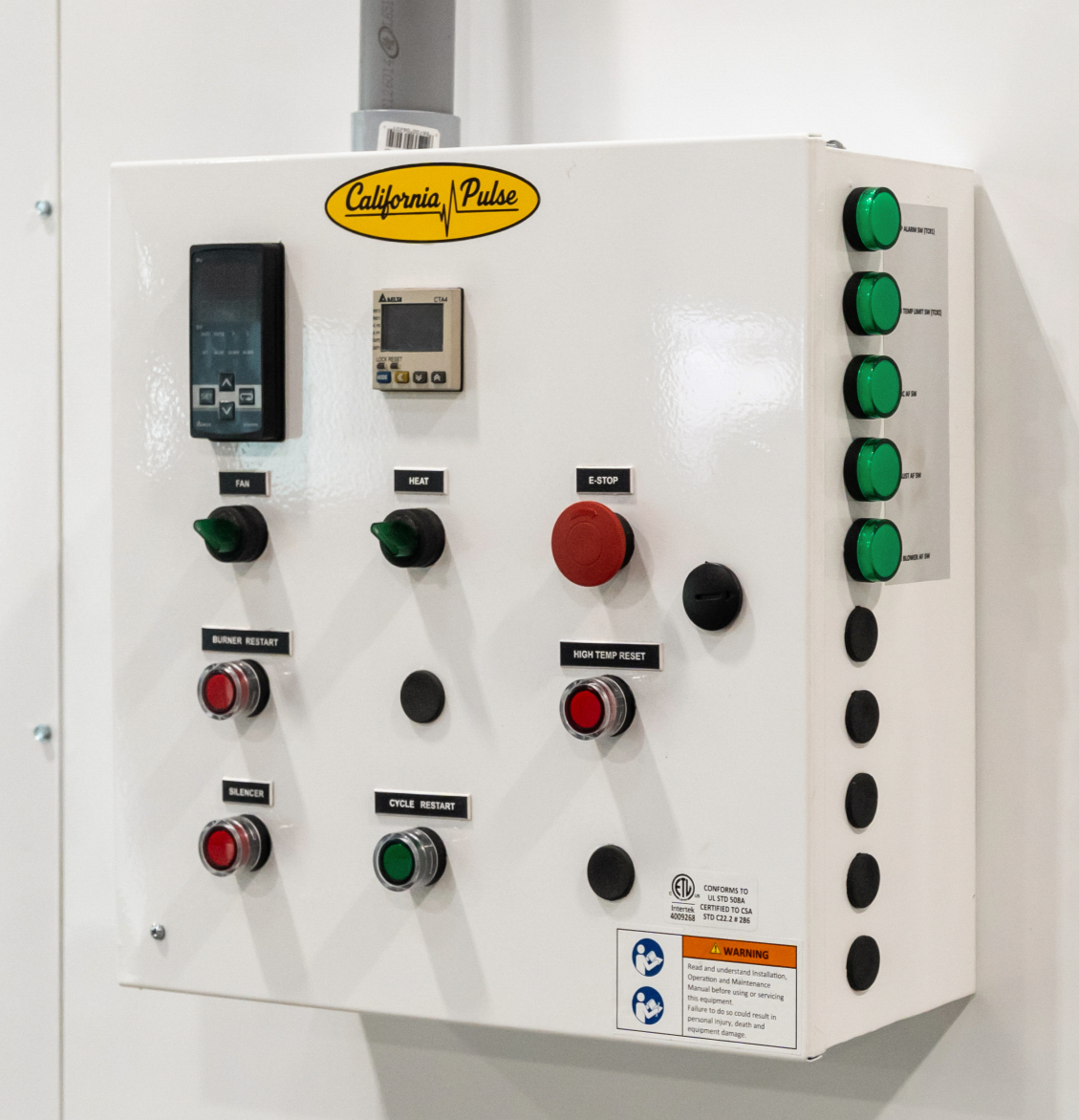
Your control panel includes safety alarms tied to temperature limits, airflow monitoring, and safety interlocks.
How to Respond
- Never ignore an illuminated alarm or fault indicator.
- Stop all operations immediately and diagnose the cause.
- After resolving the issue, reset the alarm and confirm conditions have returned to normal.
Alarms are safety-critical—treat every activation as a reportable event.
7. Overspray and Air Cleanliness
The interior condition of the booth tells you a lot about airflow health.
What to Look For
- Overspray should be minimized with proper airflow.
- Walls and floors should stay relatively clean, especially in newer booths.
- Heavy buildup may indicate uneven airflow or filter loading.
- Overspray tends to collect near exhaust plenums and ductwork, especially later in the booth’s life cycle.
Clean overspray regularly to maintain air quality, reduce contamination, and extend equipment life.
Why Monitoring Booth Performance Matters
Daily monitoring ensures your booth:
- Protects operators with safe airflow and ventilation
- Maintains consistent finish quality
- Prevents contamination and rework
- Operates efficiently with minimal strain on components
- Complies with NFPA, OSHA, and manufacturer requirements
- Avoids costly downtime from neglected issues
A spray booth is a performance system—small deviations can lead to significant quality and safety issues if ignored.
Why Choose California Pulse for High-Performance Booth Systems
California Pulse spray booths are engineered for long-term reliability and easy monitoring.
Our Advantages
- Clear airflow indicators and digital displays
- Precision-engineered fans and burners
- NFPA-compliant safety interlocks
- LED lighting designed for color accuracy
- High-capacity filtration systems
- Custom airflow ranges for every configuration
We design every system to operate safely, consistently, and efficiently—day after day.
Keep Your Booth Running at Peak Performance
California Pulse can help you optimize your booth, improve airflow stability, upgrade controls, or troubleshoot performance issues. GET A FREE QUOTE TODAY