What to Expect During Spray Booth & Oven Installation
February 4, 2026
Installing a spray booth or curing oven is not just a delivery—it’s a coordinated construction, mechanical, and commissioning process. One of the most common questions we hear is “How long will installation take?” Closely followed by “What should we expect during install?”
Installing a spray booth or curing oven is not just a delivery—it’s a coordinated construction, mechanical, and commissioning process. One of the most common questions we hear is “How long will installation take?” Closely followed by “What should we expect during install?”
The reality is that installation timelines depend heavily on preparation, system complexity, and site conditions. Understanding the installation phases—and where delays typically occur—helps shops plan downtime, coordinate trades, and avoid surprises.
This article breaks down what happens during a typical spray booth or oven installation and explains realistic timelines based on real-world projects.
Spray booths and ovens are integrated systems involving airflow, heating, electrical, controls, and safety considerations. Installation generally happens in phases, each with its own requirements and dependencies.
Phase 1: Site Preparation (Often the Biggest Variable)
Before equipment ever arrives, the facility must be ready.
This typically includes:
- Adequate floor space and clearances
- Confirmed ceiling height and roof structure
- Electrical service sized and stubbed
- Gas service (if applicable) brought to location
- Concrete pads or floor prep completed
- Permits approved or in progress
Typical timeline:• A few days to several weeks, depending on facility readiness
Most installation delays occur here—not during equipment assembly.
Phase 2: Equipment Delivery & Staging
Once equipment arrives onsite, it is staged near the install location. This phase is often overlooked but critical for efficiency.
Considerations include:
- Forklift or crane access
- Indoor vs. outdoor staging
- Protection from weather and damage
- Sequencing of components
Typical timeline:• 1 day
Proper staging can significantly reduce assembly time.
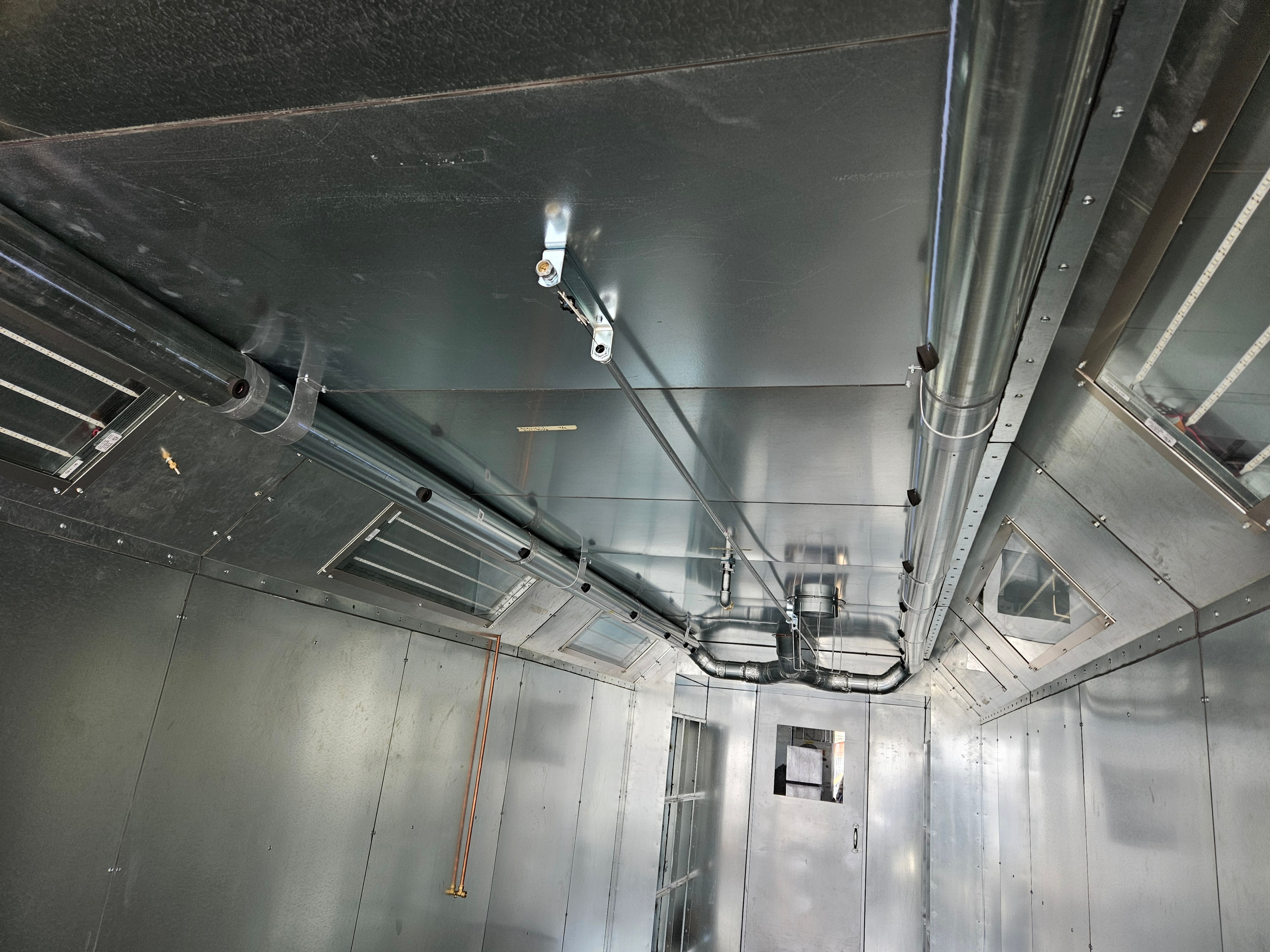
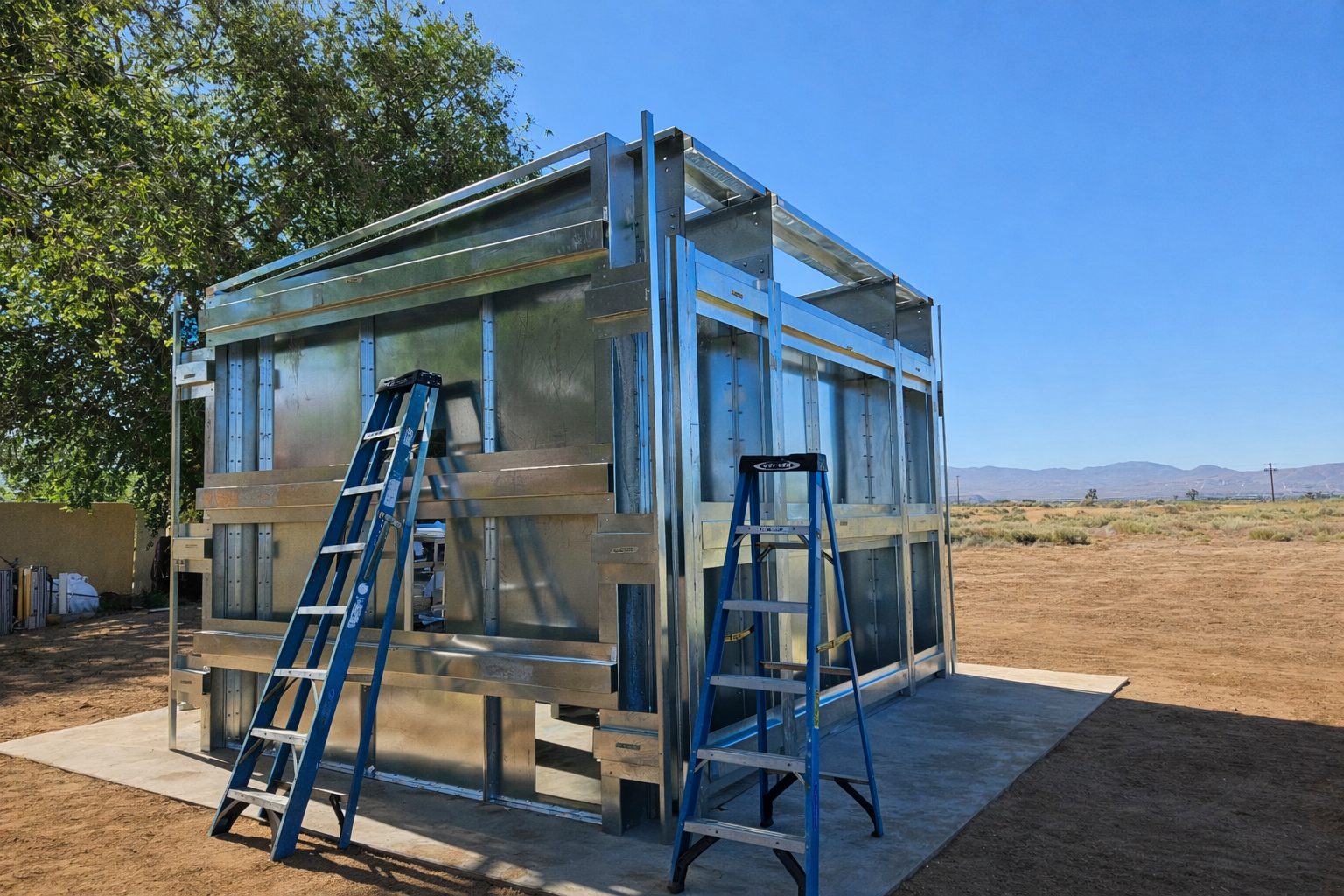
Phase 3: Mechanical Assembly
This is where the booth or oven physically takes shape.
For spray booths, this includes:
- Panel and structural assembly
- Plenum and filter bank installation
- Fan and duct connections
For ovens, this includes:
- Panel assembly and sealing
- Burner or heater installation
- Exhaust and relief ducting
Typical timeline:• Spray booth: 4–5 days• Batch oven: 4–7 days• Conveyor or large oven systems: 1–2+ weeks
System size and customization level have a great impact here and can strongly influence installation times.
Phase 4: Electrical, Gas & Controls Integration
Once the mechanical structure is in place, utilities and controls are connected.
This phase includes:
- Electrical wiring to fans, heaters, and controls
- Control panel installation
- Gas piping and leak testing (if applicable)
- Safety interlocks and sensor integration
Typical timeline:• 1–3 days for smaller systems• Several days for complex or automated lines
Coordination between trades is critical at this stage.
Phase 5: Startup, Balancing & Commissioning
Installation is not complete when the booth or oven turns on. Proper commissioning ensures the system performs as designed.
This phase typically includes:
- Airflow verification and balancing
- Temperature calibration
- Safety system checks
- Control logic verification
- Operator walk-through and training
Typical timeline:• 1–2 days
Skipping or rushing this step often leads to long-term performance issues.
Total Installation Timeline: What’s Realistic?
While every project is different, typical timelines look like this:
- Small to mid-size spray booth: 1–2 weeks total
- Large or custom spray booth: 2–4 weeks
- Batch oven: 1–2 weeks
- Conveyorized or integrated finishing line: 3–6+ weeks
These ranges assume proper site preparation and coordinated trades.
What Impacts Installation Time the Most
Key factors that extend timelines include:
- Incomplete site prep
- Utility upgrades discovered late
- Permit or inspection delays
- Complex duct routing
- Custom controls or automation
Conversely, well-prepared sites with clear scope and experienced installers often finish ahead of schedule.
How California Pulse Helps Reduce Installation Risk
At California Pulse, installation success starts long before equipment ships. Our process includes:
- Clear installation drawings and requirements
- Code-conscious system design
- Support during mechanical and electrical integration
- Startup guidance to ensure proper performance
The goal is not just fast installation—it’s correct installation that delivers long-term performance.
Installing a spray booth or oven is a manageable, predictable process when expectations are clear and preparation is thorough. Understanding the installation phases and realistic timelines helps shops plan production, reduce downtime, and avoid costly delays.
The right equipment, combined with proper planning, turns installation from a disruption into a smooth transition.
Contact California Pulse to start planning your installation with confidence.